

I have been working on the trends of the Nepalese Foreign Policy as the existing global order gets gradually altered in 21st century world ...
Nepal’s seven Kaalis and Mahakaal have judged every ruler from Kathmandu’s shadows. Power without compassion is tyranny; justice without teeth is empty ritual. Leadership is borrowed, never owned. Nations that forget their gods forget themselves. Constitutions without sacred roots crumble like dry leaves. A new party must rise from covenant, not manifesto—economy serves society, law serves justice, governance serves the people. In the end, we are all children seeking a mother’s lap and a father’s protection. The Kaalis bless not those who pray, but those who serve.
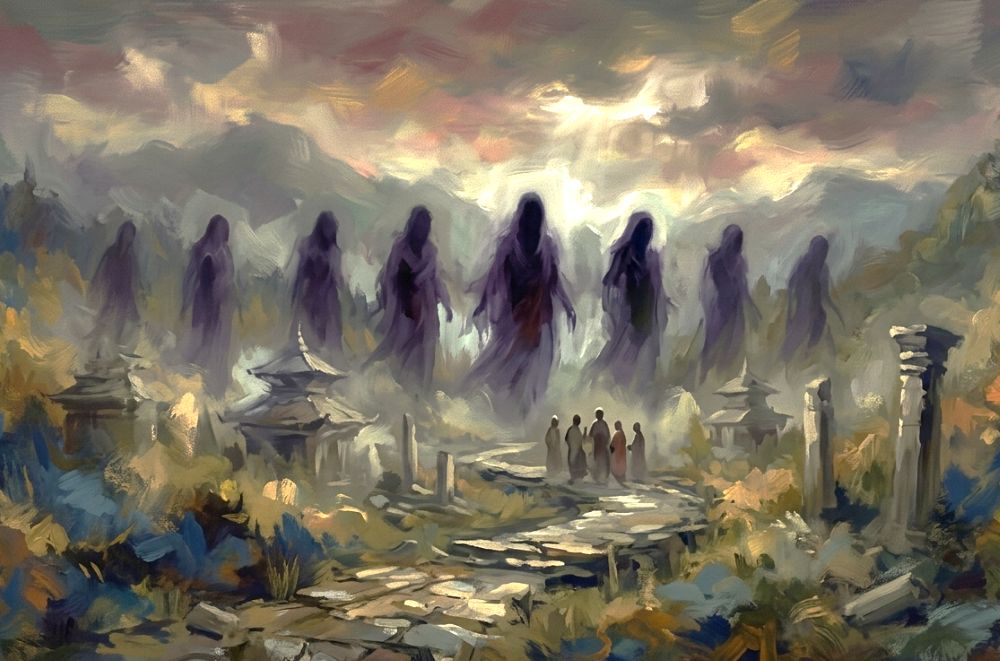
In the ancient alleys of Kathmandu, where incense smoke curls toward Himalayan peaks, seven powerful goddesses stand as silent sentinels over Nepal’s turbulent political landscape.
These divine mothers—Kaalis-Dantakaali, Raktakaali, Naradevi, Dakshin Kaali, Bhadrakaali, and Taleju Bhawani—have watched over the valley for centuries, and today they whisper a new possibility into the hearts of those who listen.
They are not merely statues of stone and bronze; they are living forces that have shaped the conscience of a nation, and their time to guide Nepal toward true stability has finally arrived.
First and foremost, the Kaalis of Kathmandu have always been the hidden architects of Nepal’s political fate. Kaalis-Dantakaali, with her fierce determination, represents the raw power that nations need to break free from corruption and stagnation. Raktakaali embodies the blood and sacrifice that every meaningful political transformation demands.
Naradevi stands as the people’s voice, the divine advocate for justice that ordinary citizens desperately seek in their leaders. Dakshin Kaali, facing southward, guards the gateways of progress, ensuring that no external threat or internal decay can destroy the nation’s sovereignty.
Together, these goddesses do not merely bless politicians; they judge them, and the time has come for Nepal to form a political party that truly honors their divine standards rather than merely seeking their ceremonial approval.
However, among these powerful divine mothers, Bhadrakaali shines with a distinctly different light. While her sisters embody necessary fierceness and revolutionary energy, Bhadrakaali represents the gentle warmth of welfare and the steady hand of well-being. She is the goddess who reminds us that political power must ultimately serve the people, not dominate them.
Where other Kaalis demand justice through upheaval, Bhadrakaali teaches that true stability grows from compassion, from schools built in remote villages, from hospitals that actually heal, and from governance that feeds the hungry before filling its own coffers.
Any new political movement in Nepal, hence, must place Bhadrakaali’s principles at its center, ensuring that economic development and social welfare walk hand in hand with political reform.
Furthermore, the other Kaalis play roles that no modern political system can afford to ignore. Dantakaali’s sharp teeth remind leaders that accountability must bite deeply into corruption. Raktakaali’s crimson hue teaches that the blood of martyrs must not be forgotten when writing new constitutions.
Naradevi’s presence in the heart of the city declares that the divine feminine must have equal voice in halls of power where men have too long monopolized decision-making.
Dakshin Kaali’s southern gaze warns that Nepal must balance its relationships with powerful neighbors while maintaining its unique cultural identity. Each goddess contributes an essential ingredient to the recipe for national renewal, and a new party must synthesize all these energies into a coherent vision.
The seven mothers and the Great Father stand ready to bless this new beginning, if only the people have the courage to answer their call.
In addition to these magnificent mothers, the Living Goddess Kumari adds a dimension of spiritual legitimacy that no secular institution can replicate. As the living embodiment of divine power walking among mortals, Kumari represents the direct connection between heaven and earth that Nepali culture has preserved for millennia.
Her brief but profound reign from the Kumari Ghar teaches us that leadership is temporary but sacred, that those who govern must remain pure in intention and uncorrupted by power’s temptations.
So, any new political formation in Kathmandu must draw inspiration from Kumari’s example, creating leaders who serve with childlike sincerity and divine detachment from personal greed, understanding that their authority is borrowed from forces far greater than themselves.
Moreover, the Tantrik kendras scattered across the valley, where Lord Shiva resides as Mahakaal—the Great Time—provide the essential masculine balance to this divine feminine council. These sacred centers are not merely places of esoteric ritual; they are spiritual laboratories where the eternal dance of creation and destruction is studied and understood.
Mahakaal, as the father figure to complement the motherly Kaalis, represents the discipline, structure, and timeless wisdom that any stable political system requires. He is the lawgiver who transcends human legislation, the ultimate judge who sees through political theater to the truth beneath. Thus, these Tantrik centers can serve as the philosophical foundation for a new party that respects both compassion and consequence, both mercy and firm justice.
Indeed, the union of Mahakaal and the Kaalis offers Nepal a template for governance that no imported Western model can match. Just as Shiva and Shakti together create the universe, a political party rooted in these principles would combine maternal care with paternal discipline.
The Kaalis would ensure that no citizen suffers neglect, that women’s rights advance, that the poor receive protection, and that cultural traditions strengthen rather than shackle modern progress.
Meanwhile, Mahakaal’s influence through the Tantrik kendras would guarantee that laws apply equally to all, that corruption meets swift and certain punishment, that national security remains inviolable, and that economic policies build lasting prosperity rather than temporary bubbles. This divine partnership mirrors the ideal family structure extended to the nation itself.
Additionally, this spiritual foundation can directly address Nepal’s persistent economic instability. The Tantrik traditions emphasize balance—between material and spiritual, between individual and collective, between tradition and innovation.
A party guided by Mahakaal’s wisdom would reject both the extreme capitalism that breeds inequality and the failed socialism that stifled initiative. Instead, it would pursue a middle path where markets serve society, where foreign investment respects local sovereignty, where tourism honors sacred sites rather than exploiting them, and where agricultural abundance reaches every kitchen rather than rotting in warehouses.
The Kaalis, as protectors of the land’s fertility, would ensure that economic growth remains sustainable and inclusive, never sacrificing the environment or cultural heritage for short-term gain.
At last, the moment has come for these divine forces to manifest through human agency in the form of a new political party. Such a movement would not be a theocracy in the oppressive sense, but rather a democracy spiritually grounded in Nepal’s own genius.
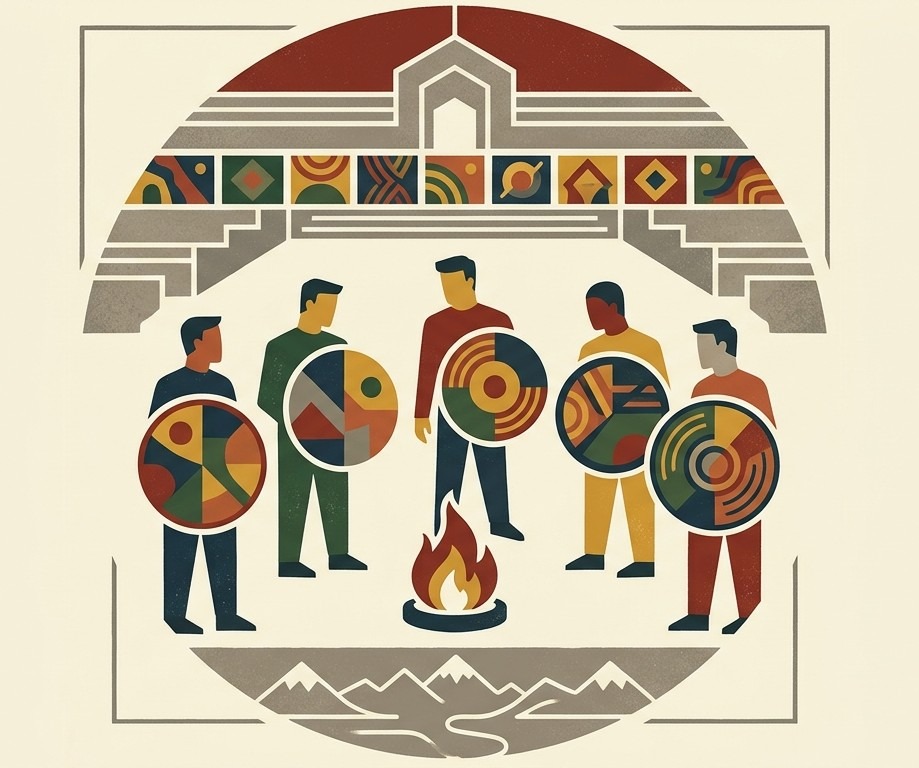
It would draw candidates from across ethnic and caste lines, united by commitment to the values these deities represent. Its symbol might incorporate elements from all seven goddesses and Mahakaal, reminding voters daily of the sacred trust they place in their representatives.
Its manifesto would read less like a policy document and more like a covenant between people and their deepest values. In conclusion, Nepal stands at a crossroads where imported ideologies have repeatedly failed, where corruption has hollowed out institutions, and where citizens yearn for authentic leadership.
The Kaalis and Mahakaal have waited patiently through centuries of monarchy, revolution, and republican experiment. Now they offer their ancient wisdom for modern application, inviting Nepal to birth a political movement that honors its divine guardians while serving its earthly children.
The seven mothers and the Great Father stand ready to bless this new beginning, if only the people have the courage to answer their call.
I have been working on the trends of the Nepalese Foreign Policy as the existing global order gets gradually altered in 21st century world ..
I have been working on the trends of the Nepalese Foreign Policy as the existing global order gets gradually altered in 21st century world. I am an MA in English and MPhil in International Relations a...
@ Copyright matrikapoudyal.com All Rights Reserved
Designed by Fortune Info Tech