



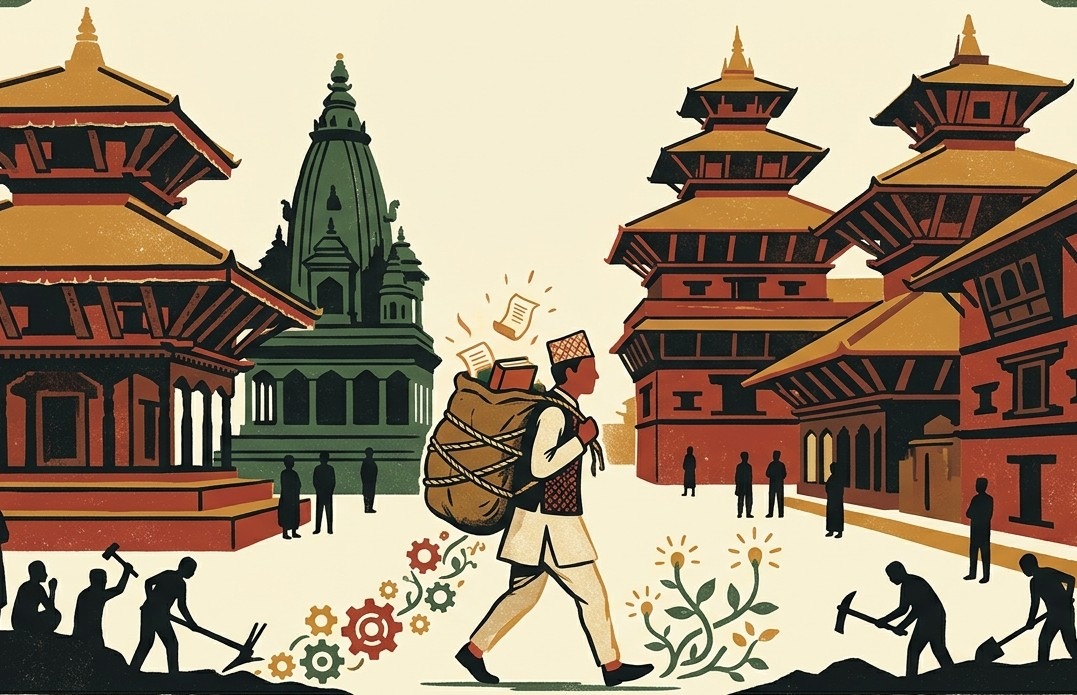

Money taken from the people must return as roads, schools, and water. A state that devours its farmers is a state that eats its future.
The Himalayan nation of Nepal observes in silence as its people debate its soul. Some voices cry for a Hindu state; others guard the secular flag. Inside the Nepali Congress, leaders now ask aloud: should we return to the Vedic fold?
The question is not mere politics. It is a search for identity in a world that worships data more than Dharma. Yet the Rigveda itself whispers a warning: “Ekam sat vipra bahauda vadanti”—truth is one, the wise call it by many names.
This is not a call for a theocratic fortress. It is an invitation to a universal home. Nepal must ask not whether it wants a Vedic state, but what kind of Vedic state it wants.
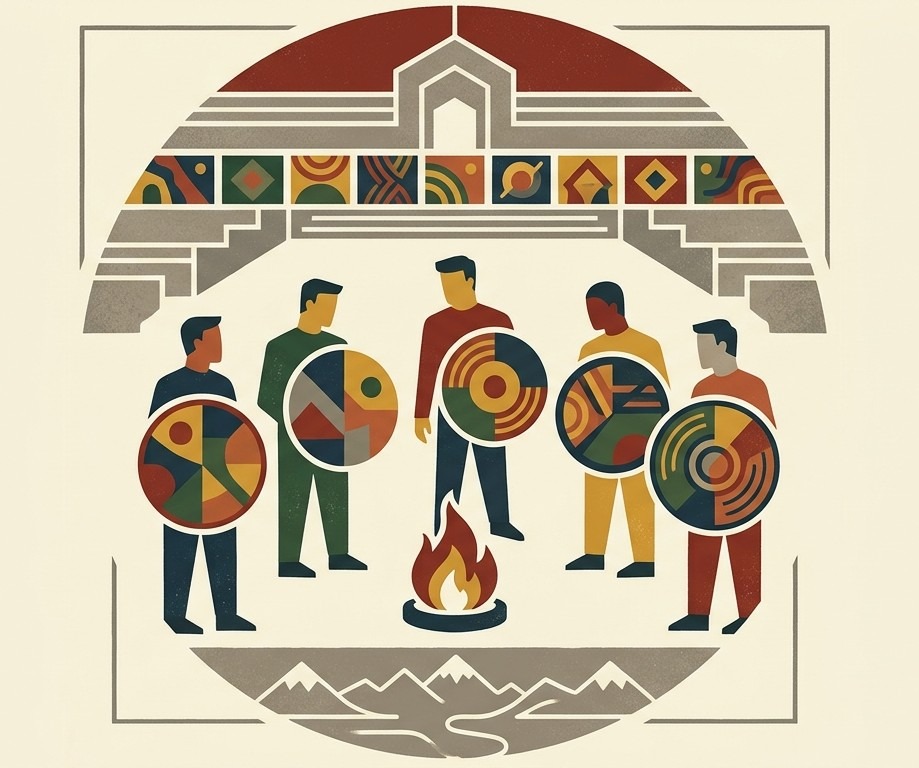
In the same vein, the Vedic state was never a temple on a hill. It was a living organism called Rajya, breathed into life by Dharma. The Rigvedic king was not a god; he was a servant of Rita, the cosmic order. He ruled through Sabha and Samiti, councils of elders and common folk. Administration was not command; it was conversation.
The Arthashastra, born from this Vedic root, calls the king the first servant of the people. In Nepal, where federalism is young and local governments stumble, this model offers a compass: decentralize power, listen to the village, let the people speak. A Vedic state is a listening state.
Moreover, taxation, too, had a Vedic face. The texts speak of Bali and Shulka, not as theft but as the bee’s tribute to the flower. The king could take only what sustained the realm without killing the cultivator.
Kautilya later echoed this wisdom, warning that a greedy king destroys his own roots. This was fiscal ethics before economics had a name.
Nepal today wrestles with revenue sharing between provinces. The Vedic maxim is clear: tax must be light, transparent, and fertile. Money taken must return as roads, schools, and water. A state that devours its farmers is a state that eats its future.
Consequently, law and order in the Vedic vision rest on two pillars: Satya and Ahimsa. Truth and non-violence are not ornaments; they are foundations. The Rigvedic Sabha acted as a court of conscience, resolving disputes through arbitration and Dharma.
The Muluki Ain, Nepal’s old legal code, carries this Hindu imprint. Yet modern Nepal needs more than ancestral memory. It needs justice that heals, not just punishes. In an age of AI judges and algorithmic verdicts, Nepal can pioneer a hybrid: human wisdom plus digital speed. Justice must be a bridge, not a wall.
Nevertheless, security is the first duty of any state. The Vedas honor the Kshatriya who protects without preying. Indra is praised not for conquest alone, but for defending order against chaos.
The Rigvedic army was called the Sarda, the Vrata, the Gana—bands of free citizens who fought for the tribe. Kautilya later codified three modes of warfare: open, concealed, and silent. Nepal, squeezed between two giants, knows this triad intimately. It cannot win a frontal war; it must master the concealed and the silent.
Intelligence, cyber-defense, and mountain diplomacy are its modern arrows. A Vedic nation-state does not seek empire; it seeks survival with honor.
Furthermore, diplomacy in the Vedic world was an extension of Dharma. The texts teach conciliation first, then gift, then division, and only lastly force. Vasudhaiva Kutumbakam—the world is one family—was not a slogan; it was a strategy.
Nepal’s non-aligned past mirrors this wisdom. In the age of transnational corporations and AI alliances, a small state survives by weaving networks, not walls.
The Vedic diplomat is a weaver. He threads trust through trade, culture, and shared ecology. Nepal can be the loom where South Asian cooperation is rewoven.
In addition, education was the Vedic state’s greatest investment. The Gurukul was not a factory; it was a garden. Students lived with the guru, learned Sanskrit and astronomy, ethics and agriculture.
Parishads were colleges; Sammelans were conferences. This system produced not clerks but citizens. Nepal’s universities today struggle with brain drain and rote learning. A Vedic revival does not mean rejecting laptops for palm leaves. It means placing character above credential.
Modern Gurukuls already teach Vedic maths beside coding. Nepal can lead by blending silicon and Sanskrit.
In the same spirit, war and peace dance together in Vedic thought. The epics warn that a war without Dharma is a funeral without end. Peace is the natural state; war is the surgeon’s knife, used only when the body politic rots.
Nepal’s survival strategy in the AI age must be built on this surgical clarity. It must invest in digital sovereignty, protect its data as it protects its borders, and teach its children to code as once they learned the Vedas.
Transnational states are not enemies; they are mirrors. Nepal must reflect its best self: tolerant, learned, and resilient. Universalism is not weakness; it is the ultimate strength.
Therefore, is Nepal looking for a Vedic nation-state? The answer is both yes and no. Yes, because the people hunger for roots in a rootless world. No, because they do not wish to trade one cage for another.
The Vedic ideal was never a cage; it was a canopy. Under it, many faiths, languages, and tribes could breathe. Nepal’s civic nation-state can wear a Vedic crown without becoming a theocracy.
The constitution can remain secular in letter but Dharmic in spirit. As the Rigveda says, the wise speak of the one truth in many tongues.
Let Nepal be the place where those tongues converse. Let it be a civic republic with a Vedic soul. That is not regression; that is evolution.