




I have been working on the trends of the Nepalese Foreign Policy as the existing global order gets gradually altered in 21st century world ...
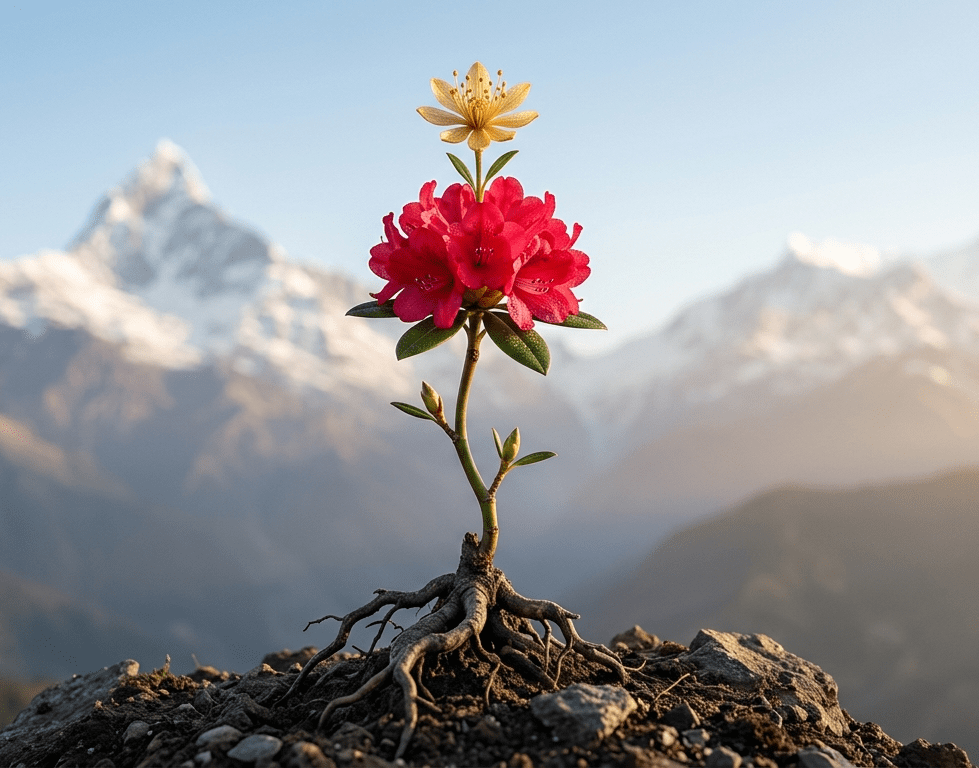
Every great forest begins with a single seed buried in darkness. For instance, in 1816, the Treaty of Sugauli forced Nepal into a contraction—a territorial pruning that, like a plant stem cut by a gardener’s blade, triggered an unexpected response.
Moreover, botanists now understand that when a plant suffers mechanical wounding, it releases calcium ions as distress signals, activating receptor-like kinases that marshal the plant’s entire defense architecture.
Consequently, Nepal’s political wounding in 1816 was precisely such a signal. Although the nation was stripped of nearly one-third of its territory, it did not wither. Instead, it activated its deep rhizome—the underground network of cultural memory, ethnic diversity, and monarchical tradition.
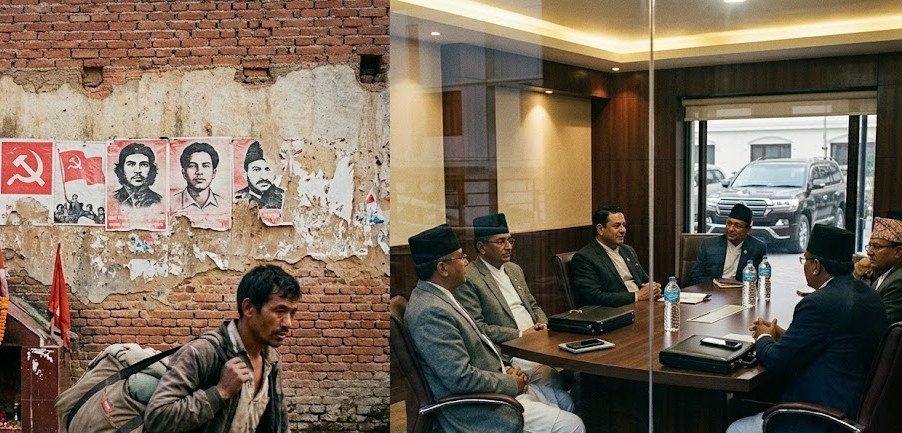
To be sure, the Rana oligarchy that followed was not democracy; nevertheless, it was a structural adaptation, much like lignin deposition in a plant stem: rigid, defensive, and necessary for survival in a hostile environment. In short, the seed of democratic consciousness had been planted, though it would lie dormant for over a century, waiting for the right season.
Furthermore, a seed does not germinate the moment it touches soil. Rather, it waits. Specifically, it senses moisture, temperature, and light. In the same way, Nepal’s democratic seed remained dormant through the Rana autocracy (1846–1951), a period of deep winter for political freedom.
Yet beneath the frozen surface, metabolic processes continued. Eventually, the 1950 revolution became the first crack in the seed coat—the emergence of the radicle, the first root seeking water and nutrients.
However, the constitutional monarchy established in 1951 was not a flowering democracy; rather, it was a cotyledon, a primitive leaf providing just enough photosynthetic energy to sustain early growth. For this reason, botanists call this phase “etiolation”—growth in darkness, where stems stretch long and pale, searching for light.
As a result, Nepal’s early democratic institutions were etiolated: fragile, pale, and easily bent by the winds of palace intrigue. Subsequently, the Panchayat system (1960–1990) emerged as a false spring, a period of arrested development where the plant was trained along a trellis of authoritarian design rather than allowed to grow toward natural light.
In contrast, the democratic movement of 1990 was Nepal’s true photoperiodic response. Namely, when day length crossed a critical threshold, when the collective consciousness of the Nepali people sensed that the season had changed, the plant flowered.
Indeed, the 1990 constitution was not merely a political document; above all, it was an inflorescence, a cluster of democratic blooms attracting pollinators from across the political spectrum. Notably, botanists observe that flowering is the most energy-intensive phase of a plant’s life cycle.
In particular, it requires stored carbohydrates, optimal hormonal balance, and precise environmental cues. Therefore, Nepal’s 1990 flowering consumed enormous social energy. To illustrate, the multi-party system was the corolla, the petals that attracted diverse political insects—trade unions, civil society, ethnic movements, and student organizations.
In turn, each carried pollen: ideas of federalism, secularism, inclusion, and human rights. On the other hand, flowering is also the most vulnerable stage. After all, a late frost, a sudden storm, or a parasitic invasion can destroy the entire reproductive effort. Unfortunately, Nepal’s democratic flower would face all three.
Then, in 1996, the Maoist insurgency arrived like Cuscuta pentagona—the field dodder, a parasitic vine that wraps around host plants and extracts their nutrients through haustoria. In fact, recent botanical research has revealed that plants attacked by Cuscuta mount a sophisticated immune response, increasing jasmonic acid and salicylic acid levels, triggering hypersensitive-like responses, and even deploying trichomes as physical barriers. Similarly, Nepal’s democratic plant responded in kind.
To be specific, the state apparatus, however imperfect, began producing defensive compounds: the RNA of dialogue, the proteinase inhibitors of security measures, and the oxidative burst of development initiatives. Even so, parasitic plants are evolutionarily advanced; worse still, they can suppress host defenses and even manipulate host signaling pathways.
Thus, the Maoist insurgency, for a decade, did precisely this—exploiting the nutrient-rich tissues of a young democracy, draining its resources, and forcing the host to divert energy from growth to defense.
Most tragically, the 2001 palace massacre was the equivalent of a pathogen breaching the cell wall, releasing damage-associated molecular patterns that triggered a nationwide calcium influx—a surge of shock, grief, and reactive oxygen species of public outrage.
Thankfully, the Comprehensive Peace Agreement of 2006 was Nepal’s systemic acquired resistance (SAR)—a broad-spectrum, long-lasting immune enhancement induced by prior exposure to pathogen stress. In plants, SAR is mediated by salicylic acid signaling and the NPR1 protein, which activates a battery of pathogenesis-related genes.
By the same token, Nepal’s SAR was activated by a decade of conflict. As a result, the monarchy was pruned away entirely in 2008. In other words, federalism, secularism, and republicanism became the new defense proteins—PR-1, PR-2, and PR-5 of the political genome.
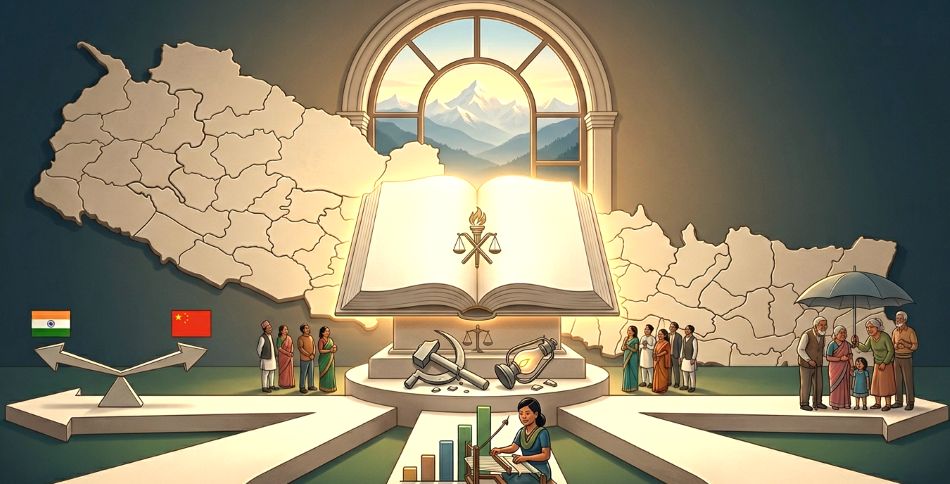
Meanwhile, the 2015 constitution emerged as the lignified secondary cell wall, providing structural rigidity and resistance to future biotic and abiotic stresses. Additionally, botanists have recently discovered that cell wall integrity is not merely passive armor; on the contrary, it is an active surveillance system.
Specifically, wall-associated kinases (WAKs) detect oligogalacturonides—breakdown products of pectin—and trigger calcium-dependent signaling cascades. By analogy, Nepal’s federal structure functions similarly: when any provincial cell wall is damaged, the entire organism senses it and mounts a coordinated response.
In essence, democracy, at its best, is a medicinal herb garden. To put it another way, each institution is a different species with distinct therapeutic properties. For example, the judiciary is Withania somnifera—ashwagandha, the adaptogen that reduces cortisol levels of social stress and restores homeostasis.
Likewise, the legislature is Curcuma longa—turmeric, with its anti-inflammatory curcuminoids that reduce the swelling of ethnic grievances and the pain of historical marginalization. Similarly, the free press is Andrographis paniculata—kalmegh, the bitter herb that purifies the blood of corruption and stimulates the liver of public accountability.
In the same vein, the electoral commission is Tinospora cordifolia—giloy, the immunomodulator that enhances the body’s ability to distinguish self from non-self, ensuring that only legitimate votes are counted and foreign interference is rejected.
Ultimately, each herb works in synergy. After all, no single plant can cure all diseases. Therefore, the constitution is the Ayurvedic formulation—the rasayana that combines these herbs in precise proportions, ensuring that the whole is greater than the sum of its parts.
Moreover, one of the most exciting recent discoveries in botany is transgenerational induced resistance: when a mother plant is attacked by herbivores, her offspring emerge with enhanced defenses, primed for battle. In other words, this is epigenetic memory—changes in DNA methylation patterns that persist across generations without altering the genetic sequence itself.
Not surprisingly, Nepal’s democratic plant possesses precisely this memory. To elaborate, the sacrifices of the 1950 revolution, the martyrs of the 1990 movement, and the victims of the People’s War have methylated the political DNA of the nation. Consequently, today’s youth inherit not just a constitution, but a primed immune system.
As a result, they are more sensitive to authoritarian threats, more responsive to civic calls, and more resilient to the toxins of populism. In fact, the RNA interference pathways of Nepali civil society are already producing small interfering RNAs that silence the messenger RNAs of hate speech and division.
Indeed, this is not merely metaphor; rather, it is the biological reality of how societies evolve. In conclusion, trauma, properly metabolized, becomes resistance.
Most importantly, the latest breakthrough in plant immunology—published in 2025—reveals the structure of resistosomes: supramolecular complexes formed by NLR (nucleotide-binding, leucine-rich repeat) proteins.
Specifically, when activated, these resistosomes assemble into pentameric calcium-permeable channels or tetrameric NADase complexes, producing secondary messengers that trigger rapid, localized cell death to confine pathogen spread. For this reason, Nepal must build its own resistosomes.
To clarify, the independent judiciary, the constitutional bodies, the free press, and the vibrant civil society are the NLR proteins of the nation. Consequently, when an external parasite—a foreign power, a corrupt oligarchy, or an extremist ideology—attempts to breach the national cell membrane, these resistosomes must assemble with lightning speed.
Admittedly, the hypersensitive response is not pleasant; indeed, it involves sacrifice, confrontation, and temporary damage. Nevertheless, it is the only mechanism that prevents systemic infection. For instance, the 2015 blockade was such a breach; therefore, the nation’s resistosomes activated, and though the economic tissue suffered localized necrosis, the pathogen was contained.
In sum, the lesson is clear: democracy must invest in its NLR diversity, ensuring that no single point of failure can collapse the entire defense architecture.
Finally, the ultimate goal is not an annual democracy that must be replanted every election cycle, but a perennial democracy—deep-rooted, winter-hardy, and capable of regenerating from its crown year after year. To begin with, perennial plants invest heavily in root systems.
Furthermore, they form mycorrhizal networks, sharing nutrients and information with neighboring plants through fungal hyphae. Therefore, Nepal’s democracy must become mycorrhizal: connected to the democratic networks of South Asia and the world, sharing phosphorus and nitrogen of best practices, warning signals of authoritarian backsliding, and the sugars of economic cooperation.
In the end, the sun of globalization, the moon of cultural identity, and the seasons of electoral cycles will continue to test this plant. However, if the roots are deep, if the immune system is primed, if the medicinal herbs are cultivated with care, and if the resistosomes remain vigilant, then Nepal’s democratic species will not merely survive—it will evolve.
Ultimately, it will produce new cultivars, adapted to the unique soil of the Himalayas, resistant to the pests of the twenty-first century, and capable of healing not just its own wounds, but offering shade and medicine to the entire region. In closing, the seed planted in 1816 has become a sapling. With patience, science, and stewardship, it will become a forest.
I have been working on the trends of the Nepalese Foreign Policy as the existing global order gets gradually altered in 21st century world ..
I have been working on the trends of the Nepalese Foreign Policy as the existing global order gets gradually altered in 21st century world. I am an MA in English and MPhil in International Relations a...
@ Copyright matrikapoudyal.com All Rights Reserved
Designed by Fortune Info Tech