


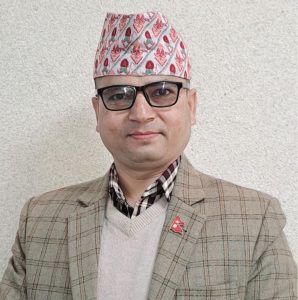
I have been working on the trends of the Nepalese Foreign Policy as the existing global order gets gradually altered in 21st century world ...
Mother democracy carries two lives in her womb. They are not identical.
They are dizygotic twins. One is freedom of the press. The other is individual liberty.
They share one mother, but they carry different maps in their blood.
Press freedom speaks in public squares. It prints words. It broadcasts voices. Individual liberty whispers in private rooms. It thinks. It believes. It chooses alone. Both come from the same democratic mother, yet their genetic codes serve different purposes.
In Nepal, these twins have been conceived, suppressed, born, wounded, and reborn across generations. Their story is the story of the republic itself.
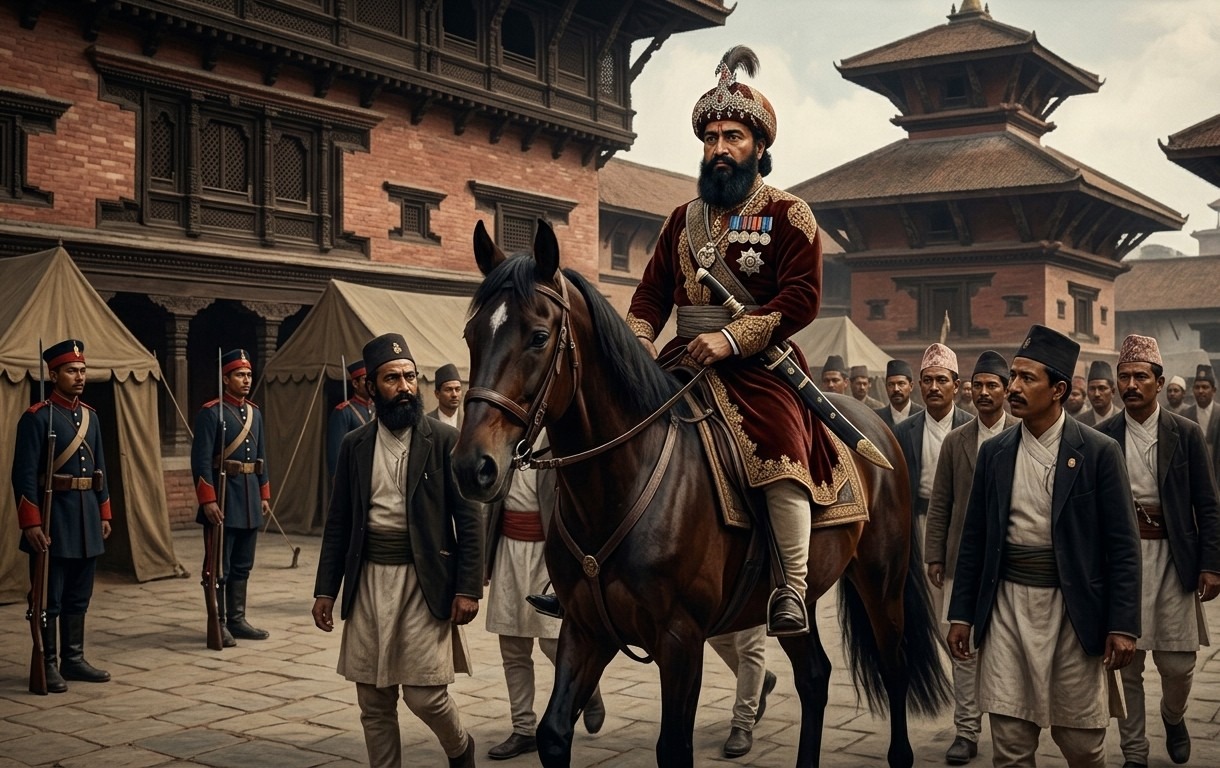
The first gestation was long and dark. Between 1960 and 1990, the Panchayat regime treated the twins as dangerous mutations. The absolute monarchy sealed the national laboratory.
The press was not free; it was an organ of the state, pumped through the Nepal Rashtriya Samachar Samiti. Individual liberty existed only in the silent spaces of private homes, shared in whispers over tea.
The 1962 constitution offered the language of rights while criminalizing the exercise of those rights. Economically, Nepal stagnated in isolation. Socially, fear became the dominant protein. The twins were not permitted to develop. They were kept in a state of arrested cellular division, frozen by the cold of autocracy.
The 1990 People’s Movement was the first successful fertilization. The absolute monarchy fell, and a new constitution wrote protections into the national DNA for the first time. Press freedom gained constitutional recognition.
Private newspapers emerged—Kantipur, The Kathmandu Post—Annapurna Post, among others, and with them, a new public consciousness. Individual liberty was no longer merely a private whisper; it became a public argument. The economy liberalized alongside the politics. Foreign investment trickled in.
Civil society expanded. The twins had been born into constitutional recognition, but they remained premature. They needed incubation. They needed an environment free from the toxins of authoritarian habit.
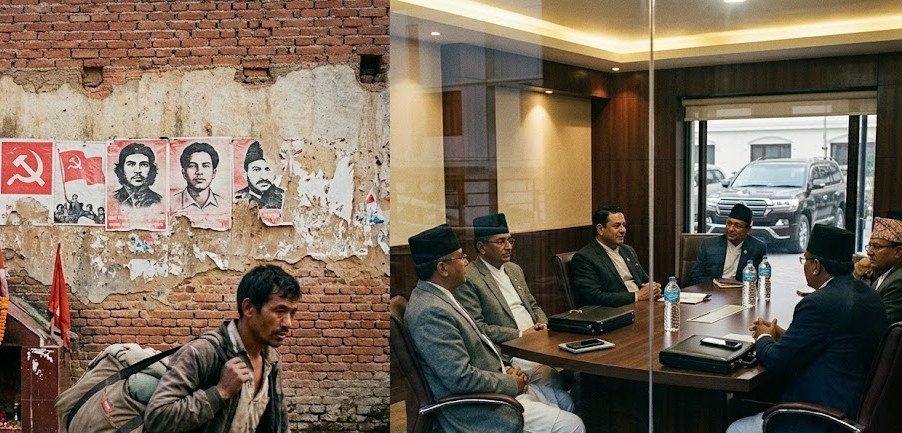
What followed was a decade of chromosomal damage. The Maoist insurgency, beginning in 1996, forced the state into a state of permanent emergency. Security became the overriding genetic instruction, and in the name of order, both twins were wounded. Journalists were arrested.
Media houses were attacked. Individual liberties were suspended in conflict zones across the nation. The crossover between liberty and security became toxic. Thousands of citizens perished. The economy bled. Yet even in this darkness, the genetic line survived.
Underground media, citizen journalists, and brave human rights defenders kept the democratic genome from dying out entirely. The twins were scarred, but they were still alive.
The 2006 Jana Andolan II was a corrective mutation. The monarchy was abolished. The interim constitution of 2007 expanded the bill of rights beyond anything Nepal had seen before.
Press freedom exploded into new forms: dozens of FM stations, television channels, and digital platforms emerged. Individual liberty gained broader protections against arbitrary detention and state violence.
Federalism was conceived as a way to devolve power and protect diversity. Economically, remittances from a global diaspora fed the national cell. Socially, a new generation grew up expecting to speak and to be heard. The twins grew stronger, nourished by openness and global connectivity.
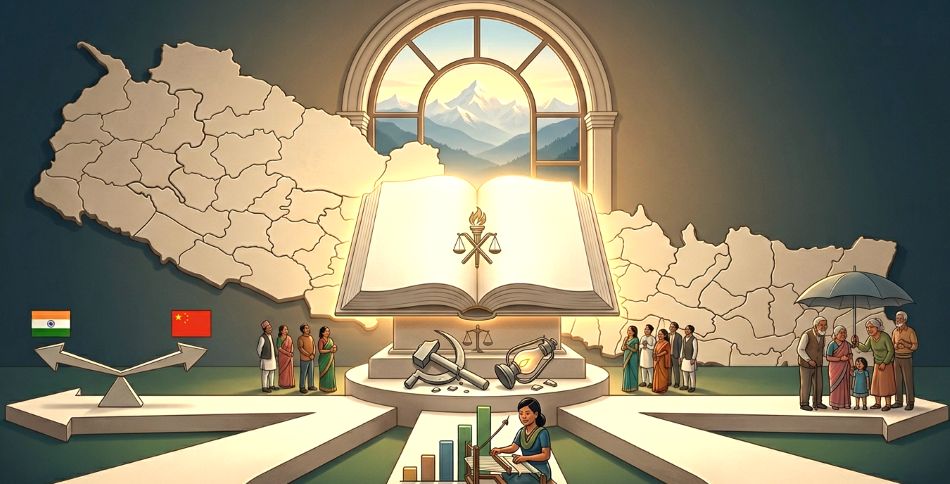
The 2015 constitution was the full genome sequence. For the first time, the democratic DNA was written with deliberate care. Freedom of opinion and expression was guaranteed. The right to live with dignity was inscribed. Federalism restructured the state into a more complex, multi-layered organism.
However, a constitution is only the genotype. The phenotype—the actual expression of those rights—depends entirely on the environment.
And the environment remained challenging. Economic blockades, political instability, and the slow construction of federal institutions meant that the twins had strong constitutional genes but a weak institutional placenta.
They needed more than paper promises. They needed courts that would defend them, parliaments that would nurture them, and executives that would respect their separate identities.
Then came the digital revolution, introducing new genetic material into an already complex sequence. Social media became the new public square, and with it came both opportunity and threat.
In 2025, the state’s attempt to regulate this space—through platform bans and restrictive legislation—triggered a generational immune response. Youth, who had grown up digital, took to the streets. The state answered with force. The crossover between liberty and order became violent. Lives were lost. The parliament witnessed flames.
Prime Minister KP Sharma Oli’s government faced an existential crisis of legitimacy. The twins, who should have been nurtured, were instead suffocating in the womb of a state that had forgotten how to protect without destroying.
Today, the national genome faces new editing tools. The Media Council Bill and the Information Technology Bill still wait in the legislative queue. They carry the potential to mutate press freedom into a controlled privilege rather than a fundamental right.
In February 2026, UNESCO gathered Nepal’s policymakers in Kathmandu to discuss artificial intelligence and social media governance. The message was clear: transparency and human oversight must guide the digital age. The challenge is surgical.
The state must remove the cancer of misinformation without killing the host of free expression. Law and order must function as protective proteins, strengthening the cellular membrane. They must not become autoimmune toxins that attack the democratic body itself.
Democracy lives only when both twins breathe. Nepal’s history proves this with terrible clarity. The Panchayat era killed both and stagnated the nation. The 1990 opening gave them birth and released economic energy. The conflict years wounded them and bled the country dry.
The 2006 restoration and the 2015 constitutional promise offered a new genomic blueprint. Now, the digital age demands a new meiosis. The crossover between press freedom and individual liberty must enrich both siblings, not mutate them into dependence on state permission.
Law and order must serve as nurturing membranes, not invasive toxins. The mother republic must not choose one child over the other. She must love both equally. The genome of the Nepali state is healthiest when freedom of the press and individual liberty remain distinct, respected, and radically free.
I have been working on the trends of the Nepalese Foreign Policy as the existing global order gets gradually altered in 21st century world ..
I have been working on the trends of the Nepalese Foreign Policy as the existing global order gets gradually altered in 21st century world. I am an MA in English and MPhil in International Relations a...
@ Copyright matrikapoudyal.com All Rights Reserved
Designed by Fortune Info Tech