

I have been working on the trends of the Nepalese Foreign Policy as the existing global order gets gradually altered in 21st century world ...
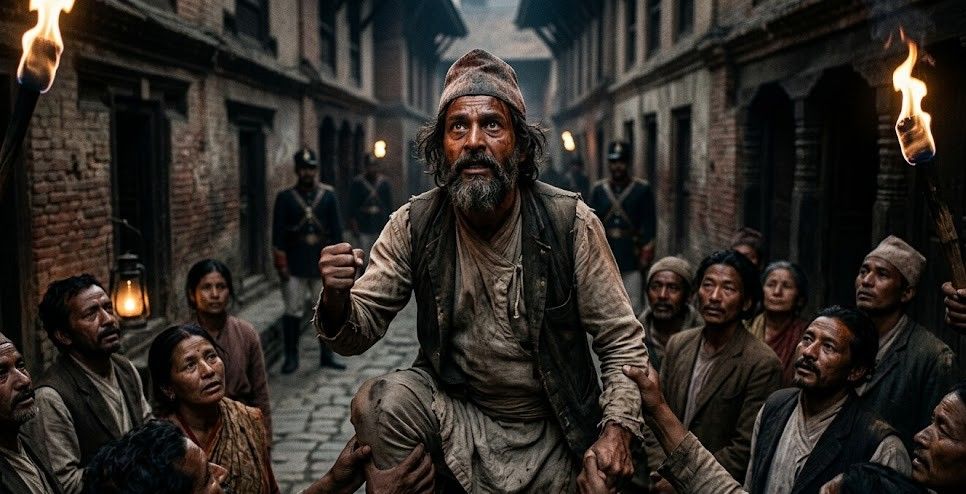
Bahula Kaji dreams of order. He dreams of dignity. He dreams of a world where the weak are lifted, not left to fade. The ordinary Nepali dreams the same dream. They dream of fair governance. They dream of laws that shield. They dream of a state that sees their tears.
In the hushed corridors of Nepali literature, where the pen has always served as a silent sword against tyranny, Bijaya Malla’s Bahula Kajiko Sapana stands as a luminous testament to the human capacity for hope.
Written in the twilight of the Rana era, this dramatic masterpiece introduces us to Bahula Kaji, a man whom the powerful dismiss as mad, yet whose dreams pulse with the clarity of prophecy.
He is not merely a character confined to the stage; he is the eternal conscience of a nation, whispering across generations that another world is possible. Indeed, his visions transcend the footlights of theater and echo in the quiet longings of every Nepali household that has ever dared to imagine justice.
Bahula Kaji dreams with his eyes wide open. He dreams of a Nepal where poverty is not a birthright but a fading memory, where a brilliant boy like Bire does not perish for want of medicine and schooling, and where the scales of equality are not tipped by the cruel weight of caste and class.
His is a dream of radical tenderness—a society where the sick are healed, the ignorant are taught, and the downtrodden are lifted by the sheer force of collective compassion.
When he declares that he would even become an atheist if God stood between the poor and their liberation, he articulates a love for his country so fierce that it shatters the boundaries of conventional piety. His dream is not of palaces and power; it is of dignity woven into the very fabric of everyday life.
Similarly, the ordinary householder of modern Nepal nurtures a dream that rhymes with the Kaji’s ancient song. The farmer in the terraced hills, the laborer in the baking brick kilns of the plains, and the mother in the crowded alleys of Kathmandu all share a single, stubborn vision: a governance that serves rather than preys, a welfare state that catches its citizens before they fall, and a rule of law that does not bow before the rich and trample the poor.
They dream of schools that teach, hospitals that heal, and courts that judge with blind impartiality. Like Bahula Kaji, they do not ask for the moon; they ask only for the earth beneath their feet to be steady, fair, and fertile.
In the same vein, the analogy between the Kaji’s visionary madness and the citizen’s quiet hope is unmistakable and profound. Both are rooted in the same soil of historical injustice; both are watered by the tears of the excluded; and both are deemed inconvenient by those who feast at the table of power.
Bahula Kaji was called mad because he refused to accept the Rana world as inevitable. Today, the common Nepali who demands clean water, fair wages, and accountable leadership is labeled a troublemaker, a protester, an obstacle to “development.”
The vocabulary of oppression changes its accent, but its grammar remains cruelly consistent. The dreamer and the citizen are twin souls separated only by the century that divides them.
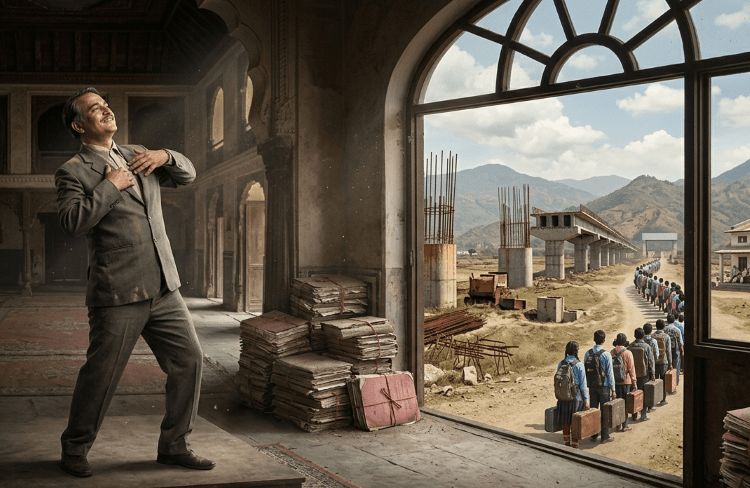
Nevertheless, the waking reality of Nepal presents a stark and painful contrast to these luminous dreams. The ordinary citizens, far from being recognized as the sovereign heart of the republic, have been reduced to the mere customers in a marketplace rigged by illicit merchants who hoard essential goods and inflate prices on the breath of the needy. They are the taxpayers who feed a sluggish bureaucracy that moves with the speed of glaciers and the appetite of a furnace.
Above all, they are the voters whose voices are harvested every few years by corrupt politicians, only to be silenced by the roar of their motorcades and the indifference of their mansions. The citizens are not the participants in democracy, but the commodities consumed by it.
Consequently, the streets of Nepal have become the stage where the drama of disillusionment is performed anew. From the Tarai to the hills, from the youth in denim to the elders in daura-suruwal, the people take to the asphalt with a courage that mirrors the Kaji’s defiant spirit.
They protest not because they love chaos, but because they love order—an order where contracts are honored, where public funds build bridges rather than palaces, and where a certificate of citizenship actually means something.
Their placards are poems of pain; their chants are hymns of hunger for a governance that remembers its first promise. They march, and in marching, they keep the Kaji’s dream alive through the only language the powerful seem to understand: the language of relentless presence.
Yet, there is a profound tragedy in this parallel. Bahula Kaji’s dream was shattered by the death of Bire, the bright boy who symbolized the future that never came.
In our time, the dream is shattered daily by the slow death of institutions. The visionary is called mad, and the victim is called lazy. The dream, however, is not defeated by its own impossibility; it is murdered by the very structures that should nurture it.
When a mother watches her child fade for lack of medicine, when a graduate sells vegetables because merit has no patron, and when a widow’s pension vanishes into the labyrinth of red tape, Bire dies again and again in Nepal.
Furthermore, the economic and social architecture of this betrayal demands our sharpest scrutiny. The nexus of corrupt rulers, predatory politicians, and entrenched bureaucracy has constructed a system where basic necessities are not rights but privileges, dispensed through networks of patronage and graft.
The hardworking Nepali are not the citizens; they are the revenue stream. The entrepreneurs are not the partners in progress; they are the supplicants at the door of permits and bribes. The students are not the future; they are but the statistics to be forgotten.
In this calculus, Bahula Kaji’s dream of equality is not naive; it is revolutionary, for it threatens the very foundation of a system built on manufactured scarcity and controlled deprivation.
So, the rational conclusion is as clear as the Himalayan sky after monsoon. The dream of Bahula Kaji and the dream of the ordinary Nepali are not relics of a bygone literature or futile fantasies of the powerless; they are the blueprint of a nation that has yet to be built.
Nepal does not need new dreams; it needs the courage to realize the old ones. When governance becomes service, when law becomes shield, and when the downtrodden are embraced as citizens rather than managed as subjects, then and only then will the Kaji’s sapana awaken from its long slumber. Until that dawn, the dream remains the truest patriotism, and the street remains the truest parliament.
I have been working on the trends of the Nepalese Foreign Policy as the existing global order gets gradually altered in 21st century world ..
I have been working on the trends of the Nepalese Foreign Policy as the existing global order gets gradually altered in 21st century world. I am an MA in English and MPhil in International Relations a...
@ Copyright matrikapoudyal.com All Rights Reserved
Designed by Fortune Info Tech