


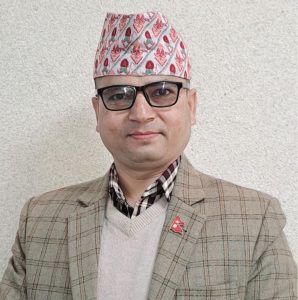
I have been working on the trends of the Nepalese Foreign Policy as the existing global order gets gradually altered in 21st century world ...
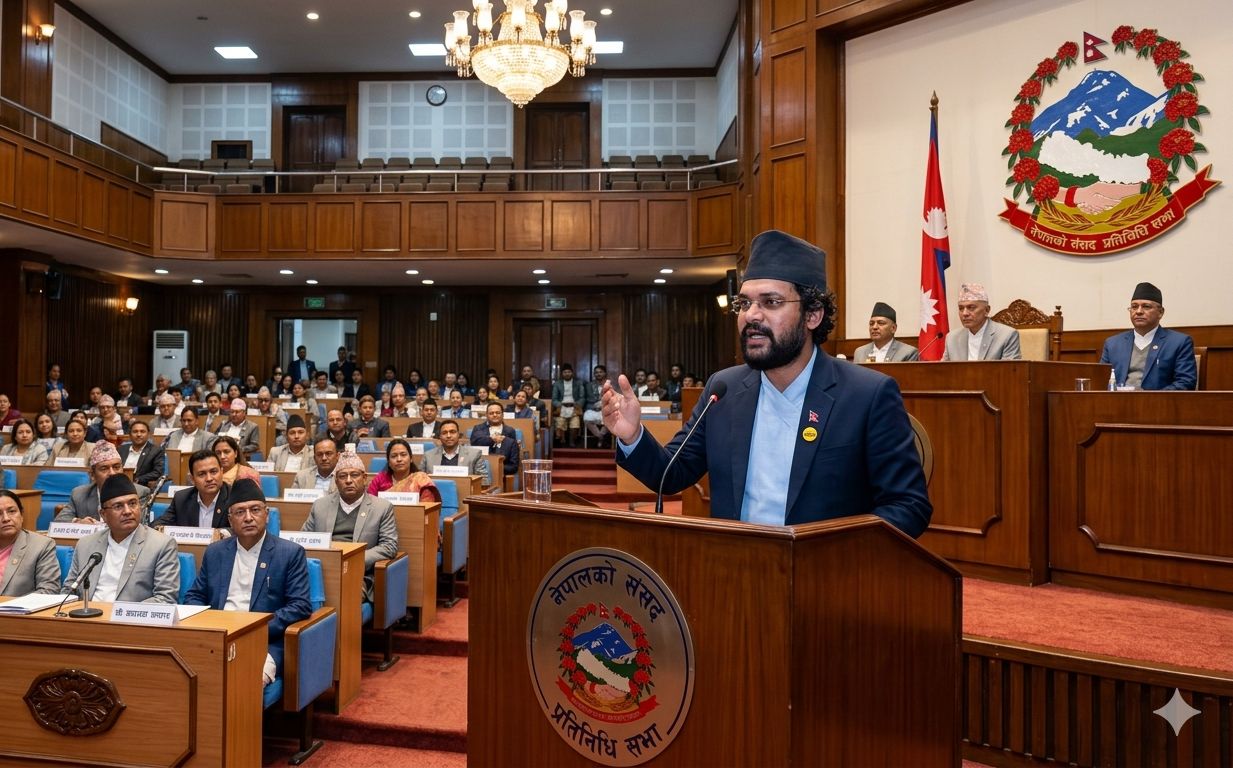
The democratic mandate of March 2026 has ushered Nepal into uncharted territory. The Rastriya Swatantra Party’s resounding victory—delivering the premiership to the youthful Balendra Shah, a former mayor and civil engineer with limited exposure to the labyrinthine protocols of statecraft, while vesting substantial party control in Rabi Lamichhane, a media personality whose political apprenticeship has been forged in the crucible of anti-establishment populism rather than the quiet corridors of diplomatic tradition—represents a generational rupture.
This rupture becomes all the more consequential when one surveys the cabinet in Kathmandu: a Foreign Minister, Shishir Khanal, whose distinguished background in education reform offers scant preparation for the granular complexities of Himalayan geopolitics; and a Finance Minister, Dr. Swarnim Wagle, whose technocratic credentials are beyond reproach yet whose political dexterity remains largely untested in the arena of bilateral negotiation.
Across the southern border, India presents a study in stark contrast. Prime Minister Narendra Modi, now in his third term, presides over a political machinery of formidable institutional memory.
He is flanked by a Home Minister, Amit Shah, whose reputation as a master strategist is matched by decades of legislative and organizational experience; a Finance Minister, Nirmala Sitharaman, who in 2026 presented her ninth consecutive Union Budget, embodying a continuity of fiscal stewardship rare in contemporary democracies; and an External Affairs Minister, Dr. S. Jaishankar, a former Foreign Secretary whose diplomatic instincts are honed by decades of global engagement.
The BJP itself, now under the presidency of Nitin Nabin—a five-time legislator and former cabinet minister who rose through the disciplined hierarchies of the ABVP—represents an organizational depth that absorbs individual inexperience rather than amplifying it.
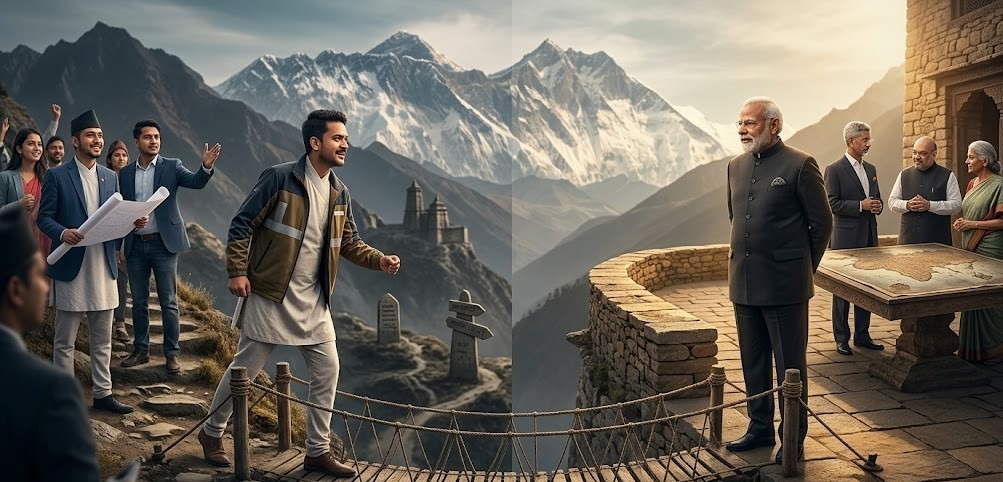
This is not merely a contrast in personalities; it is an asymmetry of institutional ecosystems. And in international relations, such asymmetries, when unacknowledged, breed strategic blunders.
The Perils of the Learning Curve
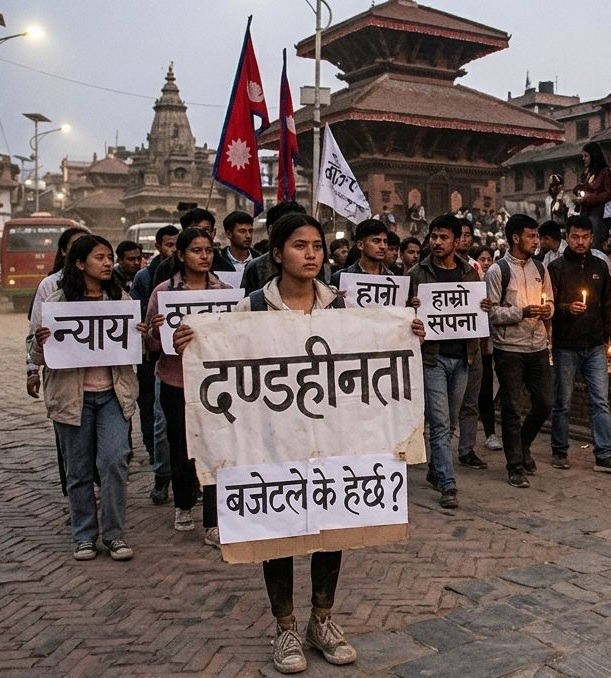
Nepal’s new leadership enters office with an undeniable mandate for reform. The Gen-Z movement that catalyzed the 2025 uprising and precipitated the electoral earthquake demanded an end to corruption, gerontocracy, and dynastic privilege.
Yet the very virtues that propelled the Rastriya Swatantra Party to power—impatience with institutional inertia, suspicion of traditional political craft, and a preference for technocratic solutions—may prove hazardous when transposed onto the delicate plane of foreign policy.
The first potential blunder lies in the misreading of strategic patience as diplomatic vacillation. India’s seasoned leadership has demonstrated, across multiple governments, a capacity to absorb rhetorical provocation and wait for the tempering effects of reality.
Nepal’s novice leadership, accustomed to the immediacy of media cycles and municipal governance, may interpret India’s restraint as weakness or indifference. This would be a grave miscalculation. New Delhi’s institutional memory spans decades; it has navigated Nepal’s monarchical transitions, Maoist insurgencies, federal experiments, and constitutional crises.
A government in Kathmandu that mistakes India’s long-game temperament for passivity may overreach—whether by inflating territorial claims in the Kalapani–Lipulekh–Limpiyadhura matrix or by prematurely challenging the 1950 Treaty of Peace and Friendship—only to discover that India’s patience is not infinite, merely calibrated.
The second risk is the temptation to deploy populist nationalism as a domestic governance tool without comprehending its external costs. Mr. Lamichhane’s media career was built on confrontational transparency—a style that electrifies domestic audiences but corrodes diplomatic trust.
If the RSP leadership continues to treat relations with India as a theatrical performance for Nepali constituencies, oscillating between emotional appeals to sovereignty and pragmatic requests for assistance, New Delhi’s bureaucratic establishment will simply slow-roll engagement.
The result will not be confrontation, but a quiet, costly disengagement: delayed cross-border infrastructure, stalled hydropower negotiations, and a cooling of the “Roti-Beti” civilizational warmth that has long underpinned the open border.
The Technocratic Mirage
Dr. Swarnim Wagle’s appointment as Finance Minister embodies a paradox. His academic pedigree—London School of Economics, Harvard, and service at the UNDP—and his tenure at Nepal’s National Planning Commission suggest a mind capable of sophisticated macroeconomic design.
Yet finance in a landlocked, asymmetrically integrated economy is not merely an economic function; it is a political art. Nepal’s trade deficit with India exceeds 64 percent of its imports, and its exports to India remain below 10 percent of bilateral trade.
The Indian Finance Ministry, under Ms. Sitharaman, understands that trade negotiations with Nepal are inseparable from Bihar’s agricultural politics, Uttar Pradesh’s industrial lobbies, and the strategic imperative of securing India’s northern frontier.
A purely technocratic approach—one that treats transit rights, currency exchange mechanisms, and hydropower tariffs as optimization problems solvable by econometric models—risks ignoring the political economy that governs India’s South Asia policy.
The 2015 blockade, whether perceived in Kathmandu as deliberate coercion or administrative dysfunction, taught a painful lesson: Nepal’s economic sovereignty is bounded by geography. If Dr. Wagle pursues fiscal reforms or trade diversification—particularly toward China—without embedding them in a sophisticated understanding of Indian domestic politics, he may trigger precisely the informal economic resistance that technocrats are least equipped to manage.
The recent RBI reforms permitting Indian banks to lend in INR to Nepali entities represent an opportunity for deeper monetary integration; mishandling this through ideological rigidity or bureaucratic naivety would be a self-inflicted wound.
The Foreign Minister’s Dilemma
Mr. Khanal’s transition from education advocacy to the stewardship of Nepal’s external relations is perhaps the most vertiginous leap. Foreign policy in the Himalayas is not a matter of goodwill or developmental intent; it is the management of existential contradictions.
Nepal must simultaneously reassure India of its strategic non-threatening posture while asserting sovereign agency; it must engage China’s Belt and Road Initiative without triggering India’s security paranoia; it must manage the water diplomacy of the Mahakali, Koshi, and Gandak basins while recognizing that India’s northern states view these rivers through the prism of survival, not mere cooperation.
An inexperienced foreign minister, lacking the intuitive understanding of India’s red lines—particularly regarding security, the open border, and Chinese military-adjacent infrastructure—may commit the third strategic blunder: the amateurish playing of the China card.
Nepal’s traditional parties, for all their faults, developed a tacit understanding of the limits of Beijing’s utility. China offers capital without conditionality, but it cannot offer transit, markets, or cultural intimacy.
A novice foreign minister who rushes to sign opaque infrastructure agreements or security-adjacent protocols with Beijing, believing this creates leverage against New Delhi, will discover that India’s response is neither loud nor immediate. It is structural: a reorientation of Indian investment toward Bhutan and Bangladesh, a tightening of informal border regimes, and a distancing from Nepali security institutions. The suffering this induces will not be dramatic; it will be chronic—a slow constriction of economic oxygen.
The Suffering of Zigzags
The most debilitating cost of this leadership asymmetry will be diplomatic zigzagging—the oscillation between populist confrontation and supplicant appeals that characterizes immature statesmanship.
Nepal’s new government has already signaled contradictory impulses: Mr. Lamichhane’s pledge to prioritize “development diplomacy” and connectivity with India, juxtaposed against the RSP’s broader nationalist rhetoric and the Prime Minister’s own background as an anti-establishment disruptor.
If Kathmandu’s messaging shifts with every domestic political pressure—one month asserting cartographic claims, the next requesting Indian investment, the third flirting with Chinese credit—New Delhi will simply institutionalize a posture of benign neglect.
The suffering will cascade across multiple dimensions. Economically, Indian private capital, already cautious since the 2015 disturbances, will retreat further, leaving Nepal dependent on Chinese state-backed loans with less transparent terms. In security terms, the porous more than 1,770-kilometer border, which requires constant micro-coordination on issues from counterfeiting to human trafficking, will experience friction as Indian agencies reduce informal cooperation.
In the hydropower sector, where Nepal’s greatest unrealized wealth lies, Indian firms will hesitate to commit to long-term projects like Pancheshwar or Arun III if policy continuity appears uncertain.
Most critically, the nearly two million Nepali citizens working in India and the Gulf—whose remittances constitute the sinews of Nepal’s economy—will find their pathways increasingly subject to bureaucratic caprice if political trust erodes.
A Strategic Vision for Future Nepal
To avoid this trajectory, Nepal’s new leadership must undergo a rapid, self-conscious institutional maturation. The following strategic recalibrations are imperative:
First, depoliticize the instruments of statecraft. The Foreign Ministry and the National Planning Commission must be shielded from the daily tempests of parliamentary politics. Mr. Khanal should surround himself with career diplomats who understand the grammar of India’s federal and party systems, rather than relying on the intuitive instincts of RSP activists.
Second, build a multipartisan India consensus. Nepal’s greatest strategic vulnerability is the tendency of each new government to repudiate its predecessor’s India policy. The RSP, with its fresh mandate, has the rare opportunity to forge a cross-party understanding that relations with India must transcend electoral cycles. This would involve institutionalizing dialogue mechanisms that include not just the Prime Minister and Foreign Minister, but provincial chief ministers whose constituencies border India.
Third, reframe water as shared prosperity. Rather than treating hydropower and river management as zero-sum sovereignty contests, Nepal should propose joint ventures that position Indian states as stakeholders in Nepali water infrastructure. This transforms a bilateral negotiation into a multilateral Indian domestic coalition-building exercise—an arena where Dr. Wagle’s technocratic skills could genuinely shine if paired with political imagination.
Fourth, leverage civilizational diplomacy. The “Roti-Beti” relationship is not sentimental baggage; it is strategic armor. Nepal’s youth-led government should invest in religious tourism circuits, educational exchanges, and cultural infrastructure that bind ordinary Indians and Nepalis in shared enterprise. This creates constituencies in India that have a vested interest in Nepal’s stability, insulating Kathmandu from the whims of Delhi’s bureaucratic mood.
Fifth, accept asymmetric interdependence as a foundation, not a shackles. Nepal will not achieve genuine sovereignty by pretending it can replace Indian transit with Chinese ports. Its sovereignty will be forged by deepening its value-added integration into the Indian economy—moving beyond raw materials to processed goods, services, and digital labor—while simultaneously diversifying its diplomatic partnerships in East Asia and Southeast Asia where India itself seeks balance.
Conclusion
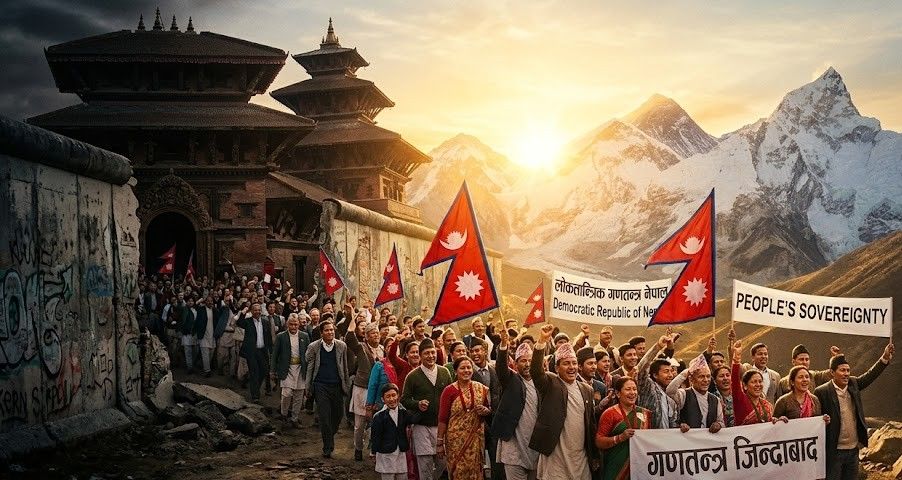
Nepal’s 2026 election was a necessary democratic catharsis. The old guard’s corruption and complacency had forfeited its moral authority. Yet the replacement of sclerotic experience with untested vigor introduces its own perils, particularly when the neighbor to the south possesses not merely experience, but institutionalized wisdom. The Modi government’s warmth toward the new RSP leadership—evidenced by Prime Minister Modi’s personal congratulations and the emphasis on scaling new heights—offers a window of goodwill.
That window, however, is narrow. If Nepal’s new leadership confuses India’s graciousness for deference, if it treats foreign policy as an extension of domestic anti-corruption theater, and if it allows technocratic purity to override diplomatic nuance, the result will not be a sovereign Nepal standing tall between two giants. It will be a Nepal that suffers the quiet agony of diplomatic isolation, economic constriction, and missed historical opportunity. The Himalayas have always demanded humility from those who would govern them. Nepal’s young republic must learn that lesson swiftly, or suffer the consequences of its innocence.
I have been working on the trends of the Nepalese Foreign Policy as the existing global order gets gradually altered in 21st century world ..
I have been working on the trends of the Nepalese Foreign Policy as the existing global order gets gradually altered in 21st century world. I am an MA in English and MPhil in International Relations a...
@ Copyright matrikapoudyal.com All Rights Reserved
Designed by Fortune Info Tech