


I have been working on the trends of the Nepalese Foreign Policy as the existing global order gets gradually altered in 21st century world ...
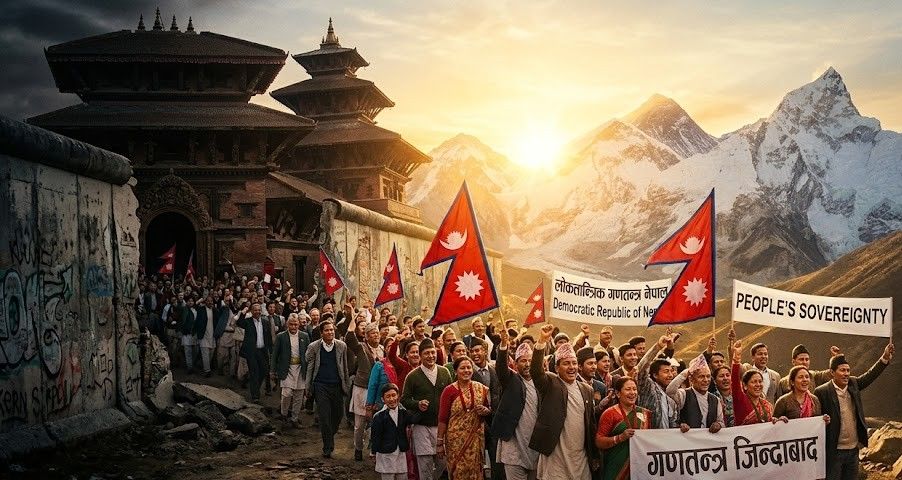
Just as the fall of the Berlin Wall signaled the irreversible march of democratic self-determination across Eastern Europe, Nepal’s proclamation as a Federal Democratic Republic—borne of the sacrifices of the People’s Movement of 2006—marked a civilizational pivot from the shadows of the Durbar to the sunlight of popular sovereignty.
More than a decade and a half later, that republican promise has undergone its most profound stress test, culminating in the transformative mandate of March 2026, when the Nepali electorate, much like the citizens of post-apartheid South Africa choosing reconciliation over retribution, opted for radical renewal over incremental decay.
The republican architecture, much like the Swiss federal model that transformed a confederation of cantons into a cohesive democratic nation, replaced hereditary privilege with an inclusive framework enabling the sons and daughters of ordinary citizens to ascend to the nation’s highest office.
Since that historic proclamation, Nepal has witnessed three heads of state, each embodying the constitutional vision of the President as the supreme symbol of national unity and the vigilant guardian of the constitutional order—a role analogous to the ceremonial presidency of India, where the office stands above the political fray as the conscience of the republic.
Yet, much like the Bourbon monarchs of France who learned nothing and forgot nothing, Nepal’s autocratic Panchayat regime and the subsequent monarchical overreach steered the nation toward the precipice of poverty, policy distortion, and social stratification.
The people’s aspiration for abolition did not emerge from abstract idealism but from the lived reality of systemic failure—a trajectory reminiscent of the Portuguese Carnation Revolution, where decades of authoritarian stagnation necessitated a democratic rupture to unlock human potential and economic modernization.
However, the republican transition, much like the post-Soviet experience in certain republics where the flag changed but the fabric of governance remained threadbare, struggled to translate political emancipation into tangible socio-economic dividends.
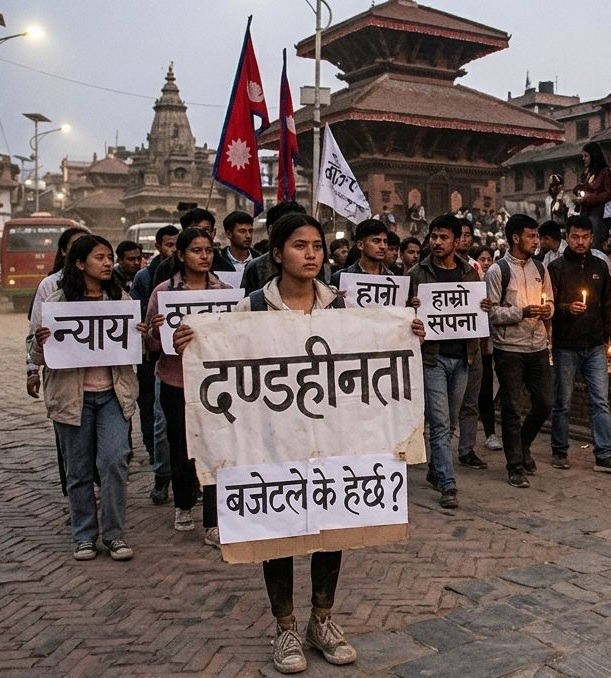
Despite the passage of years, the inability to deliver commensurate improvements in living standards became the republic’s Achilles’ heel—a gap between constitutional promise and kitchen-table reality that found its most articulate expression in the youth-led Gen Z movement of September 2025.
This awakening, echoing the fervor of the 1968 student movements across Paris and Prague, represented not a rejection of republicanism but a demand for its authentic fulfillment.
Regrettably, the traditional political parties—much like the rotating oligarchies of pre-reform Italy—became preoccupied with the arithmetic of power rather than the calculus of public service.
The gerontocracy of the Nepali Congress, CPN-UML, and the erstwhile Maoist Centre degenerated into a system where patronage networks shielded corruption, from the Lalita Niwas land scandal to the fake Bhutanese refugee scheme, and where fifteen government changes since 2012 produced not policy evolution but policy vertigo.
The ballot box, therefore, became the ultimate tribunal—a mechanism of peaceful accountability that the people employed with the precision of a surgeon’s scalpel to remove the tumors of entrenched malfeasance.
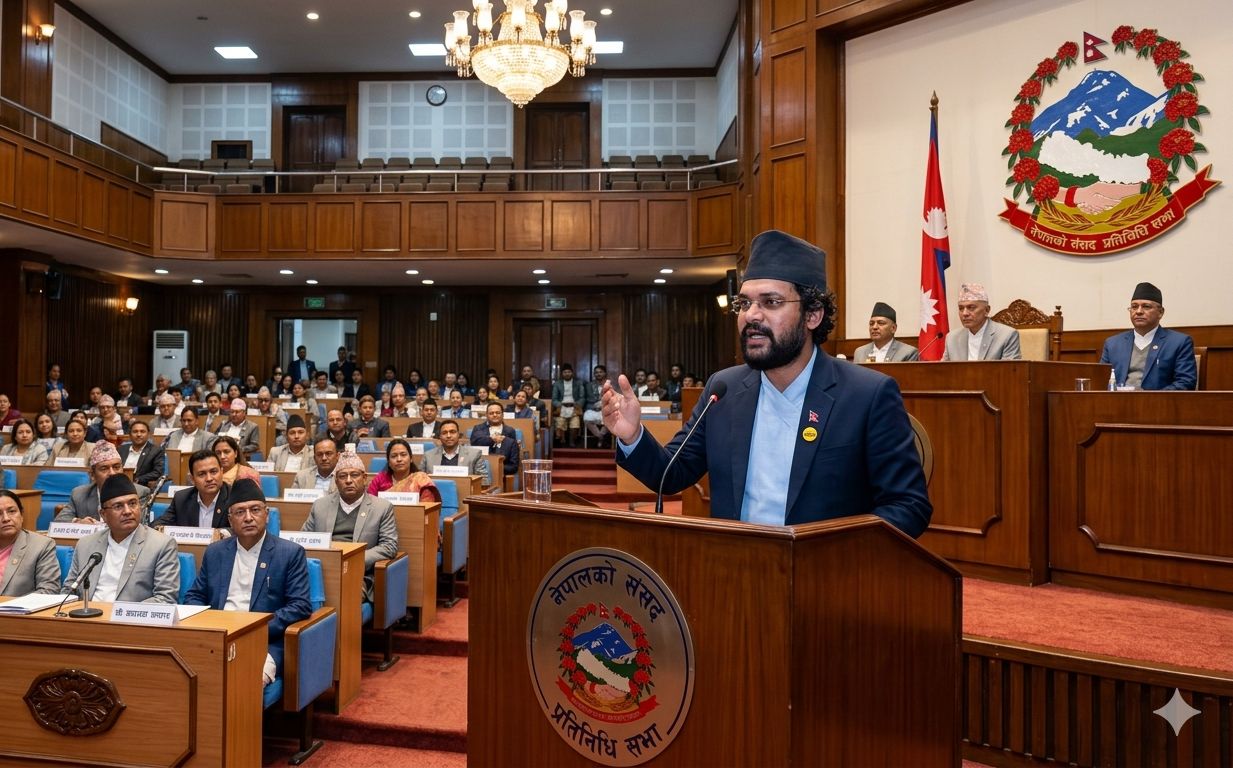
Consequently, in March 2026, the Nepali people delivered a verdict as historic as the 1994 South African election that ended apartheid: the Rastriya Swatantra Party, under the leadership of Prime Minister Balendra Shah—a 35-year-old former mayor of Kathmandu and structural engineer—secured an unprecedented mandate, winning 182 of 275 seats in the House of Representatives.
This was not merely a change of government but a metamorphosis of the political DNA, reminiscent of the rise of anti-establishment movements in post-crash Iceland, where a nation chose to entrust its future to untainted hands rather than recycled leadership.
The subsequent arrest of former Prime Minister K.P. Sharma Oli for accountability in the protest crackdowns signaled that the era of elite impunity had reached its terminus.
For this republican spring to endure, Parliament must transform itself from an arena of partisan gladiatorial combat into a forum of constructive dialogue and national consensus—much like the German Bundestag, where the architecture of debate is designed to produce synthesis rather than schism.
The RSP government’s 100-point roadmap, with its emphasis on de-politicizing the bureaucracy, judiciary, and educational institutions, represents an attempt to dismantle the spoils system that has long corroded state capacity.
Just as Singapore’s post-independence leadership recognized that meritocracy, not patronage, was the precondition for prosperity, Nepal’s new administration must ensure that constitutional bodies function as impartial arbiters rather than extensions of political fiefdoms.
Economically, the mandate demands a decisive break from the extractive patterns that have confined Nepal to the lower rungs of South Asian prosperity.
Finance Minister Swarnim Wagle’s vision of achieving 7–10 percent growth through a “low rates, high revenue” paradigm mirrors the supply-side pragmatism that transformed Ireland into the Celtic Tiger—a model where broadening the tax base and reducing individual burdens can catalyze entrepreneurial energy.
Diplomatically, Prime Minister Shah’s administration must navigate the geopolitical tightrope between India and China with the dexterity of a Singapore or a Switzerland, ensuring that Nepal emerges as a bridge of connectivity rather than a terrain of contestation, while domestically honoring the republic’s socio-cultural mosaic through inclusive governance.
Ultimately, the republic’s survival depends upon an institutional ecosystem where the judiciary, constitutional commissions, and the civil service operate with the independence of a well-calibrated watch mechanism—each gear turning freely yet in harmonious synchronization.
Unless every organ of the state becomes transparent, accountable, and unequivocally people-centered, the true dividends of republicanism will remain as elusive as the horizon.
The sovereignty of Nepal resides not in the grandeur of Singha Durbar nor in the personalities of transient officeholders, but in the collective will of its citizens—a truth that the new government, Parliament, and political forces must honor with the humility of servants and the vision of statesmen, lest the republican flame, so dearly won, flicker in the winds of complacency.
I have been working on the trends of the Nepalese Foreign Policy as the existing global order gets gradually altered in 21st century world ..
I have been working on the trends of the Nepalese Foreign Policy as the existing global order gets gradually altered in 21st century world. I am an MA in English and MPhil in International Relations a...
@ Copyright matrikapoudyal.com All Rights Reserved
Designed by Fortune Info Tech