



I have been working on the trends of the Nepalese Foreign Policy as the existing global order gets gradually altered in 21st century world ...
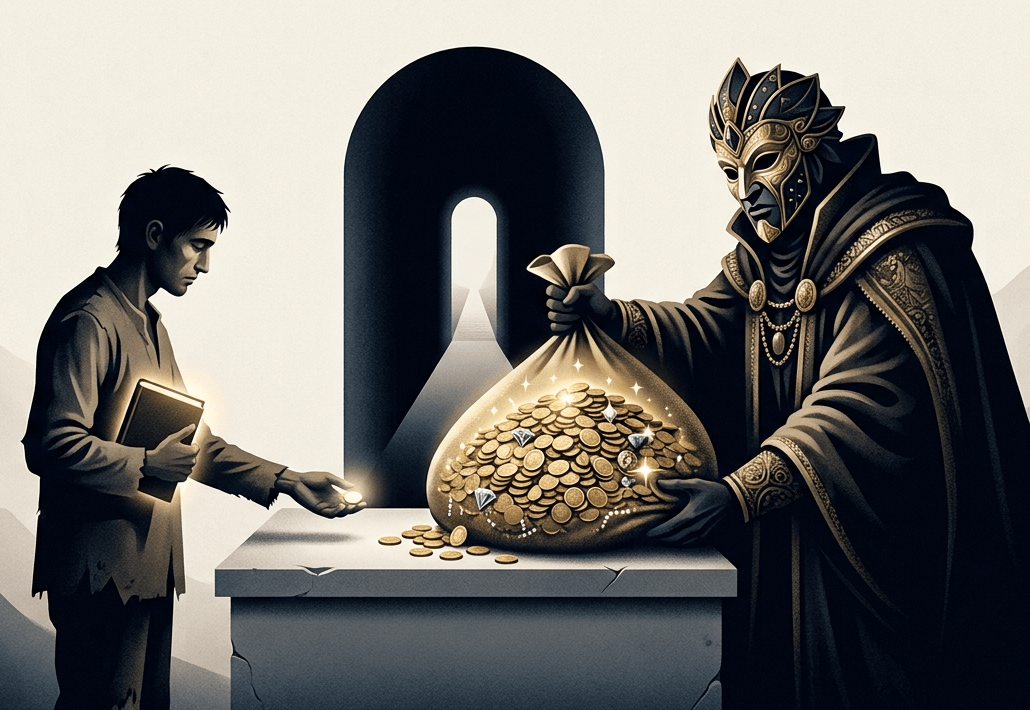
Nepal’s disease was never a shortage of heroes, but a surplus of incentives for mock heroism. When tickets are bought, the criminal will outbid the teacher.
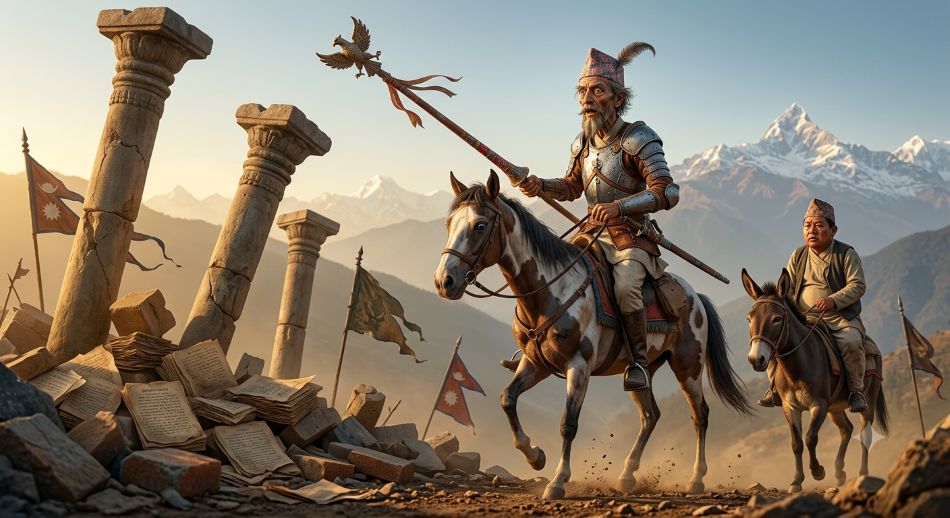
Every nation gets the heroes it applauds. To begin with, then, let us separate two creatures that walk Nepal’s political stage. The epic hero serves an idea larger than himself; he pays for principle with prison, exile, and obscurity.
The mock hero serves only himself; he buys power with other people’s money and calls the purchase patriotism. One signs his name in sacrifice. The other signs contracts.
One is remembered; the other is re-elected. Nepal has produced both in abundance — yet it has lately perfected a strange genius: crowning the second with garlands and burying the first in forgetfulness.
Look back, first, to the age of epic. Before 1990, politics was not a career; it was a crucible. Bhimsen Thapa built a state and died in a cage of court intrigue, tragic and immense.
The four martyrs of 1951 walked to the rope with straight spines. B.P. Koirala traded a prime ministership for a prison cell, and never once traded his convictions.
Ganesh Man Singh, the iron commander of two revolutions, declined power when it was finally his, and later boycotted the constitution ceremony of 1990 itself when he smelled betrayal between its lines.
Tanka Prasad Acharya and Pushpa Lal Shrestha spent their youth through hardship so that others could spend theirs in parliament. These were statespersons. Their currency was conscience; their pension, history’s respect — which pays no bills.
To trace the long river of our politics, mark ten stations of the pilgrimage. The Treaty of Sugauli in 1816 shrank the nation and taught its rulers to fear the world beyond the hills. The Kot Massacre of 1846 drowned a court in blood and raised the Rana oligarchy for a hundred years.
The revolution of 1951 brought that dark house down. The first elected government of 1959 bloomed — and King Mahendra’s coup of 1960 plucked it. The Panchayat order of 1962 froze the country’s voice for three decades.
Then followed the Jana Andolan of 1990, which restored that voice; the Maoist war of 1996, which soaked the hills in sorrow; the palace massacre of 2001, which broke a dynasty’s heart; and the second Andolan of 2006, which led to the republic of 2008 and the burial of the crown.
And, the constitution of 2015 promised a federal dawn — and the Gen-Z uprising of 2025, with the RSP landslide of 2026, promised yet another.
Yet here, precisely, the satire begins. After 1990, the epic generation died, retired, or was gently pushed off the stage, and the mock heroes inherited the theatre. More than a dozen governments rose and fell between 1990 and 2006; the premiership rotated among a small circle of tired faces, as though the nation were a game of musical chairs played by three men.
Scandals bloomed like rhododendrons in spring — aeroplane deals, land deals, passport deals. Party tickets were whispered to be sold, and men with criminal files discovered that a party flag washes whiter than any court verdict.
A candidate under investigation could campaign from a helicopter and win by a landslide, while a veteran who had spent years in jail for democracy lost his deposit.
The morally authentic — the honest organizer, the principled dissenter — were bypassed, boycotted, and buried in committee rooms, while the loudest sycophant in the lobby carried the ministerial file home.
Meanwhile, the same rot entered the civil service. The honest officer learned that integrity is a punishable offence: invoke the rules, and you are transferred to a district without roads. The pliant officer learned that flattery is a promotion policy. Bhagbanda — the sharing of posts among party quotas — quietly replaced merit as the true constitution of the bureaucracy.
Files moved when palms were greased; procurement became a festival of commissions; and the upright clerk retired on a thin pension while his corrupt colleague built a mansion above the valley he had looted. Consequently, the state that was hired to serve the citizen learned, instead, to serve itself.
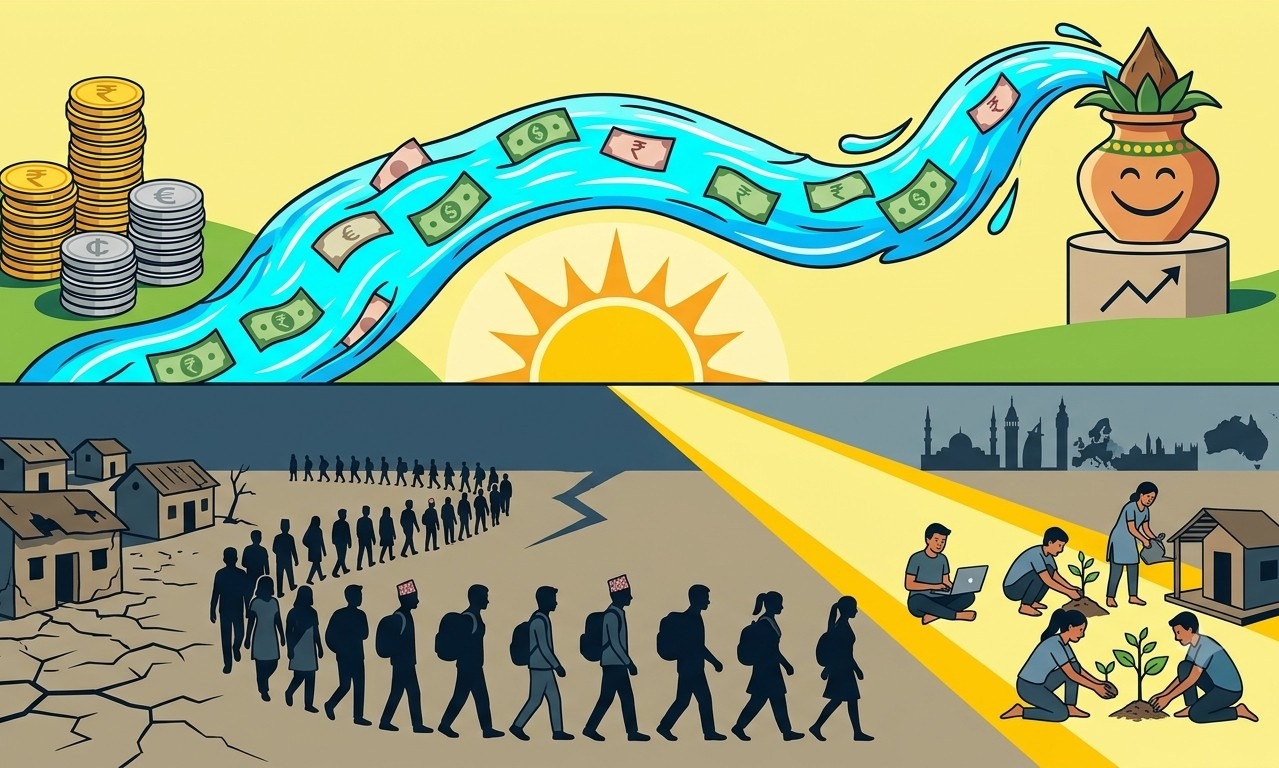
And what of the people, in whose name every revolution is sung? They were crushed with perfect courtesy. Each morning, a small army of the young queued at the airport to build foreign cities, and their remittances kept the nation breathing while its own heart emigrated.
Cooperative swindles devoured the savings of widows, farmers, and porters — savings guarded, it turned out, by very powerful friends. Debt trapped the smallholder; inflation taxed the poor more faithfully than any revenue office; decent schools and hospitals were priced like imported luxuries.
Their rights were written beautifully — in constitutions they could not afford to invoke, enforced by offices that demanded a fee for justice. Thus the circle closed and closed again: poverty denied them power, and powerlessness renewed their poverty, generation after patient generation.
Then came September 2025, when the young — armed with little more than phones and fury — set the old stage on fire. Seventy-six lives were lost before the government fell .
A retired chief justice, Sushila Karki, was proposed on a chat server and sworn in as the first woman prime minister, and for six months she governed with a spine and a broom. For one brief, shining season, the epic seemed to walk again among us. Which brings us, at last, to the present morning.
In March 2026, the Rastriya Swatantra Party — barely four years old — won 182 of 275 seats, the first single-party majority since 1999, while the old giants, Congress and UML, sat in the corner with 38 and 25 seats like dismissed tutors. Balendra Shah took the oath as prime minister in what observers kindly called a marriage of convenience.
The new court promised to count seconds, not days. Yet the satire has not entirely retired. By July, only 36 of the government’s 100 celebrated commitments stood complete; four had halted and one had not begun.
Former prime minister Oli was arrested over the September crackdown and then freed by order of the Supreme Court. The party president — a man who, barely a year earlier, had known the inside of a prison cell in a cooperative-fraud case — was re-elected unopposed.
And the prime minister still addresses his nation chiefly through Facebook posts. New brooms sweep fast; whether they sweep clean is another matter.
It would be unjust, however, to convict a government of four months. It would be equally naive to canonize it. The reasoned verdict is simpler and sadder:
Nepal’s disease was never a shortage of heroes, but a surplus of incentives for mock heroism. When tickets are bought, the criminal will outbid the teacher.
When postings are sold, the flatterer will outrank the honest. When justice is expensive, the poor will always lose to the insured. The cure, therefore, is not another savior, however sincere — it is the dull, glorious machinery of rules that bind the strong and protect the weak.
In the end, then, the true epic hero of Nepal’s story must not be a person at all. It must be an institution — a court that fears no prime minister, a civil service that rewards the honest, an election that money cannot purchase, a state that keeps its promises to the porter, the ploughman, and the girl with a phone and a grievance.
Until such institutions stand, the mock heroes will continue their costume parade across the stage, bowing to applause they have purchased themselves.
However, a people who buried a crown, outlived an oligarchy, and raised their children against three regimes will not, one suspects, applaud forever.
I have been working on the trends of the Nepalese Foreign Policy as the existing global order gets gradually altered in 21st century world ..
I have been working on the trends of the Nepalese Foreign Policy as the existing global order gets gradually altered in 21st century world. I am an MA in English and MPhil in International Relations a...
@ Copyright matrikapoudyal.com All Rights Reserved
Designed by Fortune Info Tech