


I have been working on the trends of the Nepalese Foreign Policy as the existing global order gets gradually altered in 21st century world ...
The fire rises from the street. It does not begin in the palace. It begins in the lungs of a young man from Mugu who cannot breathe anymore. It begins in the heart of a farmer who watches his crops wither while ministers watch their portfolios grow.
It begins, always, with the quiet breaking of a spirit that once believed the state would protect it. And now, as July burns on in the year 2026, Nepal stands at a crossroads where the smoke of three lives—three citizens who committed suicide by self-immolation—rises to ask us one searing question:
What kind of nation devours its own children? To understand the answer, we must first look at the cruel paradox that defines our present moment.
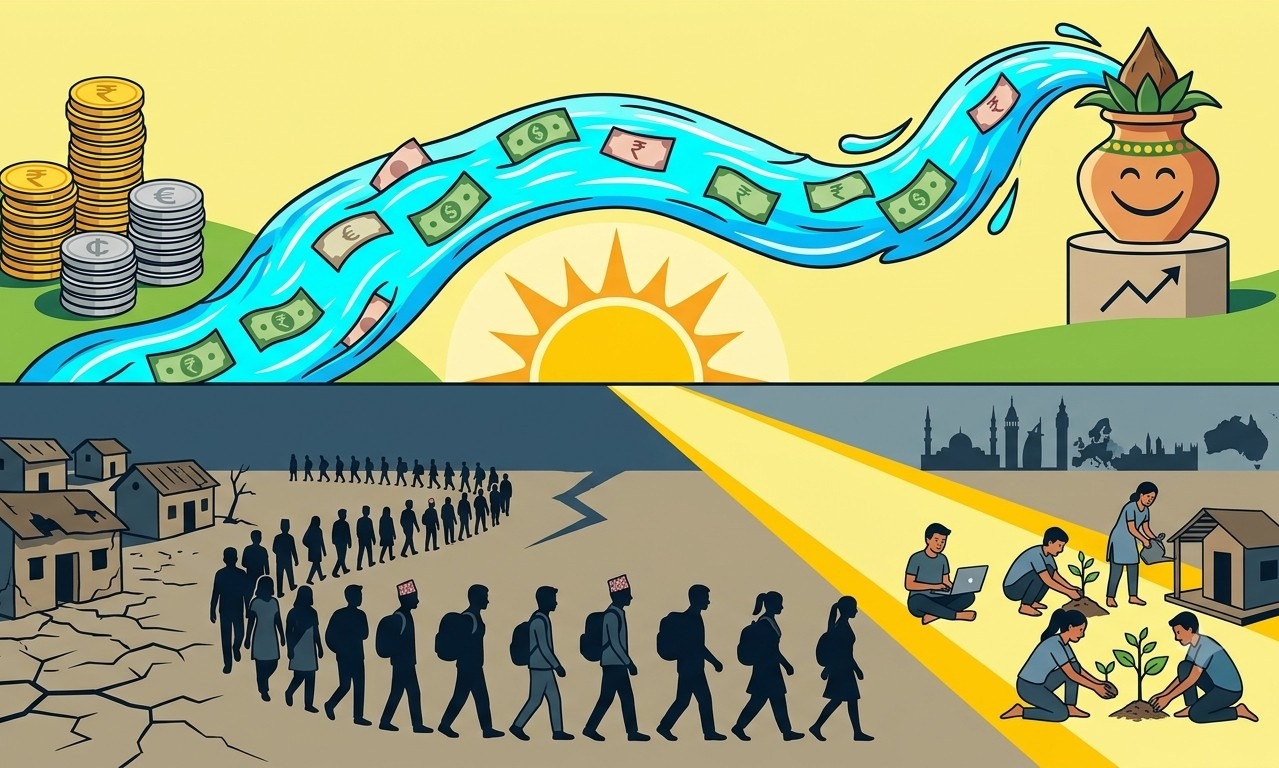
Our external economy looks robust. Foreign exchange reserves sit at comfortable levels. Remittances flow in like a swollen river. The balance of payments smiles. Yet beneath this glossy surface, the micro economy rots. The monetary policy unveiled by Nepal Rastra Bank Governor Biswo Nath Poudel on July 7, 2026, offers nothing but the old song in a new season.
It is policy continuity masquerading as prudence. It is caution pretending to be wisdom. Meanwhile, the banking system sits on billions of idle rupees, credit expansion remains a distant dream, and the private sector watches with folded hands. The economy runs on trust, but trust cannot be manufactured by repeating the same failed prescriptions.
Consequently, the stock market fell the very day after the policy announcement. The governor targets 11 percent credit growth, yet the tools to reach that summit are invisible. In the past year, only half the target was met. Interest rates have dropped, but borrowers have vanished.
The problem is not liquidity. The problem is not even interest. The problem is that Nepal has become a place where honest people cannot do honest business. And when business dies, jobs die with it.
We must, likewise, confront the bitter truth about our youth. More than twenty percent of young Nepalis remain unemployed. They are not lazy. They are not unskilled. They are simply unwanted by an economy that refuses to grow. Our education system churns out graduates like a factory assembly line, but it does not ask what the market needs. A young man studies agriculture in a remote district, only to find that there is no work for poor people with that degree.
He, so, mortgages his family land, buys a motorcycle, and becomes a ride-hail driver. Then the municipal police lock his wheel for a thousand-rupee fine, and he realizes that even this fragile life is not his own. He pours petrol on his body and strikes a match. This is not suicide. This is a verdict.
In addition to this tragedy, we must count the others. Ganesh Nepali of Mugu, who burned outside the Department of Passports. Bibek Mandal of Sarlahi, who attempted the same act as protests erupted in Kathmandu.
And, Prem Prasad Acharya, who three years ago set himself ablaze before Parliament with a twenty-five-point death wish. Three flames. Three verdicts against a state that fines the poor into oblivion while failing to tax the rich. Three citizens who chose fire over a life of slow suffocation.
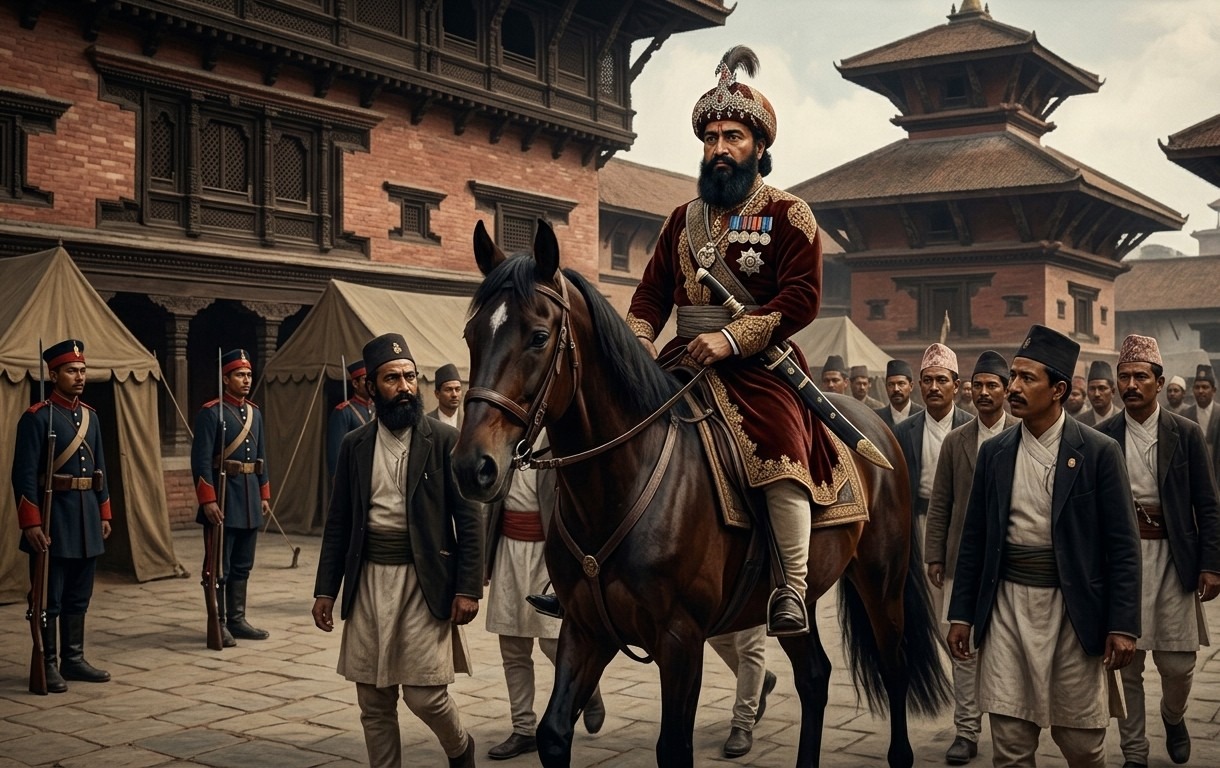
Moreover, the government that now sits in Singha Durbar came to power on a wave of Gen-Z fury. The September 2025 uprising burned with the energy of youth who had watched Parliament burn, who had watched Prime Minister KP Sharma Oli flee, who had believed that a new page was turning.
They voted for Balendra Shah and the Rastriya Swatantra Party with near two-thirds majority in the March 2026 elections. They wanted swagger against corruption. They wanted hubris against the old guard. But hubris without vision is merely arrogance. Swagger without substance is merely noise.
Nevertheless, what have the youth received in return? A government that introduces mandatory retirement at fifty-five while the youth cannot find their first job. A government that taxes health and education while the poor sell their land to pay for hospital bills.
A government that speaks of cutting public expenditure while its own ministers weep in Parliament not out of shame, but out of defensiveness. The Home Minister cried as he explained how hard the government tried to save Ganesh Nepali.
But tears are not policy. An air ambulance on standby is not justice. Justice would have been a system that did not push Ganesh to the edge in the first place.
Similarly, we must examine the quality of our law enforcement. The municipal police fined Ganesh Nepali under one law, while the traffic police would have fined him half as much under another. This is not rule of law. This is rule by confusion. This is administrative cruelty dressed up as order.
When a citizen asks, “Are you looking down on people?” the state should listen. Instead, it locks his motorcycle. It breaks his phone. It treats his despair as a crime. Unaccountable law enforcement is not a bug in our system. It is the system.
As a result, pauperization spreads like a silent flood. The World Bank notes that extreme poverty had fallen to three percent by 2023, but the Middle East conflict, slowing remittances, and rising inflation are pushing seventeen thousand more Nepalis back below the line in this fiscal year alone.
This is only the official count. In the shadows, millions more hover at the edge, one illness away from ruin, one fine away from the street. The poverty-stricken population grows not because people are not working, but because the system is designed to extract from the poor and protect the powerful.
In the same vein, our education system continues to betray the next generation. It teaches memorization, not creation. It rewards obedience, not innovation. It produces young people who are academically certified but economically useless.
And then we wonder why eighty-four percent of our employment is informal. We wonder why two thousand young Nepalis leave daily with foreign work permits. We wonder why our manufacturing sector has shrunk from nine percent of GDP to five percent. We wonder, but we do not change.
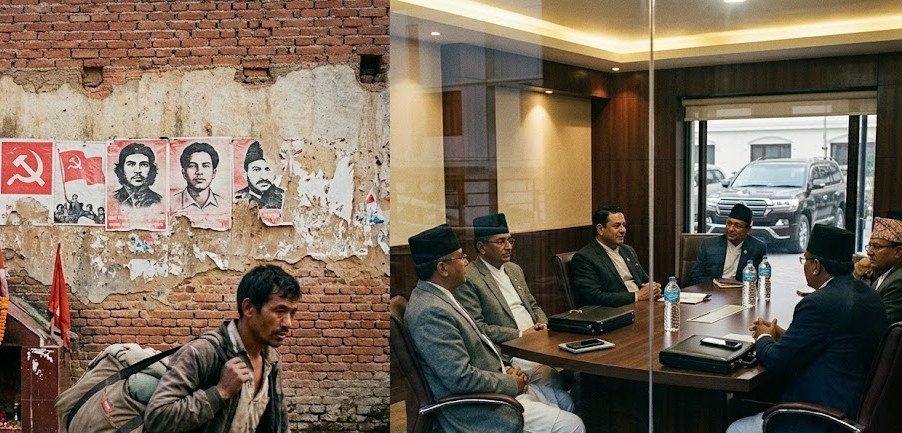
Meanwhile, the socio-political context remains unstable even after the Gen-Z uprising. The old parties still breathe. The communists still practice crony capitalism. The Nepali Congress still oscillates between opposition and complicity. The RSP, for all its fresh faces, has begun to sound like the old chorus. When Balendra Shah was mayor, he wrote that self-immolation is the ultimate sign of state failure.
Now, as Prime Minister, he is silent. When Rabi Lamichhane was in opposition, he apologized to Prem Acharya for failing to give him hope. Now, his party members ignore Ganesh Nepali’s family. Power does not corrupt only the old. It corrupts the new as well.
Therefore, what ordeals await us? They are unprecedented, and they are already here. A generation of educated, unemployed youth is a demographic dividend turned into a time bomb. A remittance-dependent economy is a house built on another country’s sand. A government that governs by swagger rather than strategy will soon face a street that swaggers back.
The ordeals will be economic—stagnation, inflation, capital flight. They will be social—more suicides, more outmigration, more broken families. They will be political—another uprising, perhaps uglier than the last, because hope, once betrayed, becomes rage.
There is, still, a path through the ashes. First, monetary policy must find courage. The central bank must stop hiding behind caution and start incentivizing productive lending. It must slash the regulatory burdens that strangle small businesses. It must ensure that bank capital cushions are not maintained by suffocating borrowers.
Second, fiscal policy must spend. Capital expenditure must not remain at thirty-two percent of its target. Roads, irrigation, and energy projects must move from paper to earth, because infrastructure is the only language that unemployment understands.
Third, law enforcement must become accountable. The municipal police cannot be a revenue-collecting militia. Fines must match incomes, not crush them. The blacklisting system must be reformed so that one bounced cheque does not lock a citizen out of the economy forever.
Fourth, education must be rebuilt. Technical education, vocational training, and entrepreneurial support must replace the rote memorization factories we call schools. The state must ask not what degrees young people hold, but what problems they can solve.
Most importantly, the government must shed its hubris. The youth of Nepal did not vote for sunglasses and slogans. They voted for dignity. They voted for a country where a young man from Mugu can park his motorcycle without fear, where an entrepreneur from Ilam can run a business without being crushed by syndicates and bank interest, where a farmer can sell his crop without paying more in bribes than he earns in profit. They voted for hope, and hope, once given, cannot be withdrawn.
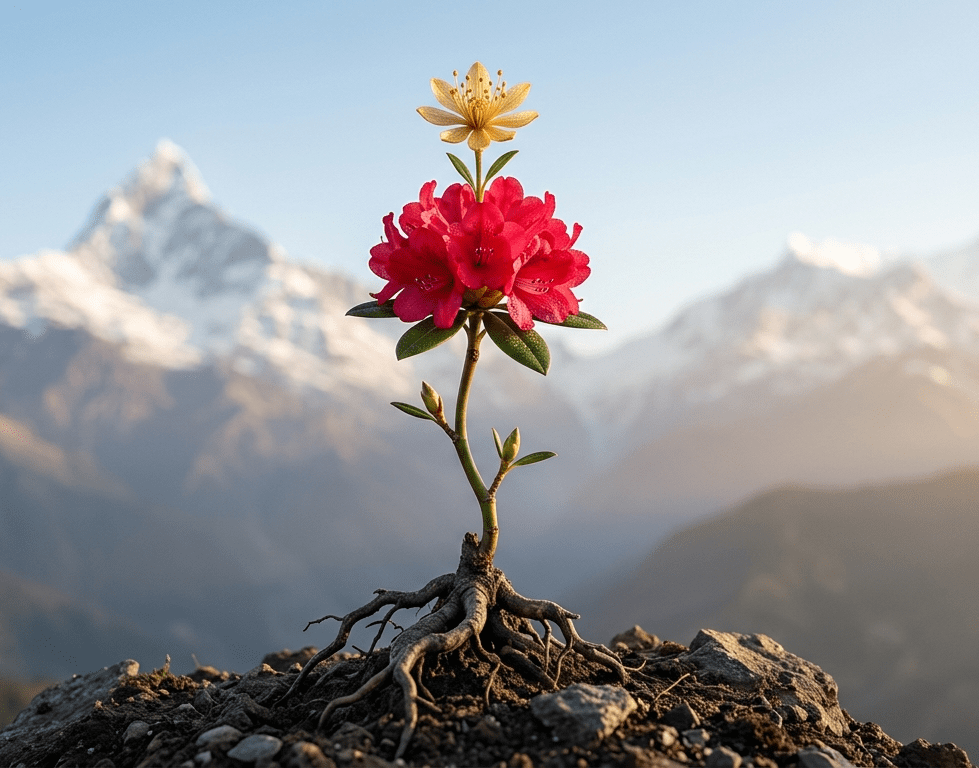
Summing up, the three flames that have burned on our streets are not merely tragedies. They are warnings. They are the final, desperate language of citizens who have found no voice in the courts, no ear in the ministries, no justice in the streets. Nepal stands at the edge of an unprecedented ordeal, but it also stands at the threshold of transformation.
The difference between the two lies in whether those who hold power today will choose continuity or courage, arrogance or humility, policy papers or human hearts. The fire has been lit. It is up to the state whether that fire becomes a funeral pyre for the old Nepal, or the torch that lights a new one.
I have been working on the trends of the Nepalese Foreign Policy as the existing global order gets gradually altered in 21st century world ..
I have been working on the trends of the Nepalese Foreign Policy as the existing global order gets gradually altered in 21st century world. I am an MA in English and MPhil in International Relations a...
@ Copyright matrikapoudyal.com All Rights Reserved
Designed by Fortune Info Tech