

I have been working on the trends of the Nepalese Foreign Policy as the existing global order gets gradually altered in 21st century world ...
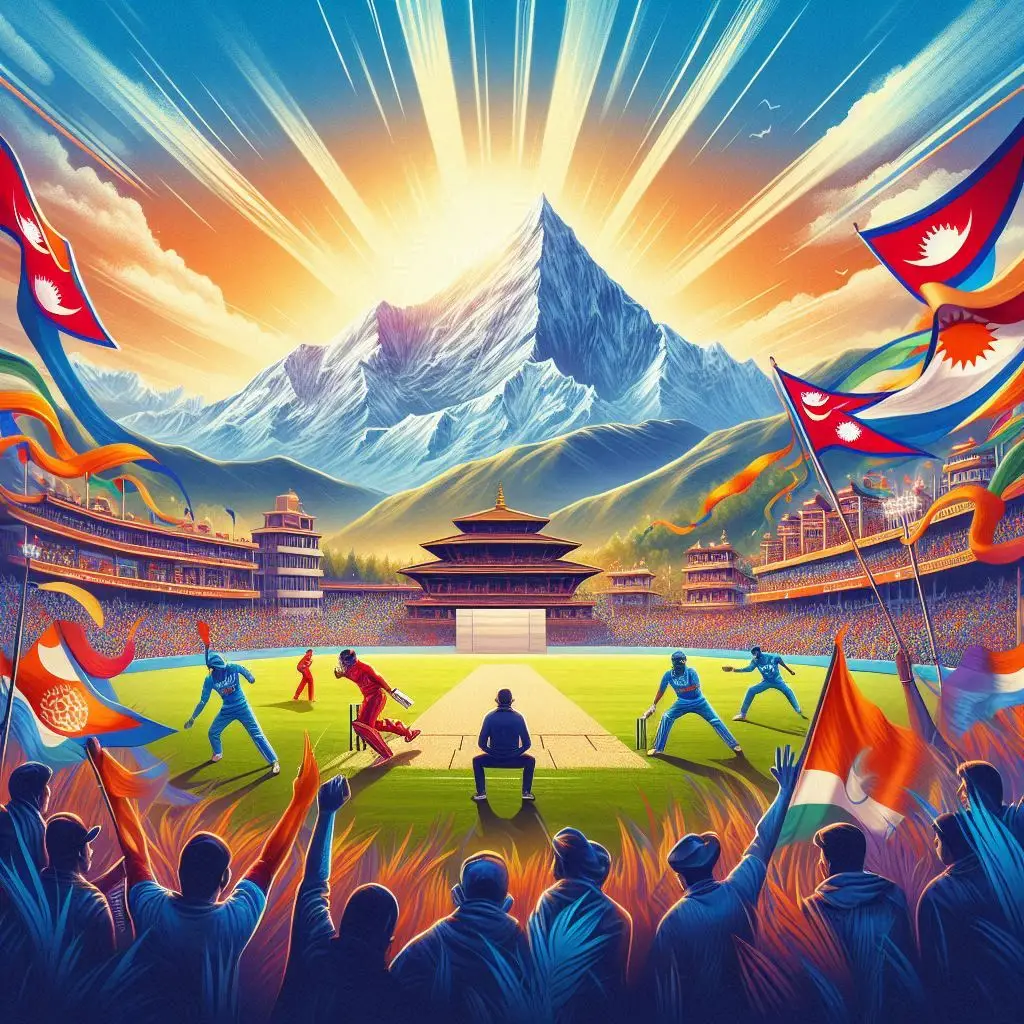
The foundational relationship between Nepal and Bharat, forged by deep-rooted people-to-people links and enduring cultural heritage, constantly demands innovative, resilient diplomatic architecture. Geopolitical complexities, occasionally punctuated by political friction and contentious issues such as border disputes, necessitate strategic instruments that reliably cultivate mutual trust.
Cricket diplomacy decisively emerges as this essential vector, intentionally steering foreign policy toward positive, sustained collaboration. New Delhi explicitly recognizes this capacity, designating cricket as an “emerging area of collaboration”. This official acknowledgement elevates the partnership from mere informal exchange to a calculated, low-stakes, high-return foreign policy initiative.
Investing resources in a popular, shared cultural domain ensures positive bilateral engagement persists and flourishes, irrespective of fluctuations within traditional political dialogue, offering a modernized, reliable conduit for cooperation.
States pursuing diplomatic goals consistently employ sport as an important staple of foreign policy, validating its efficacy as a soft power tool. Conceptualized by Joseph Nye, soft power achieves preferred outcomes through attraction and persuasion, deliberately avoiding coercion or payment.
Sport diplomacy thus directly addresses the strategic objective of “normalising or strengthening diplomatic relations” by enhancing “national branding appeal”. Historical precedents confirm this profound diplomatic potential; the iconic Ping-Pong diplomacy, for instance, dramatically eased U.S.-China tensions, subsequently paving the way for President Richard Nixon’s historic visit. Between Nepal and Bharat, cricket serves as a mechanism of attraction.
By strategically aligning support with the flourishing national aspiration for cricketing success in the Himalayan nation, Bharat effectively cultivates an environment where the public actively welcomes closer diplomatic ties. This sophisticated strategy proves the utility of soft power, actively integrating its reputation with Nepali achievements and securing a high return on diplomatic investment.
High-level political commitment translated rapidly into demonstrable institutional support, showcasing a structured, long-term strategic intention. External Affairs Minister S. Jaishankar initiated this elevated engagement, pledging “all possible help” for Nepali cricket during his visit to Kathmandu.
The Board of Control for Cricket in India (BCCI) swiftly operationalized this promise, hosting the Nepal men’s national team for a rigorous training camp at the world-class National Cricket Academy (NCA) in Bengaluru.
Coaches lauded the high caliber of the facilities, emphasizing the technical transfer of world-class cricketing expertise, noting the NCA boasts “fantastic facility, a centre of excellence, to have world-class cricket pitches, nets, indoor and rehab facilities”.
Furthermore, the scope of support extended across all tiers of the game: the BCCI facilitated comprehensive preparation for the Nepal women’s team, arranging crucial friendlies with Delhi Women and RP Cricket Academy, leading directly to their historic qualification for the T20 Global Qualifier.
India’s commitment also secured grassroots development, fully funding a three-match youth series between Delhi’s U19 team and Nepal’s youngsters in Birgunj. This holistic engagement—encompassing men’s, women’s, and youth development—provides empirical evidence of sports diplomacy’s effectiveness, demonstrating that governmental resource provision reliably yields measurable national success for Nepal.
Cricket operates as a powerful national symbol in Nepal, commanding a fervent following and functioning as a profound unifying force that transcends linguistic, ethnic, and cultural divides. This vast cultural capital significantly amplifies the diplomatic impact of cross-border cooperation. India’s strategic provision of technical resources converts seamlessly into spontaneous public affinity.
Following the men’s national team training at the NCA, thousands of Nepalis expressed overwhelming gratitude across social media platforms after the Indian team posted a short video, solidifying the emotional connection necessary for durable fraternity. Historically, this partnership traces back decades, with Indian authorities aiding the construction of the Tribhuvan University (TU) International Cricket Ground in Kirtipur in the mid-1990s.
By consistently aligning support with Nepali national pride and enabling internal unification, India injects positive sentiment directly into the domestic discourse. This strategic choice builds resilient soft power, effectively creating a powerful counter-narrative that absorbs political friction and strengthens the enduring people-to-people heart of the bilateral relationship.
Nepal’s government decisively resolved the logistical prerequisite for hosting major international competitive fixtures through a substantial national commitment to cricketing infrastructure. Authorities have elevated the master plan for the expansion of the TU International Cricket Stadium, designating it a “national pride project”. This ambitious undertaking, estimated at approximately Rs 10 billion, aims for a final seating capacity exceeding 30,000 spectators.
Furthermore, reports indicate that the first phase of work, including the vital installation of floodlights, nears completion. This impressive infrastructural outlay eliminates all preceding logistical barriers. A 30,000-plus capacity venue provides the necessary scale for generating maximum fan engagement and high visibility, establishing Nepal as a credible host nation.
This demonstrated national investment creates an urgent diplomatic imperative, demanding reciprocal commitment from Bharat to utilize this platform for high-stakes bilateral competition, thus maximizing the symbolic, infrastructural, and economic return for this national pride project.
The era of merely facilitating training yields now to the necessity of formalized competitive engagement. While training camps transfer knowledge, competitive matches maximize diplomatic yield by engaging mass audiences under conditions of shared national tension and excitement.
The Nepali team, possessing established ODI status, urgently requires regular fixtures against full-member Test nations like Bharat, a gap acknowledged by national coaches during recent NCA training who noted the team was “unable to play competitive matches”.
Therefore, policy must immediately transition from aid provision to competition institutionalization. The BCCI and the Cricket Association of Nepal (CAN) must establish a recurring, annual Nepal-Bharat bilateral series, provisionally titled the “Himalayan Challenge.”
This rotating fixture should feature ODIs and T20Is, guaranteeing that matches regularly occur in Kathmandu, utilizing the expanded TU Stadium, alongside rotating venues in India. A high-profile series against a global powerhouse instantly elevates Nepal’s international stature, validating its national pride project and reinforcing Bharat’s role as the benevolent regional leader committed to globalizing the sport.
Cricket diplomacy represents the epitome of policy pragmatism, successfully navigating complex geopolitical terrain by prioritizing shared passion and cultural synergy. The path to strengthened solidarity is now clearly mapped: high-level ministerial pledges instigated institutional technical assistance at the NCA, which demonstrably propelled the women’s team to historic achievements.
This systematic support aligns perfectly with Nepal’s massive national investment in infrastructure, culminating in a 30,000-seat stadium platform ready for activation. Leaders must seize this moment, recognizing cricket as the critical anchor securing a new era of trust and profound economic synergy.
They must immediately schedule the “Himalayan Challenge,” transforming a deep shared cultural heritage into an unbreakable, vibrant bilateral solidarity that defines the future of the Nepal-Bharat partnership. The competitive arena beckons, promising sustained cooperation and mutual glory.
I have been working on the trends of the Nepalese Foreign Policy as the existing global order gets gradually altered in 21st century world ..
I have been working on the trends of the Nepalese Foreign Policy as the existing global order gets gradually altered in 21st century world. I am an MA in English and MPhil in International Relations a...
@ Copyright matrikapoudyal.com All Rights Reserved
Designed by Fortune Info Tech