


I have been working on the trends of the Nepalese Foreign Policy as the existing global order gets gradually altered in 21st century world ...
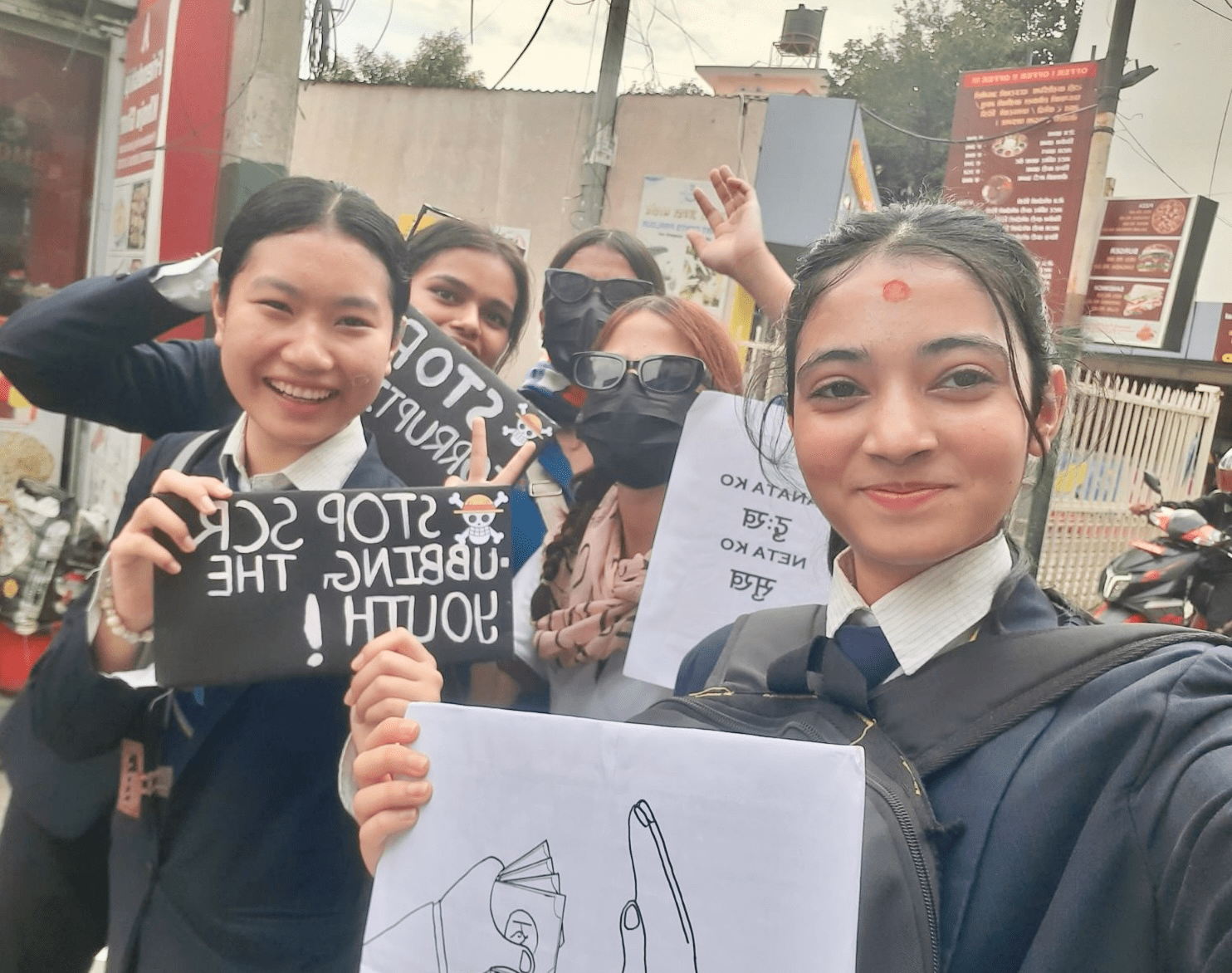
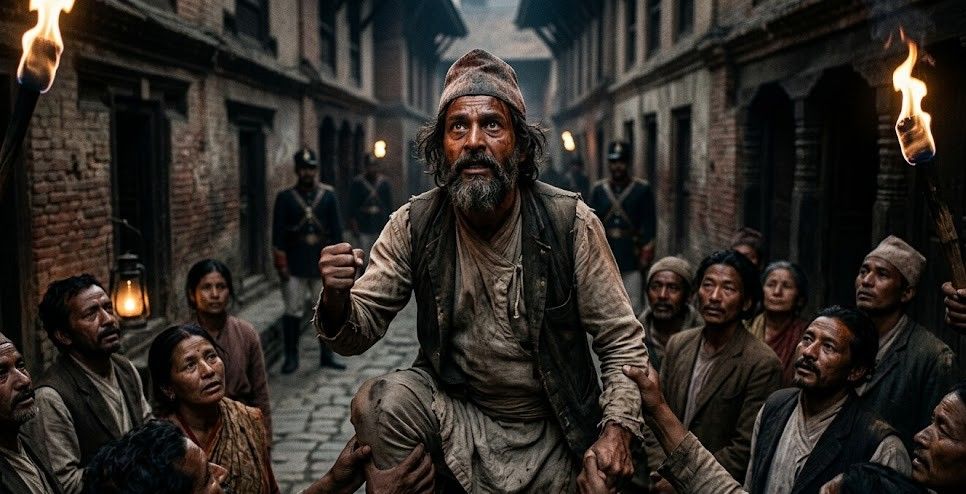
In 2025, Nepal witnessed the spontaneous combustion of collective conscience. A generation unbound by hierarchy—digital natives navigating the labyrinth of social media with the intuitive grace of those born to it—rose not merely against corruption, but against the very spectacle of inequality that had come to define their republic.
With youth unemployment exceeding one in five, the brazen display of inexplicable wealth by political elites transformed abstract grievance into visceral theater. The flames that consumed the Parliament and Supreme Court were not merely acts of destruction; they were primal utterances of a democracy speaking in tongues of fire.
Yet herein lies the profound paradox that demands our most careful deliberation. To hold leaders accountable is the essence of democratic vitality; to dismantle the institutions they inhabit is to confuse the vessel with its contents, the edifice with its tenants.
The smoke that cleared over Kathmandu revealed not liberation, but a precarious vacuum—a void where the architecture of governance once stood, now vulnerable to the siren calls of those who would trade democratic imperfection for authoritarian nostalgia. The monarchy, that ghost of Nepal’s past, stirs in such moments of institutional fragility.
For political parties, however sullied by their current practice, constitute the very sinews of democratic architecture. Consider the metaphor of a great civic building: parties are its foundational infrastructure—the conduits through which the currents of political life flow, the frameworks that render complexity manageable.
Independent candidates and single-issue movements, however luminous their intentions, function as elegant fixtures dependent upon that underlying grid. Remove the wiring, and even the most brilliant bulb cannot illuminate the darkness.
The structural indispensability of parties manifests in two cardinal functions that no spontaneous movement can sustainably replicate.
First, Interest Aggregation: the alchemical process of transmuting society’s cacophony of competing demands—industrial aspiration against ecological stewardship, tradition against transformation—into coherent, durable policy platforms.
Second, and perhaps more critically, Accountability Linkage: the mechanism by which governing coalitions present themselves as unified teams, enabling the electorate to render verdicts upon records rather than personalities, thereby forging the indispensable covenant of responsible governance.
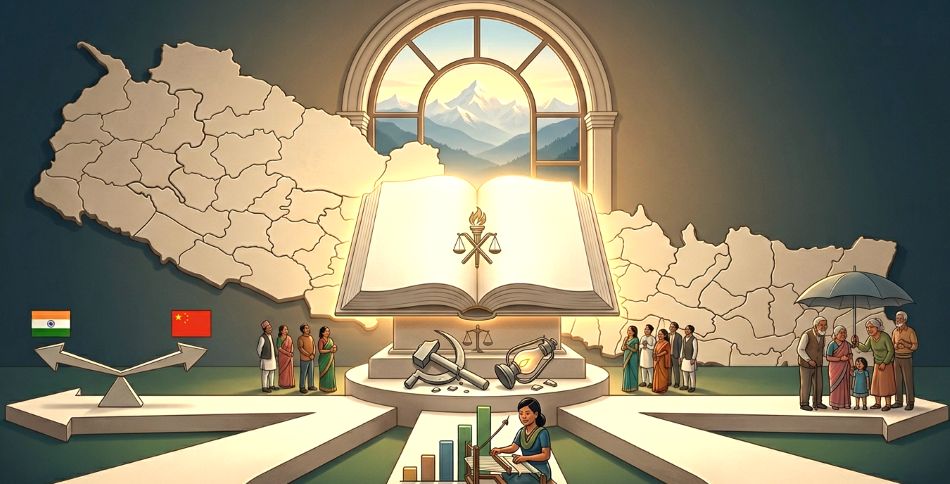
Nepal’s 2015 federal transformation magnified this necessity exponentially. Seven provinces and seven hundred fifty-three local governments now demand orchestration across a vast, decentralized tapestry.
Only institutionalized parties possess the nationwide organizational sinews to weave policy coherence across such complexity. To discard them is to forfeit the very capacity to make federalism function—a self-inflicted wound upon the body politic.
The interim administration that emerged from the ashes illustrated this truth with painful clarity. Born of digital selection, it symbolized transparency with poetic beauty; yet its non-party structure proved inherently delicate, administratively ponderous.
Governance, that most unglamorous of arts, demands institutional memory and continuity. The transitional government’s hesitation in fundamental sectors spoke volumes: vacant ambassadorial posts languished unfilled, creating diplomatic lacunae at a moment when Nepal could least afford them.
More tellingly, the failure to insure public infrastructure destroyed during the uprising—a fiscal prudence so elementary in a disaster-prone nation—forced the state to bear reconstruction costs in their devastating entirety. These were not merely administrative oversights; they were symptoms of a system without institutional depth.
The rule of law, that most fragile of democratic flowers, requires the steady nurture of impersonal institutions—courts, bureaucracies, enforcement agencies—operating beyond the caprice of political weather.
When leadership lacks stable institutional ballast, or when protest movements risk calcifying into dominant powers echoing within digital chambers of their own making, the legal framework becomes servant to volatility rather than master of it. The immediate calls for the digitally-selected Prime Minister’s resignation, scarcely after her oath, confirmed a bitter truth: purity of intent, however radiant, does not spontaneously generate governance stability. The structural economic reforms Nepal desperately requires remained suspended in the amber of continuous turbulence.
Genuine inclusivity—that lodestar of the Gen Z vision—demands nationwide institutional capacity that only political parties can command. The Nepali Constitution promises a republic founded upon equality, proportionality, and inclusion. Parties serve as the primary, nationwide mechanism for institutionalizing representation across the intricate topography of gender, caste, and ethnicity.
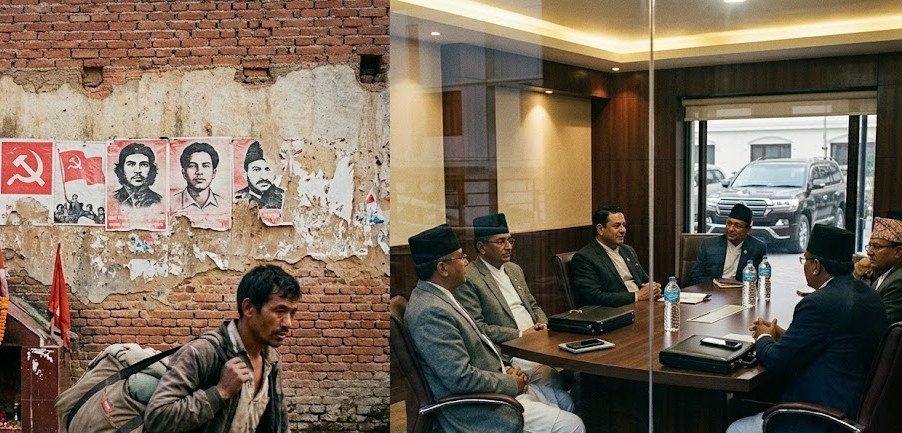
Tragically, the factionalism and patronage that have characterized party behavior systematically undermined the growth of impersonal institutions, perpetuating the chasm between democratic promise and socio-economic reality. This failure—this profound betrayal—fueled the youth’s righteous sense of exclusion.
Yet the Gen Z Draft Accord, forged in the crucible of revolt, charts a path of remarkable sophistication. Its mandate for a high-level constitutional review committee to enforce inclusion and representation in all state bodies constitutes not merely a demand, but a blueprint for transformation.
These aspirations require deep legislative surgery—amendments, implementations, coordinations across federal layers—that only parties, operating through parliament and commanding the federal architecture, possess the political mandate and organizational reach to execute sustainably.
A centralized digital movement, however passionate, cannot recruit, integrate, and elevate diverse leadership at the national scale required to build a truly inclusive federal republic.
The energy of the street—that magnificent, terrifying force—must now be transmuted into the patient work of political and electoral architecture. The Gen Z Draft Accord provides this critical bridge, signaling a evolution from insurrection to institution-building.
It constitutes, in essence, a covenant for political purification: prompt investigation and legal action against corrupt leaders; prosecution of state actors responsible for killings and rights violations during the uprising; complete transparency in party assets and finances. These are not requests; they are the non-negotiable conditions for democratic redemption.
In this light, the Gen Z uprising functions as an external regulatory force of extraordinary significance, establishing the minimum standards upon which the party system’s survival now depends.
By demanding transitional justice principles—distinguishing protestors from organized criminals, seeking accountability for state violations—the movement compels parties to engage directly with the rule of law they once corrupted.
The parties must recognize, with the clarity that only crisis can bring, that their legitimacy now hinges entirely upon demonstrated commitment to these accountability imperatives.
To reclaim public trust, political parties must embrace oversight with the humility of the penitent and the wisdom of the reformed. This necessitates adopting international best practices in governance: regulating public and private funding, establishing expenditure ceilings, ensuring transparency that withstands the most rigorous scrutiny.
Parties must enforce accountability through legal reforms that unequivocally bar individuals convicted of corruption or electoral crimes from public office—a cleansing of the democratic temple.
The patronage that has poisoned Nepal’s foreign policy—where diplomatic appointments have too often served party loyalty rather than national expertise—must yield to meritocracy. The interim government’s diplomatic sluggishness offered a stark preview of politicized appointment’s consequences.
Transparent, expertise-based selection for bureaucratic, judicial, and diplomatic roles would signal that parties have learned the most painful lesson of all: that national interest must transcend factional interest. By institutionalizing meritocracy, parties demonstrate a commitment to the republic that transcends their own survival.
Thus we arrive at the profound dialectic that defines Nepal’s moment: political parties, having been the architects of the republic’s ailments, remain the only viable structural vehicle for its cure.
They are indispensable for aggregating complex policy demands, for enforcing the rule of law, for guaranteeing long-term inclusivity across the federal landscape. The youth of Nepal have demonstrated their magnificent capacity to dismantle; now they must demonstrate the infinitely more difficult art of construction and participation.
The strategic moment belongs to Gen Z. They must leverage the force of their movement to enforce party purification—monitoring finances, demanding constitutional inclusion, and stepping forward themselves as ethical candidates.
For a functional democracy demands not merely righteous anger, but institutional commitment. Nepal’s future stability rests not upon the destruction of its democratic framework, but upon its political leaders embracing the binding Gen Z mandate, transforming their organizations from within, and securing the promise of stability, rule of law, and inclusion for generations yet unborn. In the end, the phoenix does not simply rise from ashes; it must also learn to build nests that endure.
I have been working on the trends of the Nepalese Foreign Policy as the existing global order gets gradually altered in 21st century world ..
I have been working on the trends of the Nepalese Foreign Policy as the existing global order gets gradually altered in 21st century world. I am an MA in English and MPhil in International Relations a...
@ Copyright matrikapoudyal.com All Rights Reserved
Designed by Fortune Info Tech