


I have been working on the trends of the Nepalese Foreign Policy as the existing global order gets gradually altered in 21st century world ...
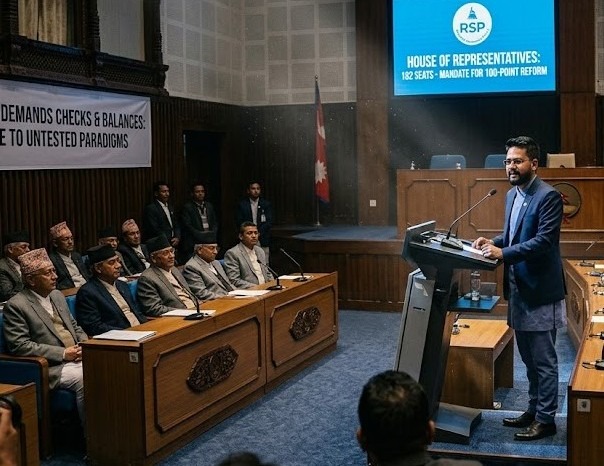
Political power in Nepal often grows through parliamentary protest because Parliament is the first and strongest arena where public grievance becomes visible, formal, and politically costly to ignore. When opposition parties protest inside the House, they turn public dissatisfaction into constitutional pressure.
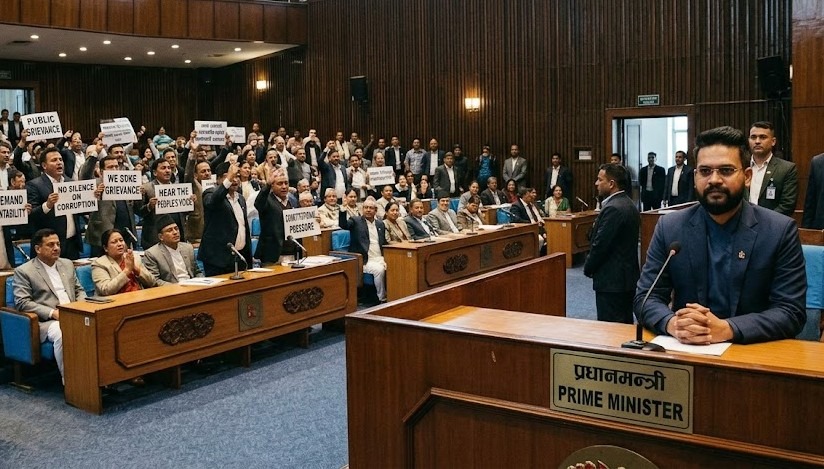
This is especially important in Nepal’s present political climate, where the opposition’s protest is not merely noise but a test of whether democracy still has real weight inside the chamber. Prime Minister Balendra Shah’s repeated absence from parliamentary proceedings has given the opposition a clear issue around which to unite, and it has turned procedure into politics.
The present conflict rests on a simple democratic expectation: the head of government should face the elected chamber and answer questions directly. Reports show that opposition parties have disrupted proceedings, demanded Shah’s presence, and even called for his resignation if he continues to avoid the House.
The Prime Minister should answer MPs in the Nepali Parliament because Parliament is the highest forum of democratic accountability, where the government must explain its decisions to elected representatives. When the Prime Minister responds directly, it strengthens trust, respects parliamentary tradition, and shows that power remains answerable to the people.
A Prime Minister must also be tactful and well-versed in political procedure, legal process, and parliamentary rules because democracy depends on discipline, not impulse. Such leadership builds trust, protects institutions, and ensures that power is exercised with respect, clarity, and accountability in the House.
This protest matters because Parliament is not only a place to pass laws; it is also the main stage where accountability is performed. When a prime minister skips the chamber during major policy and budget discussions, critics say it weakens parliamentary norms and suggests that the executive stands above the legislature.
The opposition should use this moment with discipline, not drama alone. If it turns protest into a steady and principled campaign for accountability, it can raise its political energy and rebuild public trust; if it relies only on obstruction without a clear message, it may appear interested in disruption rather than democratic responsibility.
Shah’s avoidance of Parliament has become politically costly because it allows opponents to define him before he defines himself. Even supporters of the government argue that procedural rules allow another minister to respond on the Prime Minister’s behalf, but that defense has not ended the criticism.
For a leader who came to power with a strong public image, this is a serious turning point. A prime minister can survive criticism over policy, but repeated distance from the legislature creates a deeper problem: it makes him appear unwilling to be questioned, and that perception can quickly weaken political legitimacy.
The opposition’s best path is to keep the issue focused on democratic responsibility rather than personality. It should repeat one clear question: if the Prime Minister will not appear before Parliament, how can he claim to lead it in spirit? That kind of pressure is harder to dismiss than slogans alone.
Shah’s political future will likely depend on how he responds in the next few sessions. If he appears, answers questions, and treats Parliament seriously, he may reduce the damage and regain authority; if he continues to avoid the chamber, the image of distance and defiance may harden into a lasting weakness.
In the end, this issue is larger than one leader or one protest. It is about whether Nepal’s parliamentary democracy can demand presence, dialogue, and accountability from those who govern, and whether the opposition can turn public frustration into a credible democratic force.
I have been working on the trends of the Nepalese Foreign Policy as the existing global order gets gradually altered in 21st century world ..
I have been working on the trends of the Nepalese Foreign Policy as the existing global order gets gradually altered in 21st century world. I am an MA in English and MPhil in International Relations a...
@ Copyright matrikapoudyal.com All Rights Reserved
Designed by Fortune Info Tech