



I have been working on the trends of the Nepalese Foreign Policy as the existing global order gets gradually altered in 21st century world ...
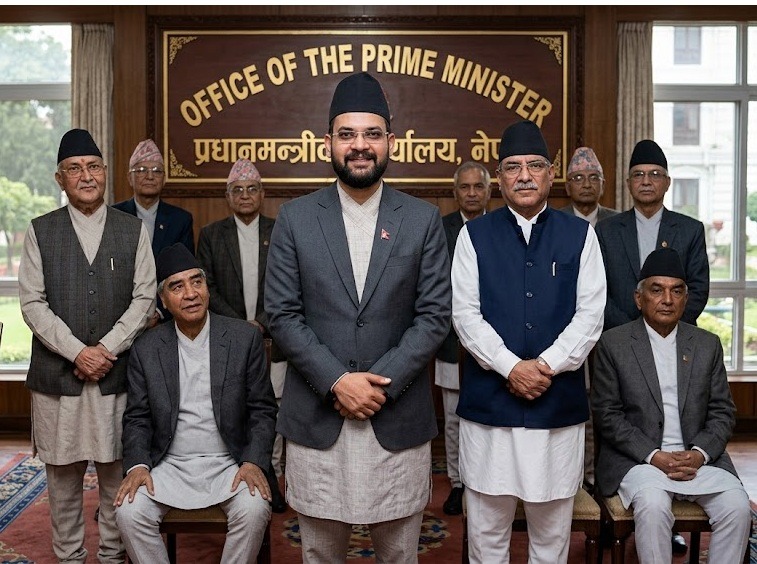
Following the RSP’s sweeping electoral majority under a new, youth-led leadership, Nepal’s “older political parties” are deliberately refusing to align with the ruling government as a matter of institutional survival and ideological defense.
This legislative friction stems from a fundamental clash between the old guard’s established patronage networks and the RSP’s technocratic, post-ideological approach to governance.
By maintaining a strategic distance, the opposition aims to prevent majoritarian overreach, safeguard their traditional support bases against aggressive economic and geopolitical shifts, and patiently await potential implementation failures from the untested ruling party to recalibrate their own political relevance.
The dramatic political transformation in Kathmandu, following the historic March 2026 general elections, has introduced an unprecedented paradigm shift in Nepal’s governance.
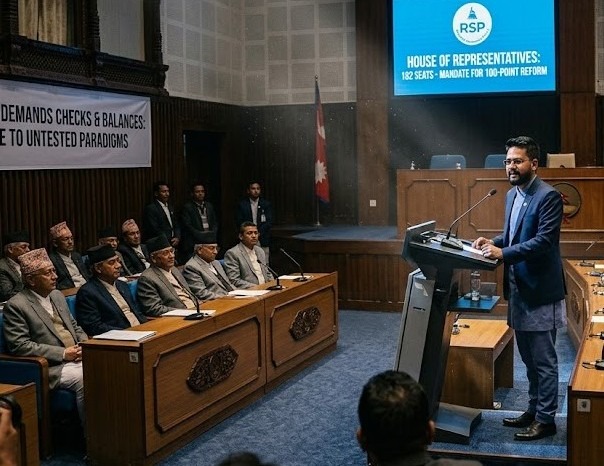
The Rastriya Swatantra Party (RSP), spearheaded by the youthful Prime Minister Balendra “Balen” Shah, secured a commanding 182-seat majority in the House of Representatives, effectively dismantling decades of traditional coalition dependence.
For the older parties, most notably the Nepali Congress and the Communist Party of Nepal (UML), navigating this newly structured political ecosystem has necessitated an approach marked by severe caution and a distinct lack of appetite for structural “go along to get along” alignment. This deep-seated unwillingness to harmonize with the ruling party is fundamentally rooted in a clash of core political philosophies.
Traditional Nepali politics has historically operated on highly organized, ideological consensus-building and grassroots patronage networks cultivated over half a century. Conversely, the RSP’s governance strategy—exemplified by Prime Minister Shah’s rapid deployment of an aggressive 100-point reform agenda—is explicitly technocratic, market-oriented, and post-ideological.
For the old guard, capitulating to this operational framework risks alienating their historical support bases, as it demands an abandonment of conventional political negotiation in favor of an untested, metrics-driven model of statecraft.
Furthermore, institutional self-preservation remains a critical driver behind the current legislative disconnect. The 2026 elections delivered historic setbacks to seasoned political figures, with standard-bearers from both the center and the left losing their traditional constituencies.
In this climate, legacy parties view the RSP not merely as a temporary legislative counterweight, but as an existential threat designed to permanently retire the established political class.
To enthusiastically cooperate with the ruling majority would inadvertently legitimize the narrative that the older parties are obsolete, accelerated by the youth-led socio-political movements of the past year.
From a strategic perspective, the opposition’s reluctance is also a calculated maneuver to maintain democratic equilibrium within a drastically altered parliament. Because the RSP commands a near-supermajority, the traditional mechanics of checks and balances are heavily strained, leaving the country with its weakest formal opposition in nearly three decades.
Leaders within the Nepali Congress and the CPN (UML) recognize that blanket compliance would effectively grant the executive branch total carte blanche, transforming the legislative chamber into a rubber stamp. Consequently, their resistance is often framed not as mere obstructionism, but as a constitutional necessity to prevent majoritarian overreach.
The highly personalized nature of the current leadership further exacerbates these tactical divisions. The meteoric rise of figures like Balen Shah, Rabi Lamichhane, and Swarnim Wagle represents a direct challenge to the hierarchy of traditional party seniority.
The leaders of previously ruling parties, accustomed to structured, decades-long internal ascents, find the RSP’s fluid, personality-driven momentum difficult to engage within standard diplomatic frameworks. This behavioral friction creates a natural impasse, as the established leadership remains deeply skeptical of aligning with an executive branch whose primary political capital stems from an anti-establishment mandate.
Economic policy serves as another profound point of divergence, preventing seamless cross-party coordination. The RSP’s platform strongly emphasizes a natural order of the economy, advocating for minimized state interference and expansive individual commercial freedoms to stimulate external investments.
This leans heavily against the long-standing, state-centric socialist welfare leanings of Nepal’s dominant communist factions, as well as the mixed-economy models favored by the center. For leftist parties, cooperating too closely with the RSP’s economic directives poses a severe ideological contradiction that could fracture their remaining party ranks.
Geopolitical sensitivities also weigh heavily on how the opposition interacts with the new administration. Nepal’s delicate position between regional powers requires a deeply predictable, thoroughly vetted foreign policy apparatus. The legacy parties view the rapid, tech-savvy, and populist-driven diplomatic approach of the current government with an underlying degree of anxiety.
By keeping a deliberate distance from the executive’s foreign policy initiatives, the opposition seeks to position itself as a stabilizing, traditional alternative to international partners who may still be adjusting to Kathmandu’s new political realities. Additionally, the opposition is keenly aware that the RSP’s extensive reform promises carry substantial administrative risk.
Managing the immense expectations of a mobilized, post-Gen-Z electorate while concurrently attempting to secure billions of rupees in necessary infrastructure investment is a monumental challenge for a four-year-old party.
Legacy parties are intentionally adopting a posture of strategic patience, anticipating that execution bottlenecks, inflationary pressures, or internal governance friction within the massive RSP majority will eventually temper public euphoria and create opportunities for traditional political recalibration.
The political distance, hence, observed in Kathmandu is a natural reflection of a system working through an intense generational transition. The unwillingness of the old guard to seamlessly merge into the RSP’s legislative current is a sophisticated act of political survival, ideological preservation, and systemic balancing.
As Prime Minister Shah’s administration pushes forward with its sweeping mandates, the enduring hesitation of Nepal’s established parties underscores a fundamental truth: while the voter base has demanded a rapid evolution, the institutional architecture of Nepali democracy will continue to contest, filter, and challenge the boundaries of the new governance paradigm.
I have been working on the trends of the Nepalese Foreign Policy as the existing global order gets gradually altered in 21st century world ..
I have been working on the trends of the Nepalese Foreign Policy as the existing global order gets gradually altered in 21st century world. I am an MA in English and MPhil in International Relations a...
@ Copyright matrikapoudyal.com All Rights Reserved
Designed by Fortune Info Tech