



I have been working on the trends of the Nepalese Foreign Policy as the existing global order gets gradually altered in 21st century world ...
There comes a moment in a nation’s life when the ballot box ceases to be a mere instrument of power and becomes, instead, a mirror held up to the national conscience.
The spring of 2026 was such a moment for Nepal. When millions marched to the polls this past March, they did not simply choose a new party; they issued a quiet but unmistakable verdict against a culture of impunity that had calcified our institutions and dulled our democratic reflexes.
The Rastriya Swatantra Party’s remarkable mandate is not a blank cheque—it is a conditional loan from a citizenry that has grown weary of waiting for accountability to trickle down from the mountaintops of privilege. To understand the weight of this loan, one must first remember the heat of September 2025.
The streets of Kathmandu and beyond did not fill with rage because of a single policy decision about digital platforms; they filled because a generation finally recognized that when leaders treat dissent as disorder and criticism as sedition, they are no longer governing a republic but managing a private estate.
The tragic loss of life during those protests—citizens gunned down for demanding voice rather than vengeance—remains an unhealed wound. True political accountability begins not with grand manifestos, but with the humble, courageous act of acknowledging that the state’s hand was unjustly raised against its own people.
Without transparent reckoning for that violence, any talk of renewal risks sounding like the same old alchemy: turning the lead of failure into the gold of forgetfulness.
Yet history teaches us that moments of democratic renewal are also moments of subtle danger. When old structures crumble, the temptation to replace them with expedient certainties grows strong.
We see this now in the polite but persistent rhetoric of those who suggest that Nepal’s problems stem not from corruption or incompetence, but from too much freedom, too many voices, too much deliberation. This is the softly furnished fascism of our era—not parades and proclamations, but the quiet normalization of the idea that strong leaders should not be troubled by inconvenient questions.
Civic nationalism has no quarrel with strength, but it insists that strength must answer to law, and that law must answer to the people in their magnificent diversity. The seduction of tribalism offers a parallel escape from accountability.
When political leaders reduce citizens to ethnic inventories—trading promises to one community by inflaming grievances against another—they are not championing inclusion; they are privatizing the republic.
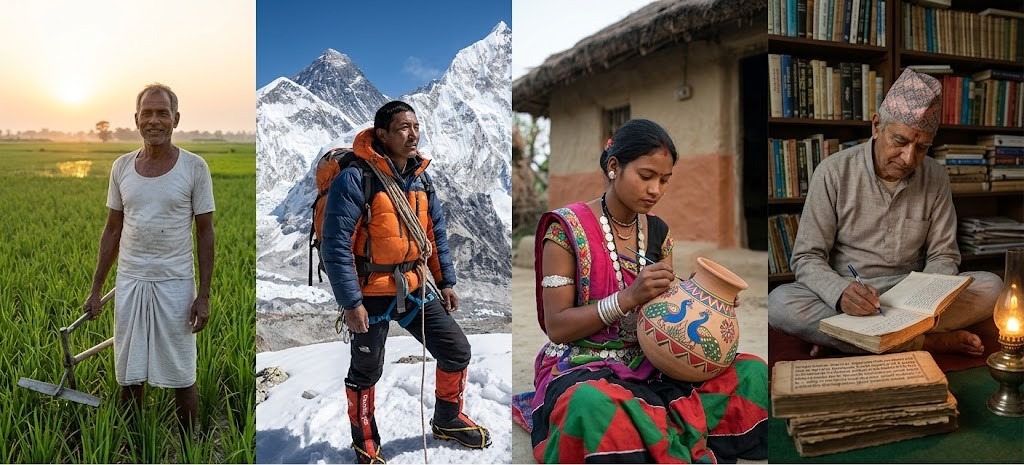
Federalism was conceived as an architecture for shared dignity, not a bazaar where identity is bartered for exemption from scrutiny. A civic nationalist vision demands that accountability be universal: the Madhesi farmer in the Terai, the Sherpa guide in the Khumbu, the Tharu artist in the western plains, and the Brahmin scholar in the Kathmandu Valley must all meet the same standard of citizenship, bear the same responsibilities, and claim the same protections.
Tribal solidarity, when it hardens into political tribalism, becomes a fortress behind which leaders hide from the demands of the broader nation.
There is also the siren song of jingoism, often draped in the language of tradition and faith. Recent murmurs to restore the monarchy, to dissolve secularism into a majoritarian creed, or to define patriotism as obedience are not expressions of national pride but symptoms of a deeper insecurity.
True civic love does not require the citizen to sing in one key; it thrives in the harmony of many voices. Jingoism and its cousin, fanaticism, offer the false comfort of uniformity, but they extract a terrible price: the erosion of constitutional morality.
When leaders imply that some Nepalis are more authentic than others, they are not defending the nation; they are wounding it at its source. Civic nationalism insists that our loyalty is to the republic and its charter, not to any transient vision of cultural purity. In that sense, the promise of democracy lies not in sameness, but in a shared commitment to live together under rules that apply equally to all.
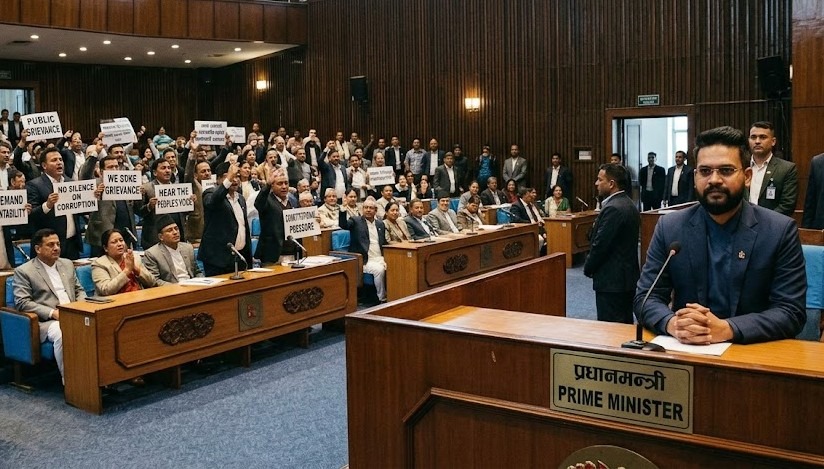
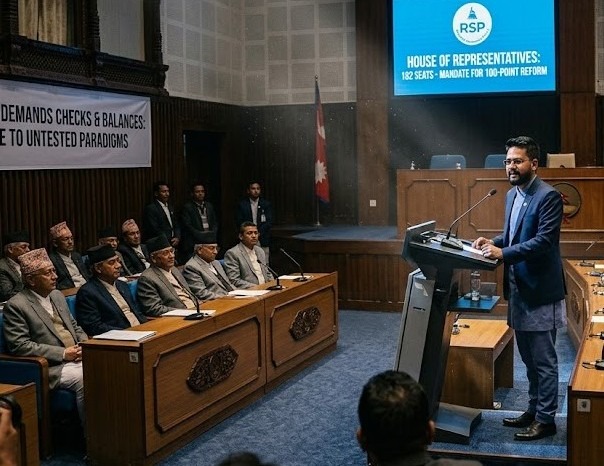
Prime Minister Balendra Shah now occupies a seat that few in Nepal’s modern history have held with such popular legitimacy. But legitimacy is not immunity. The 100-point governance framework unveiled by his administration contains the vocabulary of reform; what remains is the grammar of implementation. Will the commitment to transparency extend to the party’s own finances? Will the promise of merit survive the gravitational pull of patronage? Will the rhetoric of inclusion translate into appointments and policies that reflect Nepal’s plural reality? These are not hostile questions—they are the essential questions of a civic culture.
Institutional accountability, however, cannot rest on the character of a single individual, however well-intentioned. The violence of September 2025 demands impartial investigation, not because the past must be endlessly relitigated, but because without justice, the future cannot be trusted.
The Commission for the Investigation of Abuse of Authority has shown welcome vigor in recent years, but its courage must be systemic, not selective. The judiciary, the election commission, and the public auditor must be fortified against the very winds that brought the new government to power.
Civic nationalism understands that leaders come and go, but institutions are the inheritance we leave to children not yet born. What, then, is the positive vision? It is Nepal where citizenship is the supreme identity, where the constitution is the shared scripture, and where dissent is recognized not as disloyalty but as the awkward, necessary gift of a free people. It does not ask us to erase our differences; it asks us to transcend them in the service of common goods—clean governance, equitable development, and the dignified treatment of every individual under the law.
The path ahead is neither short nor straight. The old habits of deference, the old temptations of majoritarian swagger, and the old refuge of ethnic grievance will not dissolve simply because a new government has taken its oath.
But the Nepali people—especially the young, who reclaimed the digital commons and then the ballot—have shown a resilience that ought to humble those who hold office. This is not a time for triumphalism, nor for settling scores.
It is a time for the patient, dignified construction of a republic where leaders serve rather than perform, where institutions endure rather than obey, and where every citizen can say, with quiet confidence, that the Nepal of tomorrow belongs to them not by favor, but by right. Let us hold this moment gently, but firmly, and never let it slip back into the shadows from which we have, at such cost, finally emerged.
I have been working on the trends of the Nepalese Foreign Policy as the existing global order gets gradually altered in 21st century world ..
I have been working on the trends of the Nepalese Foreign Policy as the existing global order gets gradually altered in 21st century world. I am an MA in English and MPhil in International Relations a...
@ Copyright matrikapoudyal.com All Rights Reserved
Designed by Fortune Info Tech
One comment
Bro, you sound more like ChatGPT, less like a human. Your essays are quite boring and predictable. Not only that, but the sentences do not have depth. It all sounds pompous and rather grandiose, with no substance. I know it is your website; you can write whatever you want, but it is rather silly and makes people judge you based on your ChatGPT pieces.