

I have been working on the trends of the Nepalese Foreign Policy as the existing global order gets gradually altered in 21st century world ...
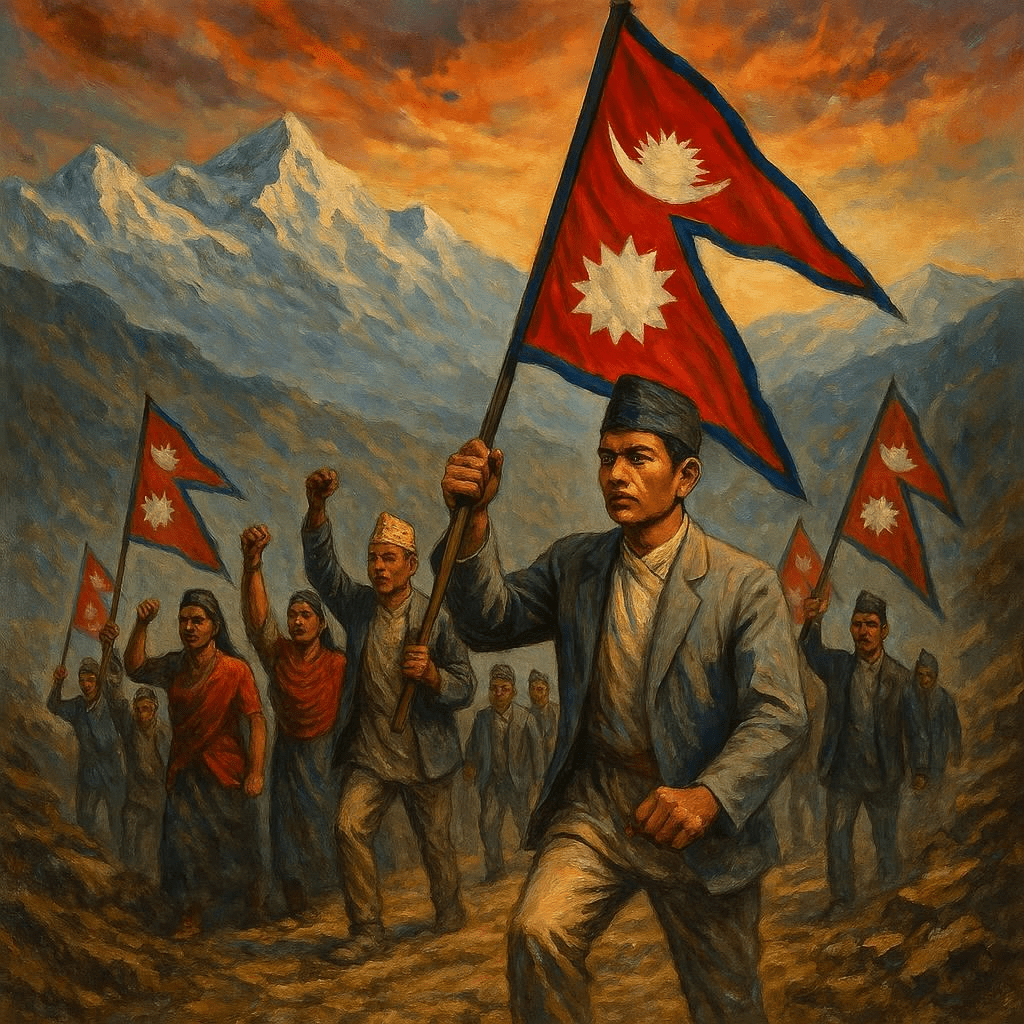
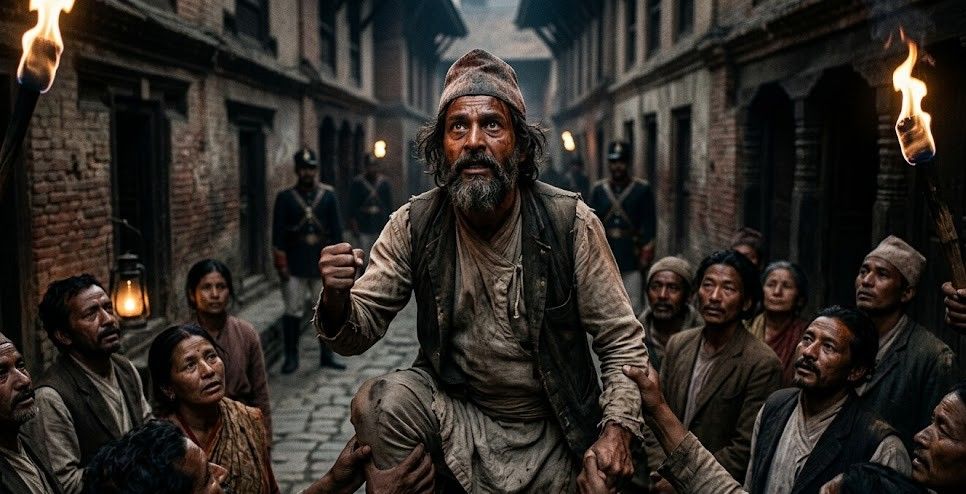
The democratic trajectory of Nepal is not merely a political timeline, but an epic saga etched in the unyielding will of its people, a testament to enduring resilience. Over seven decades, the nation’s pursuit of self-determination has unfolded as a narrative marked by profound triumphs and agonizing setbacks, confirming that democratic consolidation is rarely a story of linear improvement. The foundational moment came with the 1950-51 revolution, which bravely ended the autocratic Rana regime. Yet, the hard-won liberty was tragically short-lived, usurped in 1960 by a royal-military coup that ushered in decades of authoritarian control under the party-less Panchayat System.
This pattern—democracy gained, democracy hijacked—underscores a crucial lesson: freedom is not a gift, but a perpetual burden of vigilance. The People’s Movement (Jana Andolan I) in 1990 re-established multiparty democracy, only to see it degraded by political instability and infighting, eventually fueling the Maoist insurgency.
When King Gyanendra followed his father’s path and sabotaged institutions in 2005, the unified response of the People’s Movement II (Jan Andolan II) proved decisive. This movement, born of collective suffering and martyrdom, culminated in the abolition of the Monarchy in 2008 and the crowning achievement of the Federal Democratic Republic.
The profound sacrifices made during these struggles against central government control established an unassailable moral foundation for the current state. The recurrence of crises, however, reveals a historical vulnerability: when elected leaders fail the people, the vacuum created by public disillusionment and political non-performance becomes an invitation for authoritarian remnants to reassert themselves. So, the greatest monument to those who fell, and the highest defense against regression, resides not in stone, but in the sustained, purposeful engagement of the citizen.
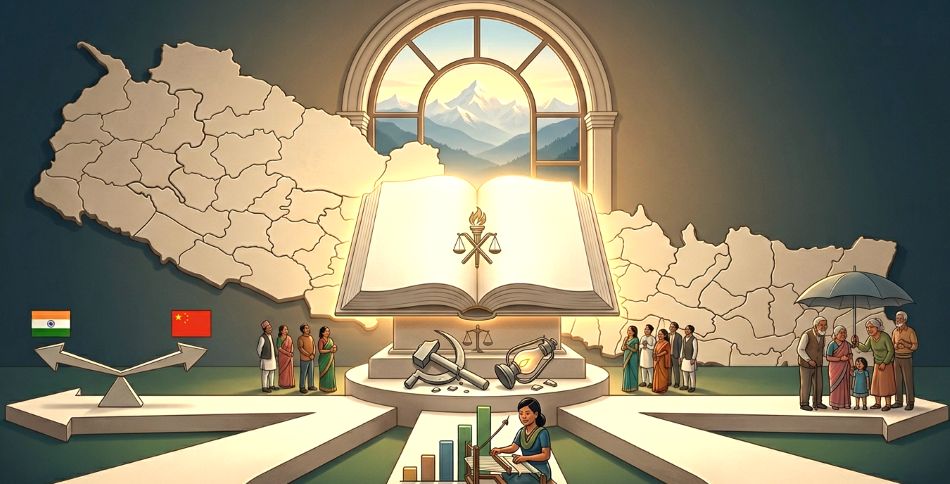
The Federal Democratic Republic of Nepal, forged through fire, declares the voter to be the ultimate sovereign, the non-centralized leadership that grants the state its legitimacy. It is the citizen who must shape the democratic process, confirming the principle that governance must honor the desire of the majority through the aggregation of individual preferences.
This mandate is an immense power, but it carries the heavy burden of managing expectation in a transitional state. As a young democracy, Nepal faces great expectations for immediate improvement in daily life, yet the shift from a feudal monarchy to federalism is inherently a “tortuous and torturous” path, requiring gradual, systemic change.
The widespread view that the process must deliver immediate, complete transformation ignores that democratization is not a quick fix, but a long process involving inevitable drawbacks and detours. To secure the foundation, citizens must embody the spirit articulated by democrats throughout history: Democracy needs democrats.
This responsibility demands not passive waiting, but the constant nourishment of civic commitment, coupled with the strategic wisdom to understand that the system’s health depends on sustained popular involvement, even when visible progress is slow.
The vote, therefore, is not merely an expressive choice; it is a critical, strategic signaling mechanism essential for resource distribution and political survival within Nepal’s newly decentralized structure. In emerging democracies, where governments possess fewer resources than consolidated states, politicians must be highly targeted in their distribution of services. Consequently, high voter turnout acts as the primary signal that a community is organized, powerful, and therefore “deserves services” from the government.
Applying this principle to Nepal’s context, which is characterized by intense political bargaining over jurisdiction and resource sharing between the three spheres of government—federal, provincial, and local—the strategic value of the local vote is multiplied. Communities must collectively organize and vote, or risk being overlooked in the competitive allocation of resources, which can be particularly acute during times of crisis and poor governmental coordination.
Furthermore, civic participation demonstrates political sophistication when voters strategically cast a ballot for an alternative that may not be ranked highest in their preference ordering, but which serves to block a disastrous candidate or outcome, a sign of political maturity necessary to navigate environments where preference distribution is uncertain.
Sustained, high local turnout is the most powerful tool available to pressure decentralized governments, ensuring that the federal system delivers essential services and remains responsive to community priorities.
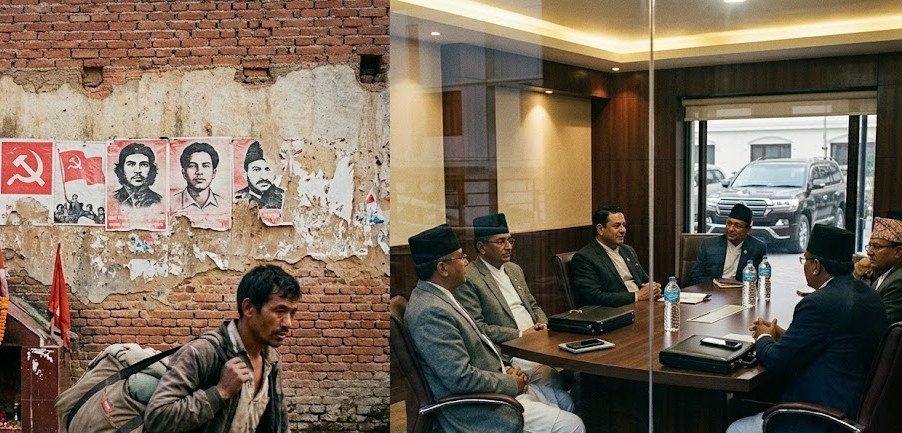
We must, however, confront the harsh reality that the democratic gains achieved through popular movements are threatened by internal decay. A pervasive “syndrome” of chronic political instability, grand corruption, expanding impunity, and legislative paralysis has deeply eroded public faith in elected representatives. Such crisis of trust is not unprecedented; the failure of mainstream political parties, focused on petty partisan interests rather than prosperity, historically fueled instability, including the eruption of the Maoist insurgency.
Today, the threat has evolved: the enemy is no longer a centralized, visible monarch, but an insidious, decentralized force of internal corruption and institutional inertia. There is a tangible danger that electoral inclusion is failing to translate into genuine political empowerment, particularly for marginalized communities, instead reinforcing old patron-client relations between political elites and selected minority leaders.
Corruption and impunity now stand as the primary obstacles to democratic consolidation, generating an “electoral deficit” that threatens the stability of the entire system. The electorate must recognize that its strategic mission has shifted: it is no longer about overthrowing an external regime, but about activating the republic’s internal immune system to cleanse itself of the pervasive abuse of money and power in politics.
Therefore, the strategic ballot must become more than a mere selection; it must be an instrument of relentless defense and non-negotiable mandate. The power of the voter resides in their ability to sanction and veto failure, thereby forcing political parties to chart a “radically different track” from the conventional approach that has proven inadequate. This demands that citizens utilize their agency to insist on robust accountability mechanisms that raise the cost of poor performance.
The political conversation must urgently embrace tools that combat the legislative paralysis and expanding impunity, such as adopting the principle of the Negative Vote (None of the Above, or NOTA) and granting the power to recall lawmakers who prove to be corrupt or criminal. The strategic value of the Nepali voter is tied directly to the threat of sanction.
The possibility of nullifying elections where negative votes outnumber those garnered by all candidates, or of actively initiating recall procedures against officials guilty of grand corruption, creates a powerful coordination device. This institutionalizes the people’s right to enforce accountability, transforming the election day not just into a celebration of choice, but into a mechanism of mandatory performance review that revives public faith in the democratic process.
No single ballot, however strategically cast, can fulfill this national destiny alone. The strategic signaling required to secure resources and enforce accountability demands the cohesion of conscience—the ability for communities to collectively organize and act decisively. The complexities of federalism, including political bargaining over jurisdiction and resource allocation, present a potential driver of instability. To counter this, the electorate must be unified, demanding clarity and consistent governance from all three tiers of the state.
Only through collective action can the public ensure that federalism meets the high expectations of the most marginalized communities, thereby translating electoral inclusion into tangible political empowerment and minimizing jurisdictional chaos. Democracy, as a living organism, requires constant commitment and nourishment; it is fragile and subject to detours.
This sustained engagement—moving beyond election day to actively defend democratic values, participate in civic discourse, and maintain vigilance—is the essential component that prevents the hard-won achievements, such as the adoption of the 2015 constitution and the establishment of the federal state, from being ultimately undervalued.
The epic of our nation is not yet finished; it is an unfinished ascent that demands the highest commitment from its citizens today. The democratic journey is analogous to navigating the tumultuous rivers and soaring peaks of the nation’s geography—a constant struggle for higher ground, demanding courage and tenacity.
Every vote cast strategically, every demand for accountability voiced collectively, reinforces the foundations of the republic and pushes back against the persistent shadow of political exclusion and impunity.
This moment in time, a fragile and critical period of transition, demands immediate, decisive civic action to solidify the gains of federalism and prevent the system from regressing due to public cynicism. Look back at the decades of sacrifice, honor the moral weight of the martyrs, and recognize that the power they fought for resides definitively in your hands.
You, the voters, are the guardians of the republic, the final adjudicators of political performance, and the authors of the next, most crucial chapter. Go forth, vote not merely for hope, but for strategic, non-negotiable accountability, and thus ensure that the sovereign will of Nepal forever prevails.
I have been working on the trends of the Nepalese Foreign Policy as the existing global order gets gradually altered in 21st century world ..
I have been working on the trends of the Nepalese Foreign Policy as the existing global order gets gradually altered in 21st century world. I am an MA in English and MPhil in International Relations a...
@ Copyright matrikapoudyal.com All Rights Reserved
Designed by Fortune Info Tech