



I have been working on the trends of the Nepalese Foreign Policy as the existing global order gets gradually altered in 21st century world ...
The foreign policy of Nepal presents a compelling dichotomy, a perpetual negotiation between an idealistic, aspirational rhetoric and the unyielding forces of geopolitical realism. For decades, Kathmandu’s diplomatic narrative has invoked principles of non-alignment, sovereign equality, and peaceful coexistence—a diplomatic lexicon rooted in a “fairy tale” vision of small-state agency. This rhetoric, however, consistently encounters a hard-edged reality.
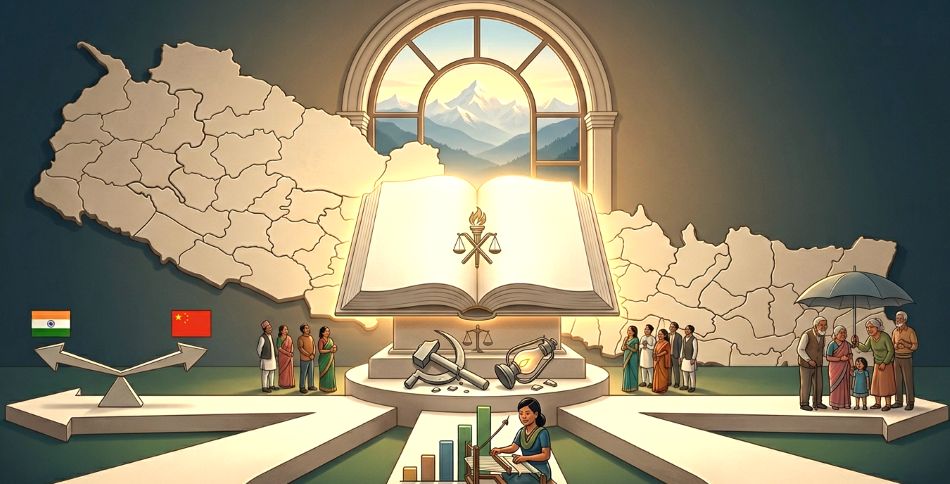
Nepal cultivates its unique “Roti-Beti Ka Rishta” with India, a profound bond of kinship and shared heritage, while simultaneously forging an agreement of “Everlasting Peace and Friendship” with China. This strategic navigation of its geography, often historically described as “a yam between two boulders,” demonstrates profound diplomatic dexterity. By transcending this traditional metaphor, Nepal consciously positions itself as a vital “bridge state,” actively fostering mutual understanding and economic connectivity between its formidable neighbors, thereby asserting its sovereign agency and ensuring its national interests.
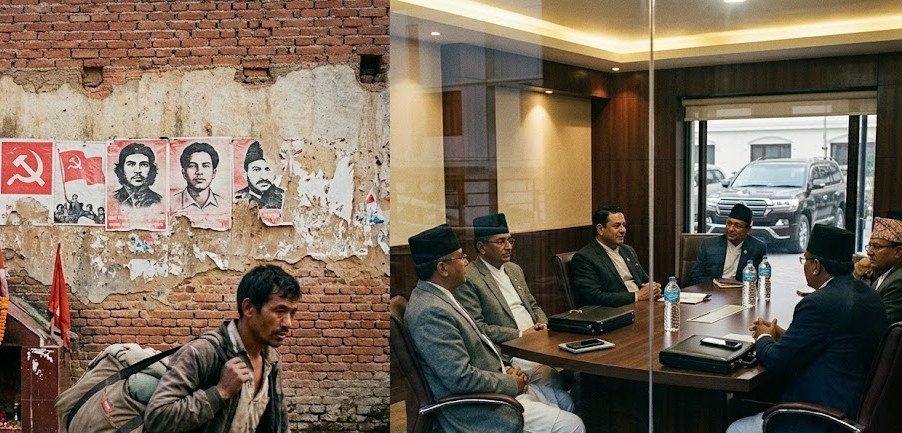
However, critics condemn Nepal’s foreign policy as reactive and inconsistent, dictated by domestic political instability rather than a long-term vision. Frequent government changes force abrupt shifts in foreign relations, while a fundamental lack of strategic coherence prevents the government from implementing its constitutional principles, a failure starkly illustrated by the stalled Belt and Road Initiative (BRI). This weakness is compounded by political patronage undermining the diplomatic corps, as appointments bypass seasoned experts to reward allies, crippling Nepal’s credibility. Furthermore, an over-reliance on foreign aid perpetuates a supplicant mentality, locking the nation into a passive, supply-driven development model.
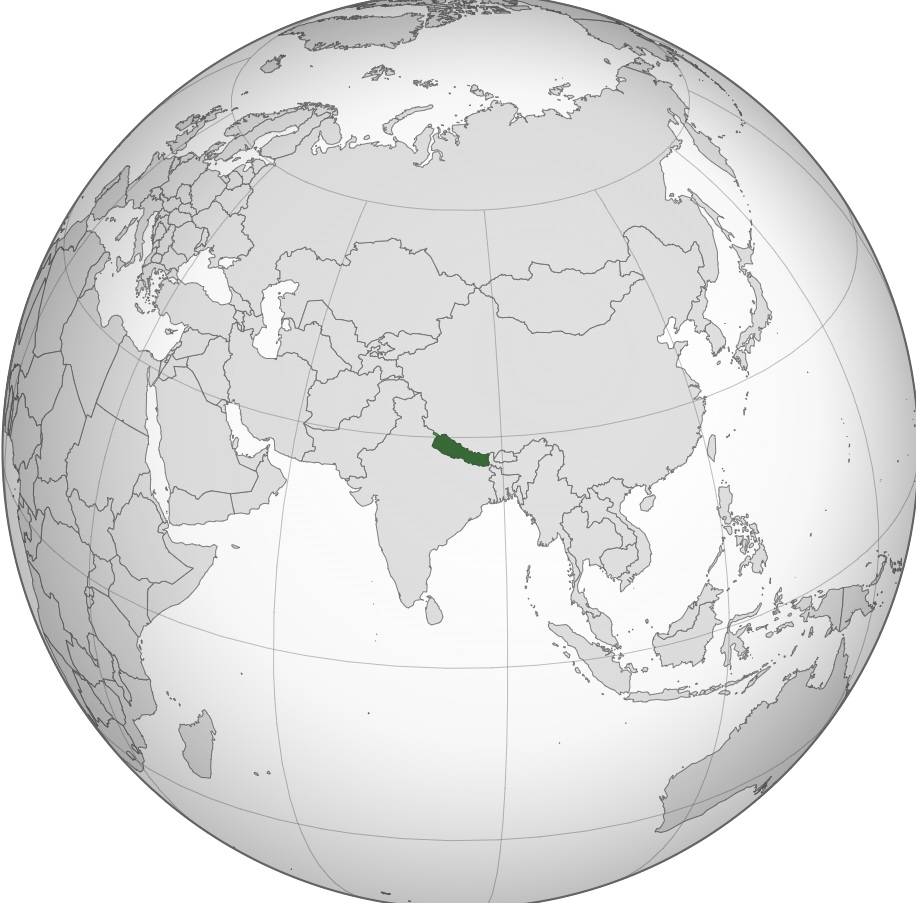
Nepal’s landlocked geography, its profound economic dependencies, and its location between two regional giants, India and China, dictate a pragmatic, often constrained, course of action. This essay explores how this rhetorical idealism, while serving a crucial domestic political purpose, ultimately yields to outcomes determined by power asymmetries, economic necessities, and a strategic balancing act. The disjunction between stated ideals and implemented realities defines the very essence of Nepal’s external relations.
However, this rhetorical idealism inevitably collides with the immutable facts of geography and power. Nepal’s landlocked status and its position as a buffer state between the competing spheres of India and China create a strategic landscape defined by dependency and vulnerability. Economic necessities—from the need for transit routes through India to the allure of Chinese investment in infrastructure—dictate a far more pragmatic and constrained course of action than principle alone would allow.
Consequently, the high-minded language of equality and non-alignment often yields to outcomes shaped by stark power asymmetries. This disjunction is not necessarily a failure of diplomacy but rather its central, defining characteristic; the essence of Nepal’s external relations lies in the constant, delicate act of navigating the gap between its sovereign aspirations and the pragmatic accommodations required for survival and development.
Kathmandu’s diplomatic discourse frequently employs lofty ideals, painting a picture of a nation autonomously charting its course in a complex world. The Constitution itself enshrines principles such as the United Nations Charter, non-alignment, and Panchsheel—the five principles of peaceful coexistence. This rhetoric elevates a moralistic foreign policy, a stance of neutrality and universal friendship, thereby positioning Nepal as an independent actor on the global stage.
This narrative, a cornerstone of national identity, projects an image of a dignified, uncolonized Himalayan state. It provides a source of national pride, a psychological bulwark against the perceived pressures of its colossal neighbors. In diplomatic communiqués and public speeches, policymakers consistently reaffirm this commitment, constructing a vision of a Nepal unfettered by external dominance, acting solely on the basis of its national interest and international law.
This grand narrative, however, confronts the primary challenge of Nepal’s geopolitical situation: its relationship with India. India’s overwhelming economic and geographic influence represents the first major realist outcome. Nepal’s dependence on Indian ports for third-country trade, alongside an open border facilitating immense cross-border movement, creates an asymmetry of power.
This reality manifests in tangible outcomes, from the 1989 and 2015-16 blockades—instances where New Delhi’s actions effectively halted the flow of essential goods—to the intricate negotiations surrounding hydropower and water resources. The rhetoric of sovereign equality often dissipates when confronting such economic coercion. Consequently, Kathmandu’s policy decisions invariably consider New Delhi’s sensitivities and strategic interests, prioritizing regional stability and economic security over an unyielding pursuit of rhetorical purity.
In an effort to mitigate this lopsided dependency, Nepal has historically engaged with China, attempting to craft a policy of “bamboo diplomacy.” This approach, seeking a strategic balance between the two powers, constitutes another facet of Nepal’s realist behavior. Nepal’s increasing tilt towards China—evidenced by the signing of a Transit Transport Agreement and its participation in the Belt and Road Initiative—underscores its desire for an alternative to Indian dominance.
However, China’s growing influence also introduces a new set of pragmatic considerations. The significant trade imbalance, the logistical challenges of trans-Himalayan connectivity, and concerns over debt sustainability present distinct obstacles. This engagement does not eliminate Nepal’s vulnerability; instead, it shifts the locus of geopolitical pressure. The rhetoric of an independent, equidistant foreign policy must now accommodate the distinct imperatives of a new, powerful partner, whose interests may not always align with Nepal’s.
A critical analysis of Nepal’s foreign policy must also recognize the primacy of economic necessity. The country’s persistent development challenges—the need for infrastructure, investment, and foreign aid—compel policymakers to seek collaboration with major global players. This “economic diplomacy,” while framed as a tool for national prosperity, often requires Nepal to compromise its non-aligned position. Treaties and agreements with Western nations or multilateral institutions frequently contain conditionalities, subtly influencing Nepal’s policy trajectory.
The pursuit of foreign direct investment and development assistance, therefore, transforms the national agenda, prioritizing pragmatic financial gains over the maintenance of an ideologically pristine diplomatic posture. This dynamic proves the ultimate realist test, where a nation’s survival and development depend on its capacity to leverage—and sometimes concede to—external capital and expertise.
The persistence of the idealistic rhetoric, despite its repeated subjection to realist outcomes, holds significant domestic importance. Politicians and leaders employ this narrative to rally public support, to foster a sense of national unity, and to project strength and resolve.
This internal function of foreign policy rhetoric allows for the external reality to be absorbed and reinterpreted, preventing public frustration over a perceived lack of autonomy. It frames concessions as strategic necessities rather than diplomatic failures.
This rhetorical tool, a kind of psychological defense mechanism, empowers a small state’s leadership to manage the expectations of its populace, creating a public perception of competence and control even when external factors circumscribe its genuine choices.
In conclusion, Nepal’s foreign policy constitutes a sophisticated, though often paradoxical, exercise. It navigates a perilous path, continuously striving to reconcile a rhetoric of sovereign independence with a harsh reality of geographic and economic constraints. The idealized vision of a non-aligned, equidistant nation consistently yields to the pragmatic demands of a complex, asymmetrical power dynamic.
This is not a failure of will, but rather a functional, necessary adaptation. The ongoing tension between “fairy tale” rhetoric and realist outcomes defines a uniquely Nepali approach to international relations—a coping strategy for survival and a testament to the resilience of a small state in a great power environment. This perpetual negotiation underscores the truism that in geopolitics, national interest ultimately triumphs over ideological purity.
I have been working on the trends of the Nepalese Foreign Policy as the existing global order gets gradually altered in 21st century world ..
I have been working on the trends of the Nepalese Foreign Policy as the existing global order gets gradually altered in 21st century world. I am an MA in English and MPhil in International Relations a...
@ Copyright matrikapoudyal.com All Rights Reserved
Designed by Fortune Info Tech