





I have been working on the trends of the Nepalese Foreign Policy as the existing global order gets gradually altered in 21st century world ...
The courageous and passionate movement led by our younger generation, commonly known as Gen Z, has delivered a profound message to our democracy: a call for genuine renewal. This movement, though rapidly escalating into national chaos, was not merely a reaction to technical policy changes; rather, it exposed decades of deep public disillusionment with corruption, elite impunity, and governance failures that have festered since the Maoist insurgency.
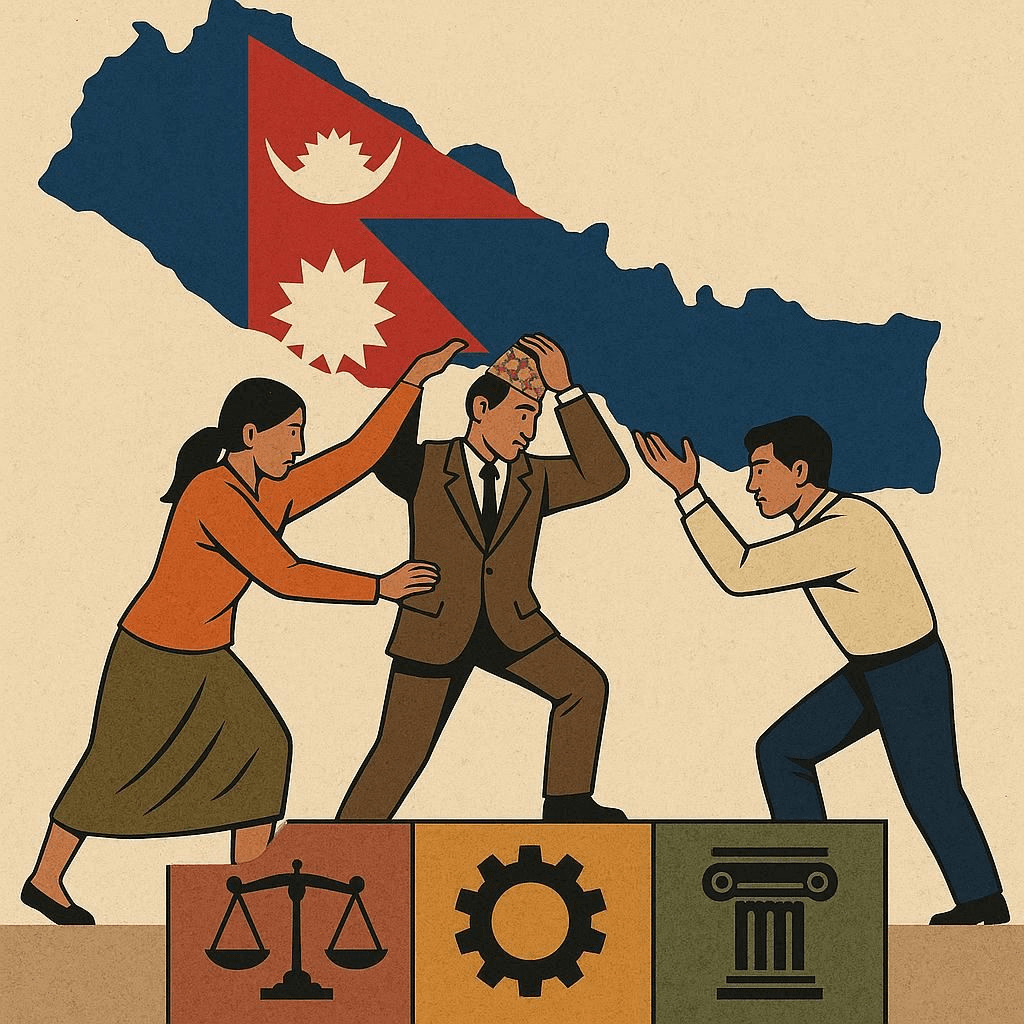
Therefore, securing the stability of our nation requires more than short-term fixes; it demands a collective commitment to three basic ingredients that will restore the credibility of the state and prevent further sliding into turmoil: swift justice, real economic opportunity, and deep institutional reform. This stabilization path requires every stakeholder in our democracy to act with prudence and patriotic duty.
Crucially, the first ingredient for stability is the immediate, non-negotiable restoration of the rule of law through demonstrated accountability. The interim government has a singular duty to pursue justice for all citizens, including the victims of the recent state violence, by supporting the established judicial inquiry commission with transparency and dedication.
Simultaneously, we must move expeditiously to investigate and prosecute the widespread corruption by the erstwhile political leadership that fueled national outrage. Only through these credible and visible acts of accountability—holding powerful individuals responsible irrespective of their status—can the state regain the moral legitimacy required to govern and secure the trust necessary to hold free and fair elections. Justice must be served quickly, for it is the foundation upon which all other reforms rest.
The second core ingredient is forging a new economic compact with our youth to offer tangible hope and opportunity within Nepal itself. The uprising was fundamentally fueled by economic despair, evident in youth unemployment exceeding 20 percent and the visible gap between the impoverished majority and the lavish lifestyles of the political elite. No political agreement can hold for long without addressing these urgent economic grievances.
In this respect, we must fundamentally shift our focus from being merely an exporter of labor to becoming a land of domestic opportunity. This requires accelerating critical capital expenditure for infrastructure, tackling pervasive tax evasion, enforcing financial integrity measures, and implementing policies that promote industrial growth and retain skilled talent.
Moving forward, the third vital ingredient is the deepening and strengthening of our fragile democratic institutions. For too long, the political system has shuffled leaders without reforming the deeply inefficient structure, leaving state capacity weak. We must now commit to profound institutional reform, prioritizing merit and specialization over political loyalty in all future appointments to the bureaucracy and ministries.
Furthermore, we must streamline our constitutional bodies and actively resource the federal structures, ensuring that the promise of federalism—designed to enhance representation and deliver political and cultural autonomy to marginalized groups—is fully realized at the provincial and local levels. Strengthening these institutions preserves the irreversible foundations of our republican, federal, and inclusive state.
In this critical period, the established political parties must demonstrate collective wisdom, moral leadership, and a fundamental shift from traditional partisan interests. The purpose of politics is to secure social peace and prosperity, not to pursue partial advantage. Every established leader must recognize that the legitimacy of political parties relies on their conformity to the rule of law and their commitment to national values.
This necessitates active support for the interim administration, transcending political divides to craft a cohesive national strategy that puts the delivery of effective governance and institutional stability ahead of short-term electoral gains.
In this spirit, we issue a specific appeal to the powerful Gen Z movements and the vital civil society organizations that catalyzed this change: you are equally valid representatives of the nation, and your voice is essential to our transformation. We ask for patience and restraint, urging you to channel your extraordinary energy and digital activism into structured dialogue platforms involving the private sector and political actors.
Your participation in policy creation and reform processes is not just welcomed, it is mandatory for stabilization. It is the duty of all protesting groups to act with responsibility and commitment to protecting human rights, democracy, and national integrity during this delicate period.
Now, more than ever, we must stand together to ensure that the crisis of September 2025 becomes the undeniable catalyst for democratic renewal. Securing the rule of law, creating opportunity for every young Nepali, and reforming our institutions are not abstract policy goals; they are the concrete duties that bind us as one nation.
By embracing these three ingredients—Justice, Opportunity, and Reform—we confirm our commitment to building a durable, inclusive, and credible democracy, ensuring that Nepal is not merely a memory of past struggles, but a place where the next generation can truly build its future.
I have been working on the trends of the Nepalese Foreign Policy as the existing global order gets gradually altered in 21st century world ..
I have been working on the trends of the Nepalese Foreign Policy as the existing global order gets gradually altered in 21st century world. I am an MA in English and MPhil in International Relations a...
@ Copyright matrikapoudyal.com All Rights Reserved
Designed by Fortune Info Tech