Why Political Parties Must Be Purified, Not Destroyed, in Nepal
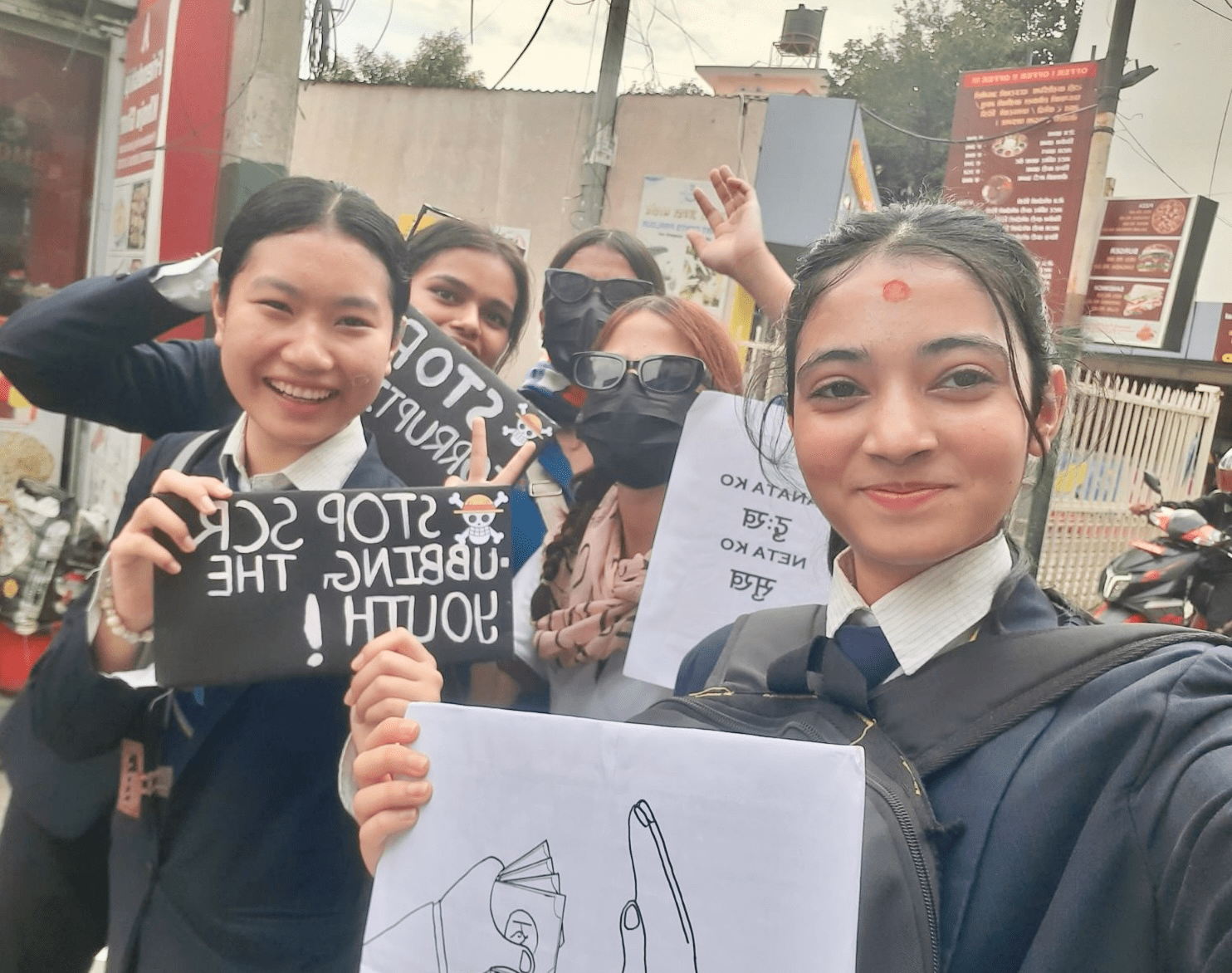
Nepal’s September 2025 uprising demonstrated the raw power of collective outrage. The leaderless, digitally coordinated youth movement—Generation Z—confronted an entrenched political establishment defined by systemic corruption and profound economic disparity.
This fury was righteous: youth unemployment rates exceed 20%, contrasting sharply with political elites who brazenly flaunt unexplained wealth. This democratic deficit drove frustrated citizens to burn the very symbols of their betrayal, resulting in the unprecedented destruction of the Parliament and Supreme Court buildings.
While the established political class certainly deserved this rejection, a critical distinction demands immediate recognition: attacking corrupt leaders differs profoundly from dismantling the institutional framework they inhabit.
The destructive phase of the protest inadvertently created a vacuum, opening a dangerous door for anti-democratic elements, like those supporting the deposed monarchy, to exploit the resultant chaos. Political parties, despite the corruption of their current practice, provide the essential architecture for stable democracy, rule of law, and inclusive governance. Rejecting the institution guarantees chaos, not correction.
A healthy democracy requires structural integrity, much like a complex building. Political parties function as the internal structure—the necessary plumbing and wiring system. They manage the complex flows of political life. Independent candidates or single-issue protest groups serve only as individual light fixtures or taps; while useful, they remain entirely dependent on the underlying grid.
Political parties perform two vital, structural tasks that non-institutionalized movements cannot replicate. First, they execute Interest Aggregation, collecting myriad, often competing societal demands—such as balancing industrial growth against environmental protection—and fusing them into a coherent, long-term policy platform.
Second, parties guarantee Accountability Linkage. They coordinate complex governing majorities and coalitions and present a unified program, allowing voters to reward or punish an entire team based on its governance record, thus creating a necessary incentive for responsible government. The 2015 transition to a federal system fundamentally altered Nepal’s governance structure, mandating immense coordination across seven provinces and 753 local governments.
Only institutionalized parties possess the nationwide organizational reach to manage policy coherence and stability across this vast, decentralized system. Discarding the parties means forfeiting the fundamental capacity required to make federalism work for the populace.
The immediate aftermath of the government’s collapse proved the immense administrative cost of instability. The transition saw an unprecedented, digitally-selected interim government take power. While this symbolized transparency, the non-party structure proved inherently fragile and administratively sluggish. Governance demands institutional capacity and continuity.
Critically, the transitional administration delayed action in fundamental governance sectors, failing to fill vacant ambassadorial posts strategically, thereby creating a detrimental diplomatic gap.
Furthermore, administrative negligence was highlighted by the failure to insure public infrastructure destroyed during the September protests, forcing the state to bear the full, uninsured reconstruction cost—a basic fiscal necessity ignored in a disaster-prone state. Rule of law requires consistent enforcement by impersonal state institutions—courts, bureaucracy, and law enforcement agencies.
When political leadership lacks stable institutional support, or when a protest group risks becoming a dominant power operating in an unchecked digital “echo chamber” , the legal framework becomes subservient to political volatility. This continuous turbulence, exemplified by immediate calls for the digitally-selected Prime Minister’s resignation shortly after her swearing-in, confirms that purity of intent does not translate into governance stability, stalling the structural economic reforms the country desperately needs.
Achieving genuine inclusivity—a core Gen Z demand—requires the nationwide, institutional capacity only political parties command. The Nepali Constitution promises a society based on equality, proportionality, and inclusion. Parties serve as the primary, nationwide mechanism for institutionalizing representation for marginalized groups across gender, caste, and ethnicity.
Tragically, past party behavior, driven by deep factionalism and patronage, systematically failed to support the growth of impersonal institutions, sustaining the vast divide between democratic promise and socio-economic inequality. This failure directly fueled the youth’s profound sense of exclusion and distrust.
However, the Gen Z Draft Accord, formalized after the revolt, mandates a high-level constitutional review committee to enforce greater inclusion and representation in all state bodies. These demands necessitate deep-seated legislative changes.
Only parties, operating through parliament and commanding the federal structure, possess the necessary political mandate and coordination capacity to implement such sweeping reforms sustainably. A centralized, digital movement cannot reach, recruit, or integrate diverse leadership on the national scale required to build a truly inclusive federal republic.
The raw energy of the street must now be channeled into concrete political and electoral mobilization efforts. The Gen Z Draft Accord provides this critical transition roadmap, signifying the movement’s focus shifted from mere overthrow to strategic institutional change.
This accord constitutes a non-negotiable contract for political purification. It demands specific, structural fixes: prompt investigation and legal action against corrupt political leaders; prosecution for state actors responsible for killings and human rights violations during the uprising; and complete transparency regarding party assets and finances. This movement demands institutional purification.
The Gen Z uprising acts as a critical external regulatory force, dictating the minimum standards required for the survival of the party system. By demanding transitional justice principles—including differentiating protestors from organized criminals and seeking prosecution for state violations —Gen Z forces the parties to engage directly with the rule of law they previously corrupted. Parties must accept that their legitimacy now hinges entirely on their demonstrated commitment to these accountability demands.
To regain public trust, political parties must willingly submit to stringent external oversight. This necessitates adopting international best practices for governance: regulating public and private funding, establishing expenditure ceilings, and ensuring exceptionally high levels of financial transparency.
Parties must immediately enforce accountability by implementing legal reforms that explicitly exclude individuals convicted of corruption or electoral crimes from running for public office.
In addition, the pervasive practice of patronage must end. Nepal’s foreign policy failures, for example, have been repeatedly cited due to the priority given to selecting party members for diplomatic roles over professional expertise. The interim government’s sluggish foreign policy immediately highlighted the consequences of politicized appointments.
Parties must transition to transparent, merit-based selection processes for all bureaucratic, judicial, and diplomatic appointments.
Appointing professionals based on expertise, rather than political loyalty, re-establishes the credibility the political class lost through decades of self-serving habits. By institutionalizing meritocracy, parties demonstrate an indispensable commitment to national interest over factional interests.
Hence, political parties, despite causing Nepal’s current political ailment, remain the only viable structural vehicle for lasting democratic recovery. They are indispensable for aggregating complex policy demands, enforcing the rule of law, and guaranteeing long-term inclusivity across the federal republic.
Nepal’s youth demonstrated their capacity to break walls; now, they must demonstrate the harder skill: building and participating. Gen Z must seize this strategic moment, using the force of their movement to enforce party purification. They must monitor party finances, enforce the constitutional demands for inclusion, and step forward as ethical candidates themselves.
A functional democracy demands institutional commitment. Nepal’s future stability rests not on the destruction of its democratic framework, but on its political leaders adopting the binding Gen Z mandate, transforming their organizations, and securing the promise of stability, rule of law, and inclusion for all generations to come.