


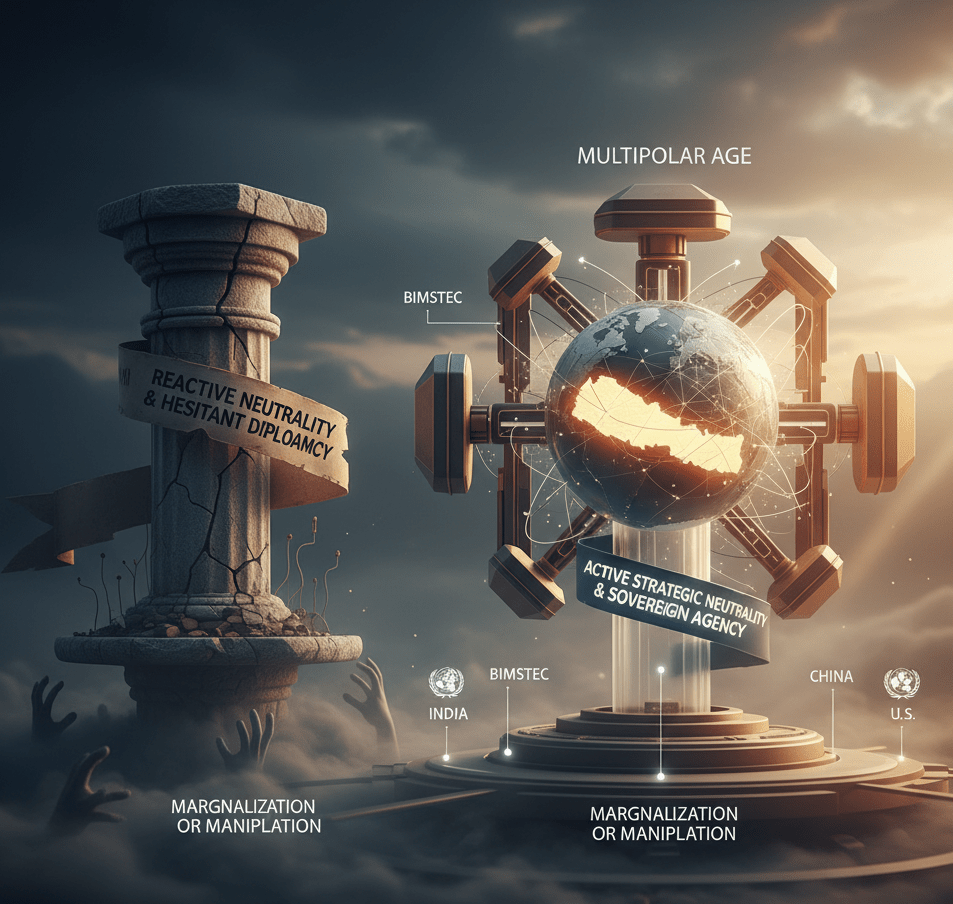


I have been working on the trends of the Nepalese Foreign Policy as the existing global order gets gradually altered in 21st century world ...
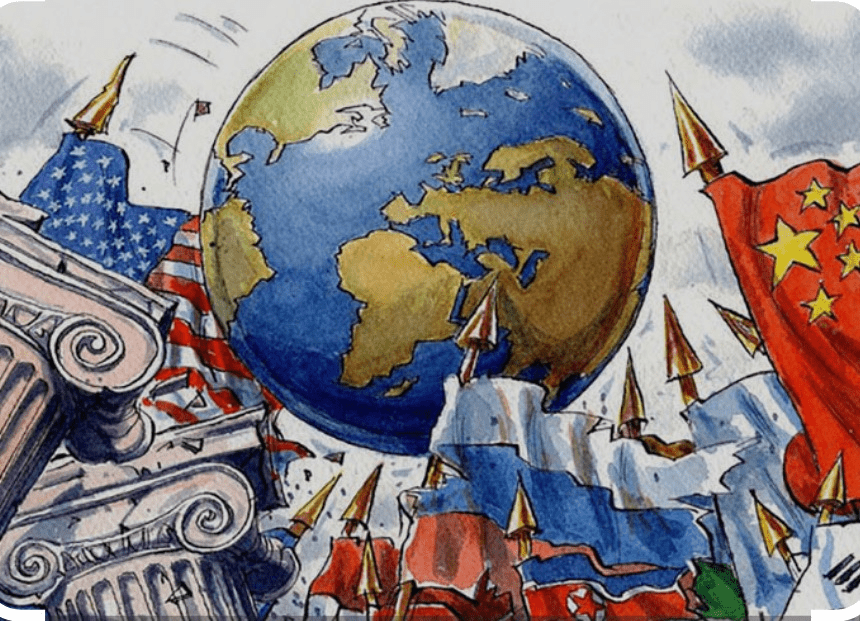
The 21st-century international system is characterized by a conspicuous absence of a singular “center of gravity,” a term denoting a dominant power or institution capable of steering global affairs. This decentralization stems from several interrelated factors, each contributing to a fragmented and multipolar world order.
The unipolar moment of U.S. hegemony following the Cold War has eroded, giving way to a multipolar landscape. Emerging powers such as China, India, Brazil, and regional actors like Turkey and Iran now assert influence, challenging the dominance of traditional Western powers.
Economically, globalization has redistributed wealth and capabilities, with China becoming the world’s second-largest economy and the EU wielding collective clout. This diffusion undermines the notion of a single economic or political center, as power is dispersed across competing poles. However, this multipolarity does not equate to stability; instead, it fosters competition, as seen in U.S.-China trade wars and geopolitical rivalries in the Indo-Pacific.
The U.S., once the anchor of the post-1945 liberal order, faces diminished capacity to unilaterally shape global norms. Military overreach (e.g., Iraq and Afghanistan), economic crises (2008 recession), and domestic polarization have weakened its legitimacy and operational coherence.
Concurrently, institutions like the UN and WTO, designed for a bygone era, are paralyzed by structural inertia. The UN Security Council’s veto system often stalls collective action, while the WTO struggles to address modern trade disputes. These institutions lack the adaptability to manage contemporary challenges, leaving a governance vacuum.
Non-state actors—transnational corporations (e.g., Apple, Huawei), NGOs (e.g., Amnesty International), and illicit networks (e.g., cybercriminal groups)—wield unprecedented influence. Tech giants control data flows and shape public discourse, while decentralized movements like #MeToo or climate activism bypass state structures.
Additionally, cyber warfare and disinformation campaigns enable both state and non-state actors to destabilize societies without traditional military engagement. This erosion of state monopoly over power complicates centralized governance.
The resurgence of nationalism (e.g., Trump’s “America First,” Brexit, Modi’s Hindutva) prioritizes sovereignty over global cooperation. Populist leaders often reject multilateral frameworks, as seen in withdrawals from the Paris Agreement or the Iran nuclear deal.
This trend fragments collective responses to transnational issues like climate change and pandemics, exacerbating distrust among states. While regional blocs (e.g., ASEAN, African Union) attempt to fill gaps, their focus on local concerns often neglects global coordination.
Issues such as climate change, pandemics, and migration require collective action but expose the limitations of a decentralized system. COVID-19 highlighted both cooperation (e.g., COVAX vaccines) and competition (e.g., vaccine hoarding).
Similarly, climate negotiations remain hampered by divergent national interests, despite existential risks. The absence of a central authority to enforce commitments leads to suboptimal outcomes, reinforcing fragmentation.
Some contend that U.S.-China rivalry creates a bipolar system. Yet neither power can fully dominate: China faces internal economic constraints and pushback in regions like the South China Sea, while the U.S. grapples with internal divisions and reluctant allies.
Moreover, middle powers (e.g., India, EU) resist alignment, seeking strategic autonomy. Economic interdependence, while deep, has not curbed rivalry but instead weaponized supply chains (e.g., semiconductor bans), further fracturing the system.
The 21st-century international system lacks a center of gravity due to structural shifts in power distribution, institutional decay, the rise of non-state actors, technological disruption, and resurgent nationalism.
While multipolarity offers opportunities for diversified diplomacy, it also engenders instability, as competing interests and fragmented governance impede coherent responses to global crises.
The result is a world order marked not by hierarchy but by networked yet contentious interactions, where power is fluid and authority perpetually contested.
I have been working on the trends of the Nepalese Foreign Policy as the existing global order gets gradually altered in 21st century world ..
I have been working on the trends of the Nepalese Foreign Policy as the existing global order gets gradually altered in 21st century world. I am an MA in English and MPhil in International Relations a...
@ Copyright matrikapoudyal.com All Rights Reserved
Designed by Fortune Info Tech