





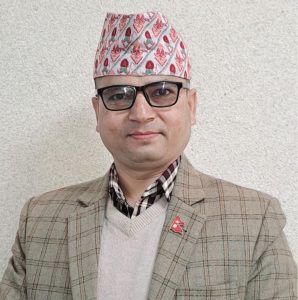
I have been working on the trends of the Nepalese Foreign Policy as the existing global order gets gradually altered in 21st century world ...

Democracy embodies feminine essence through its fundamental commitment to nurturing human potential, cultivating inclusive participation, and sustaining collective wellbeing.
Unlike authoritarian systems that impose rigid hierarchies through force and coercion, democratic governance operates through persuasion, dialogue, and consensus-building—qualities traditionally associated with feminine leadership paradigms.
Democracy also recognizes the intrinsic worth of every individual, prioritizing care for the vulnerable and marginalized within society. This nurturing orientation distinguishes democratic systems from their masculine counterparts in governance, which frequently emphasize dominance, competition, and zero-sum calculations.
Understanding democracy through a feminine lens illuminates both its transformative potential and its inherent vulnerabilities.
The nurturing dimension of democracy manifests through its institutional commitment to education, healthcare, social welfare, and environmental stewardship. Democratic societies invest substantially in human capital, recognizing that collective prosperity emerges from individual flourishing.
Democratic institutions, in addition, create spaces for marginalized voices, ensuring that policy decisions incorporate perspectives from women, minorities, and disadvantaged communities.
In contrast to extractive regimes that view citizens merely as resources for state aggrandizement, democratic governance treats people as ends in themselves. Similarly, democratic legal frameworks protect reproductive rights, gender equality, and family welfare—policy domains historically dismissed in masculine governance models.
The feminine character of democracy , that’s how, extends beyond metaphor into concrete policy priorities and institutional arrangements.
Nevertheless, this feminine quality renders democracy inherently fragile, demanding constant attention, protection, and renewal. Democratic institutions lack the rigid command structures that characterize authoritarian systems; instead, they rely upon voluntary compliance, shared norms, and mutual trust among citizens.
Consequently, democratic governance proves susceptible to demagoguery, misinformation, and the erosion of civic virtue. Additionally, the deliberative processes essential to democratic decision-making require time, patience, and compromise—qualities that impatient populations and ambitious leaders frequently circumvent.
Meanwhile, economic crises, security threats, and social upheaval create openings for anti-democratic forces promising swift, decisive action. Hence, democracy’s feminine nature—its openness, flexibility, and inclusivity—simultaneously constitutes its greatest asset and its most significant vulnerability.
Throughout history, democratic experiments have collapsed under pressure from militarism, populism, and elite capture. The Weimar Republic succumbed to Nazi totalitarianism; numerous Latin American democracies fell to military coups; and contemporary Hungary, Turkey, and Venezuela demonstrate how elected leaders systematically dismantle democratic checks from within.
In each instance, democratic fragility enabled anti-democratic forces to exploit institutional openness for destructive purposes. Nevertheless, these failures illuminate essential lessons: democracy requires vigilant defense, robust civic education, and strong independent institutions.
Furthermore, democratic resilience emerges precisely from its capacity for self-correction, adaptation, and renewal. Therefore, understanding democracy’s fragility prepares societies to strengthen rather than abandon democratic commitments during challenging periods.
Despite these vulnerabilities, democracy delivers unparalleled benefits to humanity that justify its protection and promotion. Democratic nations consistently outperform authoritarian counterparts in innovation, economic development, and human flourishing.
Free societies generate scientific breakthroughs, artistic achievements, and entrepreneurial ventures that enrich global civilization. Moreover, democratic peace theory demonstrates that mature democracies virtually never wage war against one another, fundamentally transforming international relations.
Additionally, democratic accountability mechanisms prevent the catastrophic policy failures—famine, genocide, environmental destruction—that characterize unaccountable regimes.
For these reasons, democracy represents not merely one governance option among many, but humanity’s most effective instrument for achieving peace, prosperity, and dignity. The feminine qualities of care, inclusion, and dialogue that define democracy directly generate these extraordinary benefits.
Nepal stands at a critical juncture where democratic consolidation determines the nation’s future trajectory. Following the abolition of monarchy and the establishment of republican governance,
Nepal embarked upon an ambitious democratic transformation that remains incomplete. Federal restructuring, constitutional implementation, and institutional capacity-building present formidable challenges requiring sustained commitment.
External pressures, ineluctably, from regional powers with divergent governance models complicate Nepal’s democratic consolidation. In this context, Nepal’s democratic choices carry profound implications for sovereignty, development, and national identity.
Nepal, thereupon, must strategically align with democratic nations and institutions to strengthen its governance capacity and secure its independent future.
Strategic collaboration with democratic partners offers Nepal multiple advantages essential for sovereignty preservation and national development. Democratic alliances provide access to development assistance, technical expertise, and institutional support that accelerate governance capacity-building.
Furthermore, democratic partnerships create economic opportunities through trade agreements, investment flows, and technology transfer that reduce dependence on any single power. Additionally, democratic solidarity generates diplomatic leverage in regional and international forums, amplifying Nepal’s voice on issues affecting its interests.
Beyond instrumental benefits, democratic alignment reinforces Nepal’s commitment to values—human rights, rule of law, popular sovereignty—that resonate with its own historical struggles for freedom and dignity. Thus, democratic collaboration serves both pragmatic interests and principled commitments.
Moving forward, Nepal must deepen democratic engagement through multilateral institutions, bilateral partnerships, and civil society exchanges that strengthen democratic resilience. Participation in organizations such as the United Nations, the International Monetary Fund, and regional democratic forums integrates Nepal into global governance networks that reinforce democratic norms.
Simultaneously, partnerships with established democracies—India, Japan, the United States, European Union members—provide concrete support for institutional development and economic growth. Meanwhile, civil society exchanges foster the democratic culture, civic skills, and public accountability that sustain democratic governance beyond formal institutions.
Through these multiple channels, Nepal cultivates the feminine qualities of democracy—nurturing institutions, inclusive participation, deliberative processes—that transform governance and society.
Summing up, democracy’s feminine character—its nurturing orientation, inherent fragility, and transformative potential—demands recognition, protection, and cultivation in Nepal and globally.
The challenges facing democratic governance remain substantial: authoritarian resurgence, technological disruption, economic inequality, and climate change test democratic capacities worldwide.
Nevertheless, democracy’s historical resilience, its capacity for self-correction, and its unmatched record of delivering human flourishing justify unwavering commitment.
For Nepal specifically, democratic collaboration with like-minded nations and institutions offers the most promising pathway toward sovereignty preservation, economic development, and national dignity.
Ultimately, embracing democracy’s feminine essence—caring for citizens, including diverse voices, and sustaining collective wellbeing—constitutes both a moral imperative and a strategic necessity for Nepal’s future prosperity and independence.
I have been working on the trends of the Nepalese Foreign Policy as the existing global order gets gradually altered in 21st century world ..
I have been working on the trends of the Nepalese Foreign Policy as the existing global order gets gradually altered in 21st century world. I am an MA in English and MPhil in International Relations a...
@ Copyright matrikapoudyal.com All Rights Reserved
Designed by Fortune Info Tech