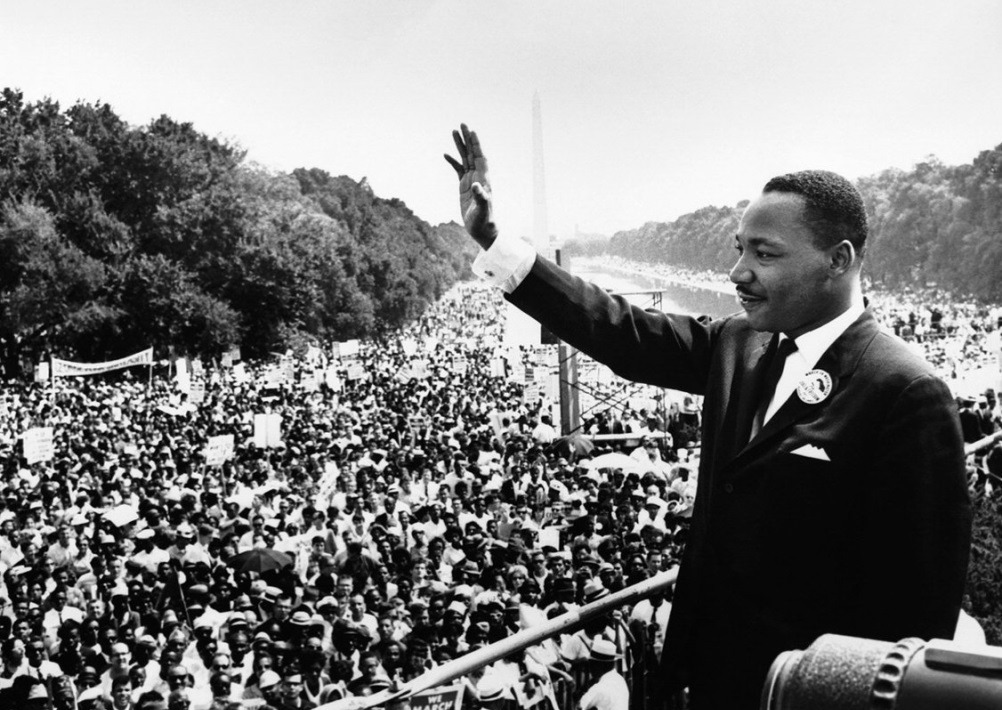
“The arc of the moral universe is long, but it bends toward justice.” Rev. M L King Jr.
A human becomes a good human not by perfection but by choosing love over fear, courage over comfort, and service over selfishness, and Rev. Martin Luther King Jr. made this choice his life’s central project.
Both his biblical Christianity and the Bhagavad Geeta’s wisdom point toward a transformed inner life that expresses itself in nonviolence, selfless duty, and reverence for the dignity of every being.
King believed a good person is shaped by agape—a selfless, creative good will that seeks the flourishing of all people, including enemies.
Drawing on the Lord Jesus’ command to “love your enemies,” he insisted that real morality refuses to return hate for hate and instead tries to transform enemies into friends through suffering love.
For King, goodness was never passive or private; it meant confronting injustice without imitating its cruelty.
Nonviolent protest, in his view, was the disciplined practice of love: refusing to kill the oppressor’s body while still opposing the oppressor’s sin, and trusting that the moral universe bends toward justice.
Every person, friend or foe, carries an inviolable divine worth that demands respect and equal rights. Jesus’ teaching became for him a social ethic, not just a private ideal; love had to guide movements, speeches, and strategies.
Nonviolent suffering, freely accepted, could expose injustice, awaken the conscience of the oppressor, and open the door to reconciliation.
In this vision, a “good human” is one who refuses to dehumanize anyone, who fights injustice while guarding the heart from bitterness, and who believes reconciliation—not humiliation—is the true end of struggle.
The Bhagavad Geeta offers a different language but a remarkably convergent moral horizon.
A good person is one who understands the unity of all life, performs their dharma (duty) without selfish attachment, and acts from clarity rather than from the storms of desire and anger.
Nonviolence (ahimsa) in the Geeta flows from seeing the other as oneself, like recognizing that hurting another hand is the same as hurting one’s own.
The text warns that desire and anger are the true enemies that devour wisdom and destroy peace, and calls the seeker to conquer these inner forces through self-discipline and insight.
At the same time, the Lord Krishna teaches nishkam karma—acting dutifully without clinging to results—so that goodness is measured not by outward success but by purity of motive and harmony with the deeper order of reality.