




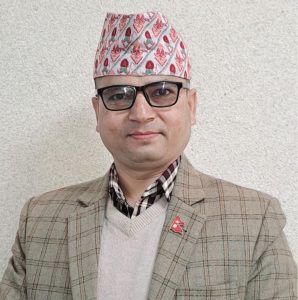
I have been working on the trends of the Nepalese Foreign Policy as the existing global order gets gradually altered in 21st century world ...

Pirandello’s Six Characters in Search of an Author captures the essence of modern politicians who perform conviction rather than embody it. Like Pirandello’s unfinished characters, contemporary leaders stride across the global stage craving validation, rehearsing moral scripts while abandoning purpose at every negotiation. They wear fixed masks—of patriotism, reform, or populism—yet behind the costume, identity flickers and dissolves.
Each policy shift mirrors a scene rewritten mid-performance, exposing not evolution but improvisation without direction. Power no longer rests on principles but on perception: the applause of the moment replaces the substance of authorship, leaving democracy suspended in endless rehearsal.
Pirandello’s play offers an unsettling yet precise metaphor for Nepal’s politics: like the abandoned characters who wander onstage seeking coherence, Nepal’s major parties drift through history as incomplete constructions—aware of their roles but devoid of stable identity, forever rehearsing democracy without committing to principled governance.
In Pirandello’s theatre, the characters claim a reality more solid than the actors’ selves; conversely, Nepal’s leaders project grand personas while their convictions mutate with every coalition, reshuffle, or bargain over immunity. This exposes a crisis of authenticity and ethical selfhood at the core of political life.
The Nepali people—especially the youth who risked their lives in 2025—embody the silenced authorial will demanding dignity, rule-bound authority, and inclusion. Yet their aspirations are repeatedly distorted into episodic “reforms” that yield only disillusionment and unrest.
Until programmatic politics links constitutional ideals with material redistribution, social protection, and credible anti-corruption mechanisms, the nation remains trapped in a Pirandellian theatre of managed instability, where governments fall but the tragedy of unfulfilled citizenship endures.
Today, Nepali politics staggers like a troupe reciting obsolete lines on a collapsing stage, while a restless generation demands a new script. Parties brandish ideological labels yet operate as transactional cartels guided by the arithmetic of ministries and impunity.
The post-2006 promise of republican renewal has devolved into a revolving door of coalitions and personality cults: fourteen governments in fifteen years turned the state into a patronage marketplace. Coalition-making now resembles stock-market speculation—alliances rise and fall overnight without coherence or conviction.
Behind the rhetoric of “stability” and “prosperity” lies an extractive regime where office serves as investment and the budget as rent-seeking machinery. The result is a stalled transition, captured by aging elites who defend access to resources rather than articulate a national project.
Communist parties, in particular, inhabit an irony—they preach class emancipation while governing through capitalist-friendly, oligarchic networks. “Democratic centralism” mutates into centralized clientelism, and loyalty to leaders eclipses loyalty to principles.
Ideology thus functions as a branding device—donned during elections, discarded during bargaining. Every “historic agreement” masks recurring crises; every “national consensus” conceals structural injustice.
Nepal today lacks an author—a collective imagination able to weave diverse demands into a coherent constitutional narrative responsive to federal inclusion, ecological precarity, and geopolitical complexity.
As elites improvise on the parliamentary stage, the socio-economic auditorium darkens. Inflation rises, development stagnates, and youth migration accelerates. Fiscal policy fuels patronage rather than transformation; citizens endure precarious employment and shrinking public services while corruption deepens.
A thin veneer of legality overlays entrenched impunity and unaccountable power. The audience, weary of farce, now pays for the set and bears the cost of collapse.
The Gen Z Uprising of 2025 signaled rupture: digital frustration became street mobilization demanding transparency, accountability, and opportunity at home. These protests toppled a government, triggered early elections, and exposed the establishment’s moral exhaustion.
However, entrenched hierarchies resist renewal, keeping youth outside the parties instead of within them. In this interregnum, Nepal stands like Pirandello’s stage at the moment of breakdown—characters crying for resolution, actors losing control, and a restless audience awaiting new authors to seize the script and rewrite the national drama.
I have been working on the trends of the Nepalese Foreign Policy as the existing global order gets gradually altered in 21st century world ..
I have been working on the trends of the Nepalese Foreign Policy as the existing global order gets gradually altered in 21st century world. I am an MA in English and MPhil in International Relations a...
@ Copyright matrikapoudyal.com All Rights Reserved
Designed by Fortune Info Tech