



I have been working on the trends of the Nepalese Foreign Policy as the existing global order gets gradually altered in 21st century world ...
In an increasingly complex global landscape, a nation’s fate depends on the foresight and skill of its leadership. Nepal, a sovereign nation wedged between two ascending global powers, faces a unique, precarious position. Navigating this delicate balance demands a specific brand of leadership—one possessing deep, proven expertise in geopolitics, geoeconomics, and geostrategy.
Consequently, Nepal’s future security and prosperity mandate a leader whose command of foreign affairs, international relations, and diplomacy extends beyond superficial political rhetoric. This expertise represents not a mere asset, but a fundamental prerequisite for survival and progress.
Nepal’s geographical reality dictates its strategic future. The nation, a natural buffer state, finds itself at the core of a great power competition. A leader lacking geostrategic insight risks compromising national sovereignty and autonomy. Analytical frameworks, employed by international relations scholars, demonstrate how buffer states without a clear, balanced strategy become vulnerable to external influence and economic coercion.
This geopolitical position necessitates a leader who proactively manages relations with both neighbors, safeguarding national interests while preventing a crisis. A reactive approach, conversely, inevitably leads to a slow erosion of independent decision-making.
Furthermore, economic development in this region hinges on geoeconomic acumen. Nepal’s landlocked status presents a significant challenge, yet also an opportunity. A leader with geoeconomic expertise understands how to leverage this position, transforming it from a disadvantage into a catalyst for growth.
Such a leader actively seeks transit agreements, develops cross-border infrastructure, and attracts foreign direct investment through strategic engagement. In contrast, a lack of geoeconomic understanding leaves the nation vulnerable to economic pressures from its neighbors, hindering its long-term development. This strategic oversight compromises trade partnerships and limits access to global markets.
A robust foreign policy, consequently, relies on a mastery of international relations. A skilled leader cultivates a diverse network of international partners beyond its immediate vicinity. This multipolar engagement mitigates risks associated with over-reliance on a single power, providing diplomatic leverage and alternative sources of aid and investment.
Moreover, such a leader understands the subtle dance of international forums, securing a stronger voice for Nepal on the world stage. Their diplomatic skill ensures the nation’s concerns receive global attention, protecting its interests from being sidelined by larger geopolitical agendas.
Diplomacy remains the ultimate tool for a nation’s survival and success. A leader with sharp diplomatic skills effectively de-escalates tensions, resolves border disputes, and handles complex negotiations. This proactive, professional approach prevents minor disagreements from escalating into major crises.
Diplomatic mastery allows a leader to secure concessions and uphold national honor without resorting to confrontation. The historical record confirms that a nation’s stability often correlates directly with the diplomatic abilities of its top officials, particularly in highly contested regions.
For too long, Nepal’s leadership selection process has prioritized general political popularity over specialized, demonstrable expertise. This oversight has yielded a foreign policy often characterized by inconsistency and reaction, rather than strategic foresight.
A scientific analysis of statecraft reveals that a nation’s success directly correlates with its leaders’ deep understanding of global systems. A leader’s grasp of these intricate dynamics empowers the nation to not only survive, but to thrive.
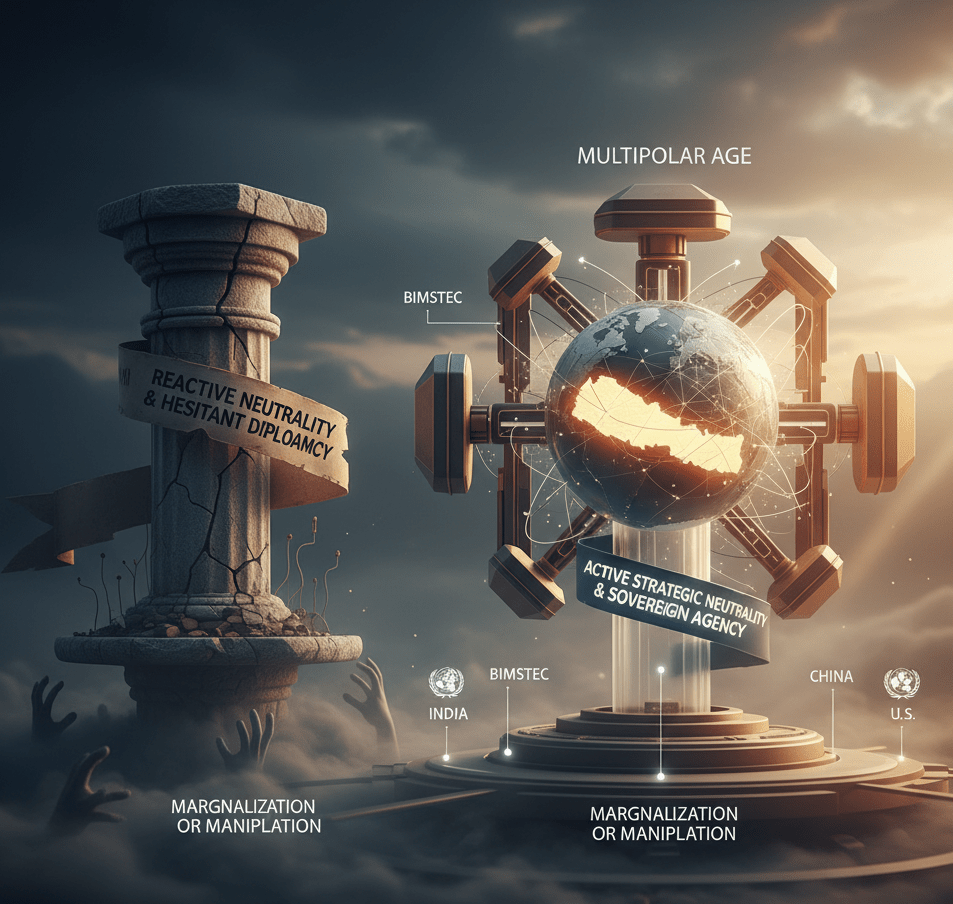
Statecraft for Nepal must first and foremost address its unique geopolitical position as a landlocked nation between two rising global powers, India and China. A foundational need is the development of a coherent, consistent, and proactive foreign policy that avoids a reactive “sandwich” mentality.
This involves building a balanced relationship with both neighbors, strategically leveraging its location to secure economic interests rather than becoming a site of great power competition. Effective statecraft requires Nepal to transform itself from a mere buffer state into a dynamic bridge for regional trade and connectivity, using diplomacy to secure favorable terms for transit, trade, and infrastructure projects.
Beyond its immediate neighbors, Nepal’s statecraft must focus on diversifying its international partnerships and strengthening its diplomatic institutions. This includes cultivating relations with major global actors and multilateral organizations to attract foreign direct investment, secure development aid, and gain a stronger voice on the world stage.
Crucially, it necessitates the professionalization of its diplomatic corps, ensuring appointments are based on expertise rather than political affiliation. So, Nepal’s ability to thrive in the 21st century hinges on its capacity to project a stable, united, and strategically-minded front, demonstrating internal strength that earns respect and confidence from the international community.
Summing up, Nepal’s future security and prosperity hinges on a simple truth: the nation needs a commander of foreign affairs. A leader who speaks the language of diplomacy, understands the calculus of geopolitics, and leverages the power of geoeconomics provides the only viable path forward.
The complexities of the 21st century demand this specialized knowledge. Consequently, Nepal’s path to a secure, prosperous future begins with a definitive change in leadership philosophy—one that elevates expertise over every other consideration.
I have been working on the trends of the Nepalese Foreign Policy as the existing global order gets gradually altered in 21st century world ..
I have been working on the trends of the Nepalese Foreign Policy as the existing global order gets gradually altered in 21st century world. I am an MA in English and MPhil in International Relations a...
@ Copyright matrikapoudyal.com All Rights Reserved
Designed by Fortune Info Tech