Nepal’s Deliberate Path Toward the US-Led System
Nepal’s geostrategic locus requires to cultivate a foreign policy of sophisticated and principled balance, internalizing its geopolitical realities to ensure resilience and autonomy among the regional as well as global powers into the troubled waters of 21st century world politics.
The seismic political shifts observed throughout 2025, culminating in the September “Gen Z” Uprising and the subsequent collapse of Oli’s indignant administration, demonstrate a terminal public repudiation of illiberal governance and systemic corruption. This youth-led uprising signals an urgent requirement for the political elite to abandon archaic socialist-communist dogmas in favor of transparent, accountable, and market-friendly frameworks.
As Nepal prepares for its landmark graduation from Least Developed Country (LDC) status in 2026, it faces a narrowing window to institutionalize the neoliberal reforms championed by the World Bank, the Asian Development Bank (ADB), and the International Monetary Fund (IMF).
Survival in the heart of Asia dictates that Kathmandu must solidify its partnerships with the United States and its democratic allies—including Japan, South Korea, Australia, India, and the European Union—leveraging their developmental assistance to mitigate geographic vulnerabilities.
This transition requires more than superficial policy adjustments; it mandates a fundamental philosophical shift where liberal democratic principles serve as the bedrock for addressing Nepal’s multifaceted geopolitics, geostrategic anxieties, and geoeconomic aspirations.
Global financial institutions catalyze Nepal’s economic evolution within a neoliberal paradigm. The geoeconomic stability of Nepal rests upon the fiscal scaffolding provided by neoliberal economic apparatuses, which enforce a rigorous discipline of market liberalization and public sector rationalization. The World Bank and the ADB together facilitate approximately 70 percent of Nepal’s development financing, a dependency that forces strict adherence to their reform agendas under the 2025 Full Mutual Reliance Framework.
Nepal’s economic performance in fiscal year 2025 reflected this structural guidance, with growth reaching 4.6 percent before political volatility induced a sharp deceleration to a projected 2.1 percent for FY2026. The ADB’s Country Partnership Strategy (CPS) for 2025–2029 specifically targets a private sector-led, green economic transformation, emphasizing productivity gains through foreign direct investment (FDI) and human capital development.
These initiatives aim to pivot Nepal away from an economy unsustainably fueled by remittances—which currently account for over a quarter of the Gross Domestic Product (GDP)—toward a resilient model rooted in domestic production and regional trade. The IMF’s ideological commitment to fiscal austerity, though often maligned by socialist factions, provides the market signaling essential for maintaining international creditworthiness as the country loses concessional access following its 2026 graduation.
The persistent execution gap in capital expenditure, which hovered near 63 percent in 2025, underscores the internal bureaucratic hurdles that neoliberal reforms must overcome. Strengthening public investment management serves as a critical prerequisite for building the infrastructure necessary to meet the 10-15 percent GDP investment threshold required for sustained prosperity.
Neoliberal institutions demand reforms that streamline land acquisition, improve procurement laws, and enhance project budgeting—steps that communist-led administrations have historically obfuscated to preserve patronage networks. The scientific apprehension of these economic dynamics suggests that without a transition to meritocratic, market-driven governance, Nepal will remain trapped in a cycle of debt and underdevelopment.
Nepal’s sovereign navigation of its complex geopolitics obliges a pragmatic engagement with the broader international security architecture, including that championed by the United States.
Nepal’s survival as a sovereign entity depends on its ability to leverage its “Third Neighbor” policy, primarily by deepening its strategic and developmental integration with the United States and its democratic allies. The US Integrated Country Strategy (ICS) defines Nepal as a delicate democracy whose stability directly impacts regional security and prosperity.
Central to this engagement is the Millennium Challenge Corporation (MCC) Nepal Compact, a $500 million investment that targets the construction of critical 400 kV transmission lines, such as the Ratamate-Bardaghat corridor, which facilitates a 10,000 MW electricity export agreement with India.
This infrastructure project represents a tangible manifestation of the liberal world vision—linking energy surplus to regional markets and creating employment opportunities—yet it remains a constant target for communist-led disinformation campaigns that prioritize ideological obstruction over national development.
The US and its allies, including Japan and South Korea, provide a counterweight to illiberal influences, offering models of performance that emphasize inclusive governance and the rule of law over authoritarian control.
Allies like Japan and Australia contribute essential technical expertise and financial support that communist factions cannot match without incurring significant debt-trap risks.
Japan’s commitment to healthcare infrastructure and Australia’s focus on farm productivity and water management in the Koshi River Basin demonstrate a commitment to Nepal’s long-term resilience rather than short-term political leverage.
Furthermore, the burgeoning Nepali diaspora in Australia and South Korea provides a crucial flow of remittances that stabilizes the external sector during periods of internal unrest.
Nepal’s geopolitical navigation must, therefore, prioritize these democratic partnerships to ensure it does not become a vassal state to illiberal neighbors, an outcome that the socialist camp’s rhetoric inadvertently invites.
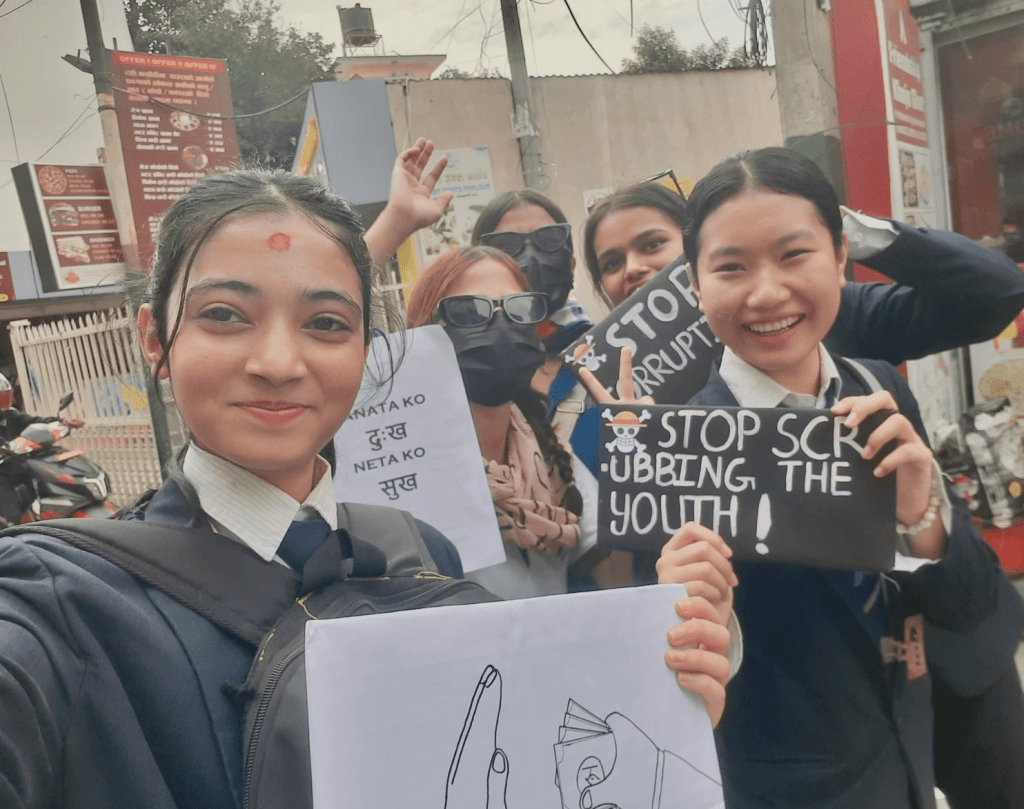
The political landscape of Nepal underwent a radical transformation in September, 2025, when a countrywide “Gen Z” Uprising toppled the government. What began as a protest against a misguided social media ban rapidly evolved into a comprehensive indictment of the communist-led government’s corruption, nepotism, and elite capture of state resources.
The state’s response—deploying water cannons, rubber bullets, and live ammunition—resulted in nearly 80 deaths and over 1,000 injuries, effectively severing the administration’s last vestiges of legitimacy. This Uprising indicates a deep-seated generational shift: the youth of Nepal no longer tolerate the “personality-centric” jockeying for power that characterizes traditional communist and socialist parties.
Instead, they demand an internalization of democratic values, digital freedom, and the dismantling of the exclusionary Khas Arya elite structures that have historically dominated the premiership.
The current interim government, headed by former Chief Justice Sushila Karki, represents a transitional bridge toward the general elections scheduled for March 5, 2026.
The destruction of government property and elite-owned retail outlets during the protests underscores the explosive potential of economic inequality when coupled with arrogant, illiberal governance.
Nepal’s political elite must internalize the fact that the Gen Z Uprising was not a fleeting outcry but a demand for a fundamental restructuring of the social contract.
Scientific reasoning suggests that the stability of the state now depends on protecting civic space and adhering to the “competition of opinions” that defines liberal democracy, rather than returning to the suppressive tactics favored by communist administrations.
Nepal’s communist and socialist parties orchestrate significant hurdles that prevent the nation from smoothly sailing into the liberal democratic world order.
Following the 2025 Uprising, nine leftist factions merged to form the Nepali Communist Party (NCP), advocating for “scientific socialism with Nepali characteristics”—a framework that often disguises a proclivity for state control and anti-Western skepticism.
These parties frequently instrumentalize the concept of “sovereignty” to block US-led initiatives like the State Partnership Program (SPP) and the MCC, even when such programs offer clear developmental benefits.
By stoking fears of “foreign-influenced forces” and “US imperialism,” communist leaders like Pushpa Kamal Dahal “Prachanda” seek to consolidate their own influence while creating parallel budgets that bypass standard government oversight.
This ideological obstructionism complicates Nepal’s relations with India and the US, occasionally driving the country toward opaque and debt-heavy infrastructure deals with China’s BRI.
The mobilization of caste and ethnic grievances by communist parties further fragments the national identity, using identity-based politics to subvert classical Marxist class analysis for electoral gain.
This tactic has institutionalized divisions within the state structure, making it difficult to achieve the broad political consensus required for transformative neoliberal reforms.
Communist-led governments have repeatedly failed to ensure political stability, characterized instead by internal factionalism and the prioritization of leader-centric posturing over platform-based governance.
Scientific apprehension reveals that these illiberal tendencies hinder Nepal’s soft power potential, rendering the nation a “hybrid regime” that struggles to attract the long-term investment committed to more stable democratic counterparts.
The political parties in Nepal can be distinctly categorized by their development philosophies and foreign policy outlooks, with a clear divide between those embracing the liberal democratic world vision and those tethered to socialist ideologies.
The Democratic camp, led by the Nepali Congress (NC), traditionally advocates for center-left democratic socialism that remains open to market-friendly reforms and strong ties with India and the US.
On the other side, the newly merged Nepali Communist Party (NCP) and the CPN-UML represent the Communist camp, which leans toward state-led development and closer alignment with China.
Emerging forces like the Rastriya Swatantra Party (RSP) represent a centrist, reformist aspiration, focusing on good governance and digital modernization while challenging the entrenched dominance of the “old guard”.
The 2026 elections will serve as a referendum on these competing visions. The liberal democratic parties must demonstrate their ability to internalize the “Gen Z” demands for transparency to counter the populist appeal of the unified communist bloc.
The internal dissent within the Nepali Congress—where younger leaders like Gagan Thapa challenge the autocratic despots of the older generation—indicates a vital struggle to reinvent the party before the 2026 vote.
For Nepal to succeed geoeconomically, its political elite must realize that a “hybrid regime” is no longer sustainable in an interconnected world that rewards institutional reliability and democratic stability.
The INGOs, MNCs, and human rights in social upliftment in Nepal play the vital roles. The US-based and allied international non-governmental organizations (INGOs) and multinational corporations (MNCs) act as essential catalysts for social, educational, and economic development in Nepal.
Organizations like Helen Keller International and Winrock International provide critical support in maternal health and agricultural transformation, while USAID invests in food security and democratic governance. These agencies bring “proven, credible, and persuasive best practices” that help local governments deliver quality education and health services.
However, aid effectiveness remains limited by donor-driven agendas and a lack of local ownership, which communist factions exploit to paint INGOs as tools of foreign influence.
Strengthening the role of the private sector and MNCs is increasingly important as traditional aid diminishes in volume, particularly as Nepal graduates to a middle-income country.
Human rights and social justice are integral to the liberal democratic order, serving as the benchmark for Nepal’s international standing. While the constitution guarantees social and economic rights, persistent issues like child marriage and bonded labor remain significant problems.
International civil society networks have expressed deep concern over the 2025 crackdown on peaceful protests, condemning the lethal state violence that undermined fundamental freedoms of expression and assembly.
The protection of human rights defenders and the completion of a credible transitional justice process are not merely social goals; they are geostrategic necessities that signal Nepal’s commitment to the values of its democratic allies.
Neoliberal economic stability is inextricably linked to these human rights, as MNCs and investors avoid jurisdictions where the rule of law is inconsistently applied or where civic space is repressed.
Nepal’s impending graduation from LDC status in 2026 needs a decisive internalization of neoliberal economic worldviews by the political elite. This transition will remove the nation from the list of countries eligible for concessional grants and preferential trade treatments, such as the Least Developed Countries Fund (LDCF).
To compensate, Nepal must attract higher levels of FDI, which currently constitutes only about 3.2 percent of the total stock from US companies.
The investment climate is presently hampered by a “cumbersome bureaucracy, widespread corruption, and a tax regime inconsistent with international practices”. Liberal democratic governance is scientifically suited to solve these structural problems by introducing a consensual definition of the common good and promoting institutional transparency.
Geoeconomic resilience also requires the development of storage hydropower facilities to secure investments from private companies reliant on exports to India and Bangladesh. The MCC-funded transmission infrastructure is vital for this purpose, enabling Nepal to export 10,000 MW of power and transition from a remittance-dependent economy to an energy-exporting one.
The failure of communist governments to manage relations with international donors and navigate the growing influence of China has led to a Rise in support for nationalist movements that threaten this geoeconomic trajectory.
Nepal cannot afford to lose the US-led socio-political worldview, as it provides the only coherent framework for managing the transition to a competitive, middle-income economy.
Scientific contemporary geopolitical analysis, in this respect, leads to a singular prescriptive conclusion: the adoption of a robust liberal democratic political order is the most suitable path for addressing Nepal’s geopolitics, geostrategy, and geoeconomic conditions.
The failure of communist and socialist factions to provide political stability or foster an environment conducive to international investment has left the nation vulnerable to external shocks and internal upheaval.
To ensure its sovereignty and prosperity, Nepal’s political leadership must internalize several critical recommendations, beginning with the prioritization of liberal democratic alliances.
Nations such as the United States, the European Union, Japan, and Australia offer sustainable development models and partnership frameworks founded on transparency and mutual respect. These relationships provide essential technical expertise and investment, crucially devoid of coercive political strings, thereby reinforcing Nepal’s autonomous strategic footing.
Concurrently, the institutionalization of neoliberal economic reforms remains imperative for national progress. As Nepal graduates from Least Developed Country status in 2026, adopting World Bank and IMF guidance on public sector efficiency and market deregulation will signal unequivocal stability to multinational corporations and global financial markets. This deliberate alignment fosters the investor confidence necessary for durable, high-quality growth.
Furthermore, the protection of civic space and human rights constitutes a fundamental pillar of a resilient state. The 2025 youth demonstrations underscored an immutable public demand for liberal guarantees.
Government assurance of unfettered expression and assembly sustains the social stability and innovative capacity that underpin long-term economic expansion and international credibility.
Moreover, the political system requires a foundational shift from personality-centric patronage to platform-based governance. The chronic instability fostered by a dozen government changes since 2008 demands this transition. Concrete, programmatic agendas must supplant leader-centric posturing, directing the state’s energy toward measurable development outcomes and institutional strength.
Finally, the accelerated development of energy infrastructure, particularly through the completion of the MCC compact, is a national economic priority. This strategic investment unlocks Nepal’s hydroelectric potential, enabling substantial cross-border power trade. Such a breakthrough offers the most viable path toward replacing remittance dependency with robust domestic productivity and export revenue.
Therefore, the “Third Neighbour” policy—the cultivation of robust ties with the United States and its democratic allies—transcends diplomatic preference; it represents a geostrategic necessity.
Nepal’s future as a self-reliant global actor demands a decisive departure from ideological ambiguity and a firm embrace of the liberal democratic order, ensuring its security and prosperity in an era of profound geopolitical competition.