India’s National Security Mandates Nepal’s Socio-Economic Ascent
India’s national security imperatives require a stable, prosperous Nepal. This strategic calculus elevates Nepal’s socio-economic development from a bilateral concern to a regional priority.
Indian policy, consequently, actively fosters cross-border connectivity, energy cooperation, and trade facilitation. Such engagement predicates regional stability upon Nepal’s internal resilience and economic momentum, rendering its ascent a mutually constitutive objective.
The enduring strategic relationship between India and Nepal transcends conventional diplomatic paradigms, defining a mutual security architecture inextricably linked by geography, culture, and shared destiny. India’s sustained commitment to Nepal’s socio-economic vitality constitutes not merely regional assistance, but an indispensable national security investment.
Geostrategic realities dictate that chronic vulnerabilities within Nepal’s sovereign space translate directly into profound security liabilities for India, compelling immediate, proactive engagement.
While historically termed a “buffer state,” policy imperatives now demand a strategic reorientation, recognizing Nepal as an empowered “dynamic bridge” that actively facilitates India’s regional stability and influence.
The 1950 Treaty of Peace and Friendship formalized this indivisible security perimeter, establishing reciprocal rights and underscoring the intrinsic link between Nepali stability and Indian security, particularly mandating mutual notification regarding serious friction with any neighboring state.
A passive acceptance of the buffer status invites strategic pressure and external exploitation; conversely, proactive engagement, channeled through the “Neighborhood First” doctrine, cultivates the economic resilience necessary to secure Nepal’s alignment with shared regional stability, safeguarding sensitive territories like the strategically vital Siliguri Corridor from geopolitical intrusion.
This strategic necessity demands India view Nepal’s prosperity as functionally equivalent to securing its own northern frontier.
The foundation of this strategic relationship resides in an unparalleled civilizational and cultural continuum, generating a unique resilience against geopolitical disruption.
This deep affinity, reinforced by shared religious beliefs and practices, acts as a powerful strategic asset, creating an emotional firewall against adversarial narratives.
The spiritual corridor linking the two nations—from the sacred flow between Pashupatinath and Kashi Vishwanath, to the mythological connection between Janakpur Dham and Ayodhya—defines a living reality of interconnected sacred geographies, profoundly resisting political severance.
Additionally, the Gorkha military fraternity provides tangible security dividends, maintaining invaluable military integration. Approximately 42,000 Gorkha soldiers serve actively in the Indian Army, comprising a crucial component of India’s defense forces, a practice cemented by the 1947 Tripartite Agreement.
This profound trust finds symbolic reinforcement in the unique tradition of conferring the honorary rank of General of each other’s Army on their respective Chiefs.
Moreover, India’s immense pension commitment to Nepali Gorkha ex-servicemen and their dependents, ensuring social and medical benefits on par with Indian counterparts, acts as a critical economic stabilizing factor across rural Nepal.
When millions of households depend on these financial streams or on migration for employment and marriage in India, the profound cultural and familial ties inhibit external forces from effectively leveraging political instability against New Delhi, limiting the effectiveness of attempts to foment anti-India sentiment.
Nepal’s persistent infrastructure deficit and weak state capacity create a critical vacuum, impeding inclusive economic growth and accelerating the contagion risk to India. The nation struggles with severely inadequate public capital spending, facing an infrastructure gap estimated between 8.2% and 11.8% of Gross Domestic Product (GDP) annually.
Global competitiveness reports characterize Nepal as one of the least competitive countries in infrastructure quality, ranking 136 of 147 for electricity supply quality.
Institutional impediments, including widespread corruption, cumbersome bureaucracy, and persistent political instability, deter meaningful Foreign Direct Investment (FDI), slowing reforms and undermining consistent law implementation.
This systemic inability to streamline capital expenditure processes, such as land acquisition and procurement amendments, constrains employment generation and sustainable growth.
This failure of governance introduces a significant financial security risk, compromising regulatory efficacy and increasing vulnerabilities along the open border.
A state struggling with internal financial stability and higher Non-Performing Loans (NPLs) potentially provides easier operational space for illicit financial flows, including those related to criminal or militant activities, thereby challenging India’s financial sovereignty and anti-terror financing efforts.
Furthermore, this chronic failure to meet critical development needs validates Nepal’s search for high-visibility, alternative partners, confirming the infrastructure gap as a direct geopolitical invitation.
The open, porous frontier, while symbolizing unparalleled people-to-people movement, simultaneously creates a critical security aperture exploited by organized transnational criminal networks, directly destabilizing India’s domestic frontier.
A law-and-order vacuum in Nepal’s border regions translates directly into cross-border threats for India, enabling illicit activities. These threats include the systematic trafficking of Fake Indian Currency Notes (FICN), with significant seizures demonstrating the direct challenge to India’s financial integrity.
Highly organized transnational criminal networks capitalize on socio-economic distress and vulnerability—often exacerbated by humanitarian crises following natural disasters like the 2015 earthquake—to traffic persons into and via India for exploitation, demanding rigorous joint counter-trafficking mechanisms.
Critically, instability on the Nepalese side presents opportunities for insurgent groups and militant infiltration, with concerns regarding the movement of extremist militants using Nepal as a transit corridor.
The most cost-effective preemptive security measure involves strengthening Nepal’s state capacity—particularly its police, border forces, and judicial system—to project sovereignty effectively.
Supporting Nepal in imposing “strong rules against these criminals” and funding capacity-building initiatives, such as the new National Police Academy, acts as a force multiplier for India’s internal security efforts, facilitating necessary consolidated action to regulate the border without compromising the unique freedom of movement essential to the bilateral relationship.
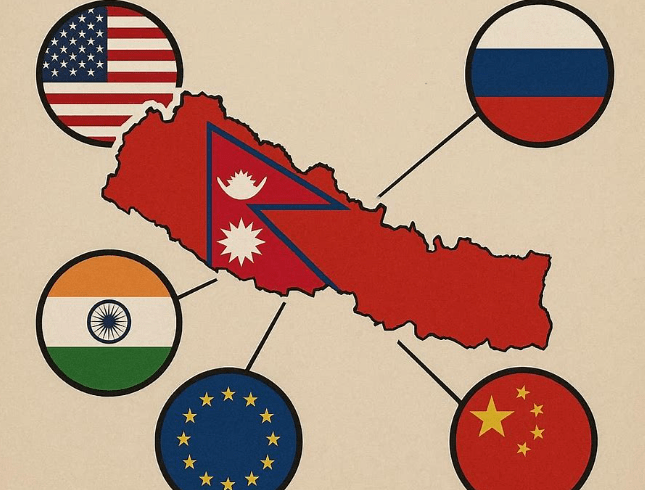
The intensifying geopolitical rivalry, fueled by external infrastructure initiatives, mandates that India execute a determined, multi-faceted outreach, securing Nepal’s strategic autonomy and preventing strategic encirclement.
The expansion of the Belt and Road Initiative (BRI) heightens geopolitical competition, creating valid concerns in New Delhi regarding debt diplomacy, economic dependence, and the potential strategic encirclement of its borders, particularly concerning the vulnerability of the narrow Siliguri Corridor.
Key Nepali assets, such as the 750 MW West Seti Hydropower Project, have become focal points of this rivalry, transferring ownership from Chinese to Indian state entities, underscoring the fierce competition in the energy sector. India’s competitive advantage rests upon its position as the largest purchaser and transit node for Nepalese energy.
This dominance has been strategically leveraged, with India securing ten contracts to operate hydropower plants in May 2023, significantly surpassing China’s allocation.
While Nepal actively pursues “equidistance” and multilateralism—evidenced by the ratification of the U.S.-backed Millennium Challenge Corporation (MCC) Compact—to preserve its agency, India must ensure its engagement facilitates, rather than constrains, Nepal’s pursuit of strategic autonomy, cementing India as the reliable partner.
However, slow execution of promised projects, exemplified by recurrent delays in high-visibility infrastructure, significantly damages strategic credibility.
The strategic response requires overcoming “internal constraints such as political instability, bureaucratic inefficiencies, and limited funding” to prioritize speed, efficiency, and transparency in project delivery, demonstrating a superior track record to effectively counter rival narratives.
Directing development capital toward energy, water, and connectivity creates irreversible economic and physical integration, transforming Nepal’s vast natural resource potential into a mechanism for shared regional stability and securing India’s future resource needs.
Nepal’s immense 40 gigawatts (GW) of commercially viable hydropower potential offers the definitive blueprint for mutual interdependence.
India, functioning as the indispensable primary market and transit hub, must solidify long-term power purchase agreements and invest substantially in cross-border transmission infrastructure to fully integrate Nepal into a stable South Asian power pool, a process actively supported by the MCC Compact.
Furthermore, collaboration on shared riparian resources, such as the Mahakali River development, secures vital water resources for irrigation and critically mitigates downstream flooding for India’s populous Gangetic plains.
Nepal’s sustainable management of these upper riparian assets directly impacts the security and stability of millions in India. Strategic investments in connectivity, including roads and Integrated Check Posts (ICs), bolster trade and enable job creation in border regions, simultaneously facilitating the smooth deployment of security and relief assets.
Additionally, preemptive security demands significant investment in disaster resilience; financial packages for post-earthquake reconstruction, such as the USD 75 million allocated after the Jajarkot earthquake, prevent the humanitarian crises that organized crime networks actively exploit.
Policy discourse must consistently frame this support as a strategic investment guaranteeing mutual long-term security dividends, avoiding the potentially patronizing framing of concessional Official Development Assistance (ODA).
India must embrace the conviction that Nepal’s developmental success defines the integrity of its own strategic future. Political instability, the chronic infrastructure deficit, and the resultant exploitation of the open border collectively endanger India’s domestic security.
The only sustainable mechanism to fortify India’s interior involves decisively supporting Nepal’s state capacity and economic resilience. This political reality mandates action, compelling India to translate its unparalleled civilizational bonds and economic influence—evidenced by its prominent position among Nepal’s largest investors—into sustained, mission-mode execution of the ‘Neighborhood First’ policy.
This process necessitates overcoming “strategic shortcomings characterized by reactionary diplomacy” and bureaucratic inertia, prioritizing swift project implementation and fostering confidence-building measures.
India must leverage the profound cultural ties as an enduring source of strength and convert the liability of the open border into an indelible strategic asset.
Hence, the strategic logic mandates that India’s investment in Nepal’s economic ascent constitutes an investment in its own enduring security and global prominence, forging a shared destiny where Nepal stands not as a geopolitical vulnerability, but as a resilient, indispensable pillar of South Asian stability for the coming century.