




I have been working on the trends of the Nepalese Foreign Policy as the existing global order gets gradually altered in 21st century world ...
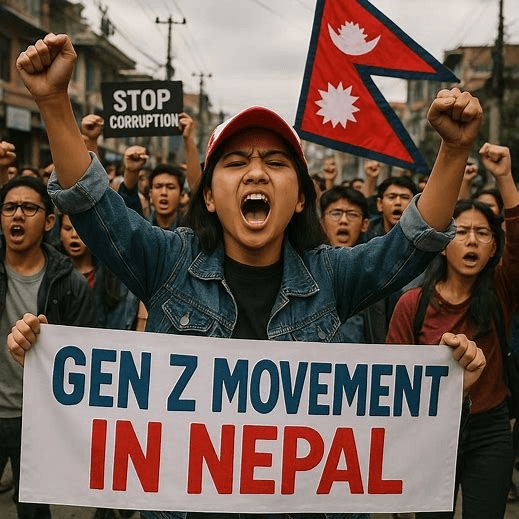
The political establishment in Nepal, long defined by a familiar cast of veteran leaders and entrenched rivalries, now faces an existential reckoning. A new generation, Generation Z, armed with digital tools and a profound disillusionment, challenges the very foundations of the old order.
Their recent movement transcends mere policy protest; it constitutes a wholesale rejection of an elite class perceived as corrupt, complacent, and detached from the daily realities of ordinary citizens. This seismic shift marks a pivotal moment, necessitating a critical appraisal of how traditional politics lost its way.
The fertile ground for this widespread discontent emerged from a decades-long pattern of political instability and unfulfilled promises. The same leaders, repeatedly cycling through positions of power, failed to deliver on core pledges of good governance, economic opportunity, and institutional reform.
Instead, their tenures became synonymous with endemic corruption and nepotism. The political landscape, dominated by a handful of established parties, offered little genuine choice, perpetuating a cycle of frustration for a populace hungry for change. This stagnation deeply alienated a youthful demographic.
What began as a protest against a social media ban quickly evolved into a powerful and spontaneous uprising. This youth-led movement successfully compelled the resignation of the sitting prime minister and precipitated the dissolution of parliament, demonstrating that a digitally connected, decentralized force could dismantle a political structure that had seemed unshakeable for decades.
The protests signaled a clear and decisive rejection of the old guard, compelling a political system defined by a small circle of veteran leaders to confront its own obsolescence and lack of legitimacy in the eyes of a new generation.
This historic shift underscores a pivotal moment in Nepal’s democratic journey, where a new form of citizen activism challenges the traditional model of political power.
By targeting the symbols of corruption and elite privilege—including the homes of politicians and government buildings—the movement exposed a deep-seated chasm between the ruling class and the aspirations of the general populace. The aftermath of the protests has prompted a crucial period of transition, with a new interim leadership taking the helm.
While the protests effectively dismantled the old order, they have not yet established a clear, new political framework. This outcome, however, also presents a critical challenge.
The transition now requires a delicate balance: ensuring accountability for past grievances while simultaneously building a more inclusive and resilient political system.
The old guard’s inability to connect with and represent the aspirations of the youth left a significant void, and the question remains whether new leadership can effectively fill it.
The path forward for Nepal’s political future hinges on recognizing this fundamental shift. Mainstream parties must undergo a profound internal transformation, shedding their elitist structures and embracing new leadership.
They must prioritize public service over personal gain and transparency over political expediency. Ignoring the demands of Gen Z would be a grave error, risking further instability and deepening the democratic deficit. A genuine renewal requires more than cosmetic changes; it demands a wholesale commitment to a more accountable and equitable form of governance.
The Generation Z movement, with its raw energy and digital savvy, has fundamentally rewritten the rules of political engagement in Nepal. It stands as a potent reminder that the legitimacy of mainstream politics hinges on its capacity to evolve and genuinely serve its constituents.
Their collective protests signify a demand for a future where merit, not patronage, determines success and where leaders remain accountable to their citizens, not merely to their political parties. The old way has failed. The future of Nepalese democracy rests on its ability to embrace this new reality.
I have been working on the trends of the Nepalese Foreign Policy as the existing global order gets gradually altered in 21st century world ..
I have been working on the trends of the Nepalese Foreign Policy as the existing global order gets gradually altered in 21st century world. I am an MA in English and MPhil in International Relations a...
@ Copyright matrikapoudyal.com All Rights Reserved
Designed by Fortune Info Tech