




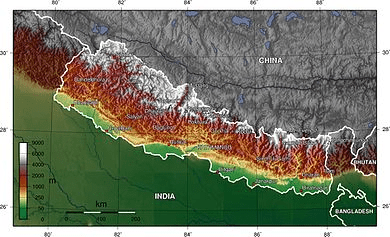
Nepal’s geographic reality, lodged between the competing spheres of influence of China and India, presents a formidable geopolitical test, yet simultaneously confers a unique strategic possibility. This position demands a foreign policy of the highest diplomatic caliber, one that transcends traditional reactive postures.
Kathmandu’s paramount imperative therefore becomes the vigorous and unambiguous reaffirmation of non-alignment, recasting this principle from a passive historical stance into a dynamic and principled doctrine of sovereign statecraft.
Such a recalibration necessitates a sustained diplomatic offensive, communicating through every channel Nepal’s inviolable commitment to balanced and mutually constructive relations. The government must articulate this position with crystalline clarity, leveraging high-level state visits and formal dialogues to assure both capitals that engagement with one neighbor never signifies disregard for the core security interests of the other.
This lucid, consistent positioning forms the indispensable bedrock for all subsequent national strategy, transforming a precarious balancing act into a managed and sovereign equilibrium.
This doctrine of dynamic non-alignment mandates a proactive, not a passive, foreign policy. It requires Kathmandu to consistently demonstrate its sovereign agency through decisive actions and unambiguous declarations, thereby preempting misinterpretation from either power.
The state must project this philosophy beyond mere rhetoric, embedding it within the fabric of every bilateral agreement and multilateral engagement. This involves a continuous diplomatic campaign that reinforces Nepal’s role as a respectful and independent partner, one that honors its commitments without falling into a sphere of dominance.
Such strategic clarity builds indispensable trust, assures regional stability, and ultimately secures Nepal’s position not as a buffer state, but as a confident, sovereign actor commanding respect on its own terms. This firm foundation enables the nation to navigate the complex currents of Sino-Indian rivalry, not as a subject of their competition, but as the author of its own destiny.
Kathmandu must confront with utmost seriousness India’s paramount strategic apprehension: the potential exploitation of Nepali territory for activities undermining Indian security. This imperative demands a demonstrable, immediate fortification of Nepal’s internal security architecture along the porous southern frontier.
This endeavor requires more than symbolic gestures; it necessitates tangible investments in advanced surveillance technologies, the strategic deployment of security forces, and the rigorous monitoring of cross-border movement.
Complementing these physical measures, Nepal must institute seamless, real-time intelligence fusion with New Delhi, transforming sporadic cooperation into a structured, institutionalized mechanism targeting cross-border militancy, arms smuggling, and illicit trafficking.
This proactive collaboration represents not a concession to a larger neighbor, but the unequivocal assertion of Nepal’s own sovereign responsibility to govern its territory effectively and deny sanctuary to any malign actors.
Beyond these operational necessities, Kathmandu must articulate a clear and binding political guarantee, proclaiming through the highest diplomatic channels that Nepali soil will never serve as a staging ground for elements hostile to the Indian state. This declaration, however, transcends diplomatic rhetoric; it acquires credibility only through consistent, verifiable action on the ground.
The sustained demonstration of this commitment—through joint security operations, transparent investigations, and the unequivocal dismantling of any illicit networks—holds the power to assuage New Delhi’s deep-seated anxieties.
This combination of decisive action and unwavering political assurance forms the essential catalyst for a fundamental strategic shift, moving the bilateral relationship beyond its historical baggage of suspicion and forging a new paradigm grounded in pragmatic trust, reciprocal responsibility, and a shared dedication to regional stability. This secures Nepal’s southern flank and constructs an interdependent architecture of mutual security, benefiting both nations.
Simultaneously, Nepal must approach its northern frontier with a commensurate level of strategic clarity and proactive diplomacy. China’s core interests, particularly regarding the issues of Tibet and its overarching Belt and Road Initiative (BRI), demand unambiguous recognition.
An immediate and public restatement of Nepal’s adherence to the One-China policy, coupled with firm commitments to prevent any anti-China activities within its borders, is an indispensable diplomatic necessity.
Engagement with the BRI must proceed with meticulous caution, ensuring that all infrastructure and development projects are subjected to rigorous, transparent cost-benefit analyses that prioritize Nepal’s long-term economic sovereignty and debt sustainability, thereby preemptively neutralizing concerns from both neighbors about strategic overreach or debt-trap diplomacy.
The most pressing and tangible task is the urgent review and ratification of the long-pending Millennium Challenge Corporation (MCC) compact with the United States. This issue has become a lightning rod for geopolitical speculation, with China viewing it with deep suspicion as a component of American Indo-Pacific strategy aimed at containment.
The government must immediately place this matter before a special parliamentary commission, conducting exhaustive hearings to dissect its every clause. The objective must be to arrive at a national consensus that either ratifies the compact with explicit, legally-binding sovereign safeguards that unequivocally state its non-military nature, or rejects it to remove a persistent irritant in Nepal-China relations. Procrastination on this file only fuels external suspicion and undermines Nepal’s credibility.
Furthermore, the government must initiate a comprehensive audit of all existing and proposed treaties and agreements with both neighbors. This is not an act of revisionism but of strategic housekeeping. The objective is to identify and rectify any clauses that create strategic dependencies, infringe upon Nepal’s sovereign regulatory space, or contain ambiguous language that could be exploited to draw the nation into the broader Sino-Indian rivalry.
This process must be conducted with the highest degree of legal and diplomatic rigor, ensuring that Nepal’s national interest is the sole and supreme arbiter of all its international commitments, thereby projecting an image of a mature and discerning state capable of managing its own destiny.
Economic strategy must be immediately recalibrated to serve these geopolitical imperatives. Over-reliance on either neighbor creates a strategic vulnerability that can be leveraged as political pressure.
Therefore, the state must aggressively pursue economic diversification, seeking out trade and investment partners beyond the immediate region, and developing its own internal infrastructure, such as hydropower and digital connectivity, to enhance its strategic autonomy.
By positioning itself as a transit hub between the two economies—a bridge rather than a buffer—Nepal can transform its geography from a liability into an asset, creating interdependencies that reinforce its neutral status and give both Beijing and New Delhi a vested interest in its stability.

In conclusion, the gravity of the moment demands a statesmanlike resolve from Nepal’s political leadership. The immediate actions required are not isolated tactical maneuvers but interconnected components of a grand strategy of sovereign assertion.
By reinforcing its borders, clarifying its treaty obligations, diplomatically assuring its neighbors, and strategically diversifying its economy, Nepal can navigate the treacherous currents of Sino-Indian competition.
The goal is not merely to allay concerns but to actively construct a posture of confident neutrality, securing for itself a future where it is not a theater for great power rivalry but a respected and independent actor on the world stage.